Named examples below are decision examples, not a permanent ranking. Unlock conditions and balance can change with updates.
Fast answer
The answer before the background
There is no single Army of Ruin best character for every objective. The 1.0 release advertises twenty-four playable characters with unique skills, and the right choice depends on the stage, challenge, available weapons, and control style. Use a broad-coverage or forgiving hero while learning, a focused or directional hero when the objective rewards aiming, a control-oriented hero when crowd contact ends the run, and a sustain-oriented hero for stationary or attrition challenges. Judge the passive by the problem it solves, not by a tier letter copied from an older patch.
Selection method
Start with the objective, then choose the passive
A character can feel powerful in a standard stage and awkward in a challenge that restricts movement, requires a specific weapon, or changes enemy pressure. Read the challenge text before opening a tier list. Decide whether the run needs early safety, late scaling, directional control, pickup access, healing, or a way to keep generals away. Then select a passive and starting setup that contributes to that job immediately.
For a first clear, consistency is more useful than theoretical ceiling. A passive that improves coverage or reduces the cost of a mistake gives more time to learn evolution slots and stage timing. For an optimized clear, the best hero may instead be the one whose passive multiplies a planned elemental package. The recommendation changes again for achievements, no-movement attempts, or unlock runs where finishing the requirement matters more than total damage.
- Learning: prioritize early coverage and low setup cost.
- Boss objective: prioritize focused damage and safe uptime.
- Crowd objective: prioritize control and multi-direction coverage.
- Stationary objective: prioritize sustain, automatic attacks, and collection reach.
Role examples
Use named characters as starting hypotheses
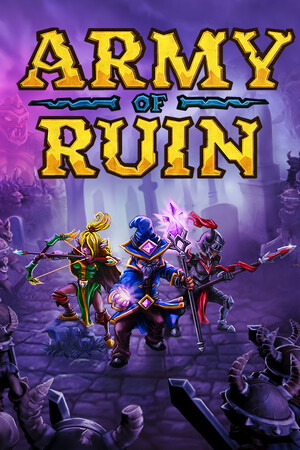
The store page introduces Ker as a swift ranger who uses a bow, illustrating a directional and spacing-oriented style. Community players have discussed Neptune as a control-focused option in freeze-centered attempts and Selina in no-movement or defensive contexts. These examples are useful because they connect a character to a job, but they are not official proof that the character is top tier. A later weapon balance change, different unlock set, or stage layout can reverse the result.
Test a candidate with the same small checklist. Note survival at the first dense wave, ability to damage a general without losing crowd control, trinket pressure required to support the passive, and whether aiming or movement is comfortable on the chosen platform. Repeat on the target challenge rather than a convenient stage. If a hero only becomes strong after several rare selections, record that setup risk as part of the evaluation.
Ker is described on the official store page. Neptune and Selina use cases cited here come from dated community discussions and must be treated as test ideas, not developer rankings.
Unlock progression
Build a practical roster before chasing a complete tier list
The official release notes emphasize challenges, character unlocks, weapons, trinkets, and evolutions as connected progression. That means a recommendation for a fully unlocked account may not help a new save. Use available characters to complete reachable objectives, expand the weapon and trinket pool, and revisit harder constraints when the build has the required tools. Do not assume a locked hero is necessary unless the challenge explicitly says so.
For a useful Army of Ruin character tier list, store more than one rank. Track early safety, boss pressure, crowd control, setup dependence, directional demand, and special-challenge value separately. A hero can be average overall yet excellent for one achievement. Add the game version, stage, modifiers, and unlock state to every test. This makes the list explainable and prevents an old high score from becoming a universal claim.
- Record the exact challenge and stage.
- Separate low-unlock and full-unlock recommendations.
- Retest after official balance notes affect the supporting weapons.
- Promote a character only when the advantage repeats under the intended condition.
FAQ
Common questions
How many characters are in Army of Ruin?
The official 1.0 announcement lists twenty-four playable characters, each with unique skills.
Who is the best hero for a new player?
Choose an available character with reliable early coverage and a passive that does not require rare setup. The exact name depends on current unlocks and control preference.
Can I trust an old character tier list?
Use it as a starting hypothesis only. Check its game version, stage, challenge, unlock state, and whether later official updates changed supporting weapons or controls.
Sources
What we checked
Official listings establish current availability and product facts. Community pages are used for mechanics and build history, then labeled separately.