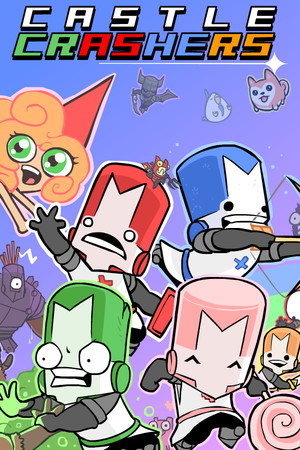
This guide discusses combat, character abilities, and enemy damage without story spoilers. Some character evaluations are practical recommendations rather than officially published rankings.
Fast answer
The answer before the background
For a reliable first run, choose Blue Knight if you want control or Red Knight if you want crowd lockdown. Spend early points on Strength, then Defense, and add Magic once you are comfortable using spells. For a magic-led route, prioritize Magic and use elemental effects to freeze, stun, burn, or poison enemies. For a melee route, maximize Strength first, keep enough Defense to avoid being defeated during mistakes, and use juggling and air attacks as your main damage source. Do not spread points evenly unless you specifically want a flexible, lower-specialization character.
Verified mechanics
How classes, skills, and stats work
Castle Crashers does not use a formal class system with fixed roles, talent trees, or respec menus. Instead, every playable character combines a moveset, a magic set, a starting weapon, and four upgradeable attributes. The official Steam description confirms the four stats: Strength, Magic, Defense, and Agility. It also confirms that characters unlock more attacks as they progress.
Strength improves the value of physical attacks. Magic improves spell damage and expands the usefulness of special attacks. Defense increases survivability. Agility improves movement and projectile handling. The exact feel of each stat depends on the character, weapon, animal orb, and the attacks you actually use.
Magic is the main difference between characters. The four starter knights represent the clearest elemental identities: Green uses poison, Red uses electricity, Blue uses ice, and Orange uses fire. Those effects are not merely cosmetic. Poison and fire deal damage over time, ice freezes targets, and electricity can stun ordinary enemies. Large enemies and bosses may respond differently, so no element is universally best.
- Skills are unlocked through progression in the Magic attribute rather than through a separate class menu.
- Splash attacks, magic projectiles, air magic, elemental infusion, and magic jumps can behave very differently between characters.
- Weapons and animal orbs can modify a character’s effective attributes, so a final loadout is not defined by level-up points alone.
| Archetype | What it does best | Good starting direction |
|---|---|---|
| Melee bruiser | Reliable physical damage, juggling, and simple resource management | Strength first, then Defense |
| Elemental caster | Controls enemies or adds damage through status effects | Magic first, then Strength or Defense |
| Control specialist | Freezes, stuns, or pins ordinary enemies | Magic first, with Defense for mistakes |
| Ranged or hybrid | Uses projectiles, bombs, or unusual magic patterns | Strength and Magic, adjusted to the character |
The stat names, character progression, magic system, and character count are documented by the game or its official store listing. The routes below are recommendations based on how those mechanics interact, not official developer classifications.
Best starting choices
Starter knight comparison
Blue Knight is the safest recommendation for players who want their magic to solve problems. Ice can freeze many ordinary enemies, creating openings for melee attacks or helping a co-op partner recover. His route is especially comfortable when you understand spacing and can keep enemies inside your spell range. The trade-off is that relying on magic can feel slow when a target resists control or when your mana is empty.
Red Knight is the strongest recommendation for crowd control. His electric Splash Attack can hold many ordinary enemies in place while it continues dealing damage. This makes him effective in crowded encounters and useful in co-op, where one player can pin enemies for everyone else. The limitation is that the attack consumes mana over time and does not solve every matchup.
Orange Knight offers fire damage and a long-reaching splash attack, making him a straightforward offensive caster. Green Knight’s poison is useful against enemies that can be affected by damage over time, but poison is less immediately defensive than ice or electricity. Choose Green when you enjoy sustained damage and do not mind relying more heavily on positioning.
For a first campaign, Blue is the easiest control pick, Red is the best lockdown pick, and Orange is the most direct damage-oriented elemental pick. These are practical recommendations, not an official tier list.
- Pick Blue Knight if you want the safest learning experience.
- Pick Red Knight if you enjoy holding enemies in place and managing mana.
- Pick Orange Knight if you want long-range fire pressure.
- Pick Green Knight if you prefer damage over time and a less defensive magic identity.
| Character | Magic identity | Recommended role |
|---|---|---|
| Blue Knight | Ice | Control caster and safe opener |
| Red Knight | Electricity | Crowd-control caster |
| Orange Knight | Fire | Offensive elemental caster |
| Green Knight | Poison | Damage-over-time hybrid |
Community rankings often disagree because they weigh campaign speed, Insane Mode, boss damage, juggling difficulty, and personal execution differently. Treat the comparison as a starting point rather than a definitive ranking.
Practical route
Three builds that work from the first level
The balanced melee route is the safest default for a new character. Put early points into Strength so ordinary attacks remain effective, then add Defense when enemies begin defeating you in only a few hits. Add Magic later if your character has a special attack you regularly use. Leave Agility for the point where you specifically want faster movement, better arrow handling, or a more mobile playstyle.
The control-mage route is best for Blue Knight and Red Knight. Prioritize Magic until your signature spell feels dependable, then add Defense so you can cast without being interrupted by every mistake. Strength remains useful because frozen or stunned enemies create excellent openings for physical combos. Do not treat this route as a reason to ignore melee entirely; mana is limited and some enemies resist or ignore parts of elemental control.
The physical-damage route is for players who already know the combat system. Maximize Strength as your main investment, use a weapon and animal orb that support the role, and practice juggling rather than spending every encounter on ground attacks. Add Defense before Insane Mode if survivability becomes the bottleneck. Agility can improve comfort, but it usually gives less immediate value than Strength or Defense for a general campaign.
- Early game: Strength is the most universally useful first investment.
- Mid game: add Defense if healing items disappear quickly or mistakes are costly.
- Magic route: invest until your signature spell is reliable, then support it with Defense or Strength.
- Agility route: choose it for movement and projectile comfort, not because it is automatically the highest damage stat.
| Route | Priority order | Best for |
|---|---|---|
| Balanced melee | Strength, Defense, Magic, Agility | First playthroughs and mixed combat |
| Control mage | Magic, Defense, Strength, Agility | Blue Knight and Red Knight users |
| Physical damage | Strength, Defense, Agility, Magic | Juggling-focused players and repeat runs |
After every few levels, ask which problem is actually stopping you. If enemies survive too long, add Strength or Magic. If you die before finishing a room, add Defense. If you cannot reach or control targets, change your positioning and weapon before assuming Agility is the answer.
Loadout advice
Weapons, animal orbs, and co-op roles
A weapon should reinforce the route rather than replace it. A Strength-focused character benefits from a weapon that improves physical damage or survivability. A caster should look for Magic support, but should still consider Defense if the weapon’s offensive bonus is small. Because weapon effects differ, compare the displayed stat changes instead of assuming the most expensive or newest weapon is best.
Animal orbs can also change the final shape of a character. Choose one that solves your immediate problem: damage, survivability, mobility, or utility. There is no single orb that is correct for every level, and swapping companions for a difficult stage is often more effective than forcing one permanent choice.
In co-op, avoid four players copying the same plan unless everyone enjoys it. A Blue Knight can create openings, a Red Knight can pin ordinary enemies, and a Strength-focused character can convert those openings into melee damage. A ranged or hybrid character can handle targets that are awkward to approach. This division is a recommendation, not a required team composition.
- Check the stat changes on weapons instead of judging by appearance.
- Use animal orbs to cover a weakness rather than stacking a strength you already have.
- In co-op, combine control and damage roles for safer rooms and bosses.
- Remember that custom Steam Workshop characters can introduce different visual and magic combinations through Painter Boss Paradise.
FAQ
Common questions
What is the best character for a first playthrough?
Blue Knight is the safest general recommendation because ice can control many ordinary enemies. Red Knight is an equally strong choice if you prefer locking enemies in place with electricity. If you would rather learn melee fundamentals, use any starter knight with the balanced Strength-then-Defense route.
Is a full Magic build better than a Strength build?
Not universally. Magic can make certain rooms safer and gives elemental characters strong control, but mana management and enemy resistances limit it. Strength is more consistent across the campaign because physical attacks remain available even when spells are inconvenient. A mixed route is usually easier for a first run.
Should I spend points on Agility?
Agility is useful for players who value movement speed, projectile handling, or a highly mobile style. It is not usually the first stat to raise for a general campaign. Start with Strength, Magic, or Defense according to your route, then add Agility when movement is clearly your limiting factor.
Can I change my build later?
The game is built around spending level-up points as you progress, so plan your main route before investing heavily. If you want to experiment, use another character or a separate save rather than assuming you can freely respec. Weapons and animal orbs provide additional flexibility without changing the core level-up plan.
Are Blue Knight and Red Knight good on Insane Mode?
Both remain useful, but Insane Mode exposes the limits of every specialist. Blue Knight can lose value when enemies resist freezing or when bosses are difficult to control. Red Knight’s sustained Splash Attack is powerful against many ordinary enemies but depends on mana and positioning. Add Defense, learn the relevant enemy patterns, and keep a physical damage option available.
Sources
What we checked
Official listings establish current availability and product facts. Community pages are used for mechanics and build history, then labeled separately.
- OfficialThe Behemoth, Castle Crashers on Steam
- OfficialThe Behemoth Support, Painter Boss Paradise DLC
- CommunityCastle Crashers Wiki, Playable Characters
- CommunityCastle Crashers Wiki, Magic
- CommunityCastle Crashers Wiki, Red Knight