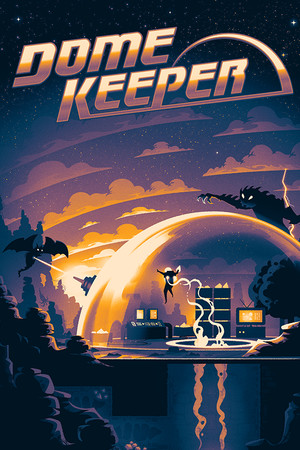
The terms gold, money, gems, diamonds, and coins are not official resource names in the standard game. They may describe the appearance of a material, a translation, a mod, or confusion with another game. This guide uses the official material names: iron, water, and cobalt.
Fast answer
The answer before the background
There are no separate coins, gold, gems, or diamonds in the standard game. The real progression materials are iron, water, and cobalt. Mine them from cave tiles, then spend them on upgrades, repairs, and gadget improvements. For repeatable income, plant a Mineral Tree near resource tiles, use the Resource Converter to turn water into iron or multiply iron, and improve transport with drones, a Resource Packer, Lift, or Teleporter. In short, the best early farm is efficient mining; the best long-run farm combines a Mineral Tree, automated transport, and a suitably upgraded converter.
Verified basics
What counts as currency in Dome Keeper?
The game does not use a shop-style wallet. You do not collect coins and then exchange them at a vendor. Instead, every run revolves around three physical materials: iron, water, and cobalt. You carry them from the mine to the dome, where they become upgrade currency or repair capacity.
Iron is the general-purpose material and appears throughout the upgrade tree. Water is used for upgrades and for powering or improving certain gadgets. Cobalt is especially important for repairs and defensive upgrades. Their shapes and colors can vary with the world palette, so use the resource icon and shape rather than assuming a yellow-looking deposit is gold.
Materials normally come from finite cave deposits. The deeper you mine, the larger deposits tend to become, but deeper routes also cost more time and make transport more important. The exception is repeatable production from gadgets and special cave finds.
- Iron: your main upgrade material and the closest equivalent to ordinary money.
- Water: a flexible upgrade resource that can also feed conversion loops.
- Cobalt: a repair and defense material that is usually more precious than iron.
- Coins, gold, gems, and diamonds: not standard resources in the base game.
| Player term | Actual system | Best use |
|---|---|---|
| Coins or money | Iron, water, and cobalt | Buy upgrades and maintain the dome. |
| Gold | Usually mistaken for iron or a visual variant | Check the icon instead of the color. |
| Gems or diamonds | No standard equivalent | Do not search for a separate gem mine. |
The Resource Converter does not create a universal currency. It changes one material into another, so it is a production tool rather than a shop or coin generator.
Early and mid-run route
The best repeatable farming loop
For most normal runs, do not delay your first upgrades while trying to build a perfect farm. Start by opening a short route from the dome, collect nearby iron, and spend enough material to improve digging, movement, carry capacity, or your chosen weapon. Your first goal is to reduce the time between finding a deposit and returning before the next wave.
Once the immediate route is safe, expand toward larger deposits rather than clearing every tile close to the shaft. A good route has a simple return path, multiple deposits within reach, and enough room to stage resources. If a cave feature sends materials toward the dome, prioritize it over carrying every piece yourself.
Transport upgrades change the value of every deposit. Drones can collect and return resources while you keep mining. A Lift can move a stockpile vertically and is particularly useful when deep veins are too far for normal hauling. A Teleporter is excellent when available, but it requires more setup and careful placement. The Resource Packer compresses carried materials into bundles, allowing fewer trips when you are personally transporting a large haul.
Treat these tools as part of the farm rather than optional convenience. A deposit is only valuable when its material reaches the dome before the run ends.
- Mine a nearby route first and buy basic digging or movement upgrades.
- Target larger or deeper deposits once the route is reliable.
- Stage loose materials near a transport tool instead of making repeated long trips.
- Choose drones for passive collection, Lift for vertical hauling, and Resource Packer for personal carrying.
- Keep enough water and cobalt for urgent upgrades or repairs before converting anything.
| Situation | Recommended route | Why it works |
|---|---|---|
| First waves | Short nearby mining loop | Fast upgrades matter more than a slow farm. |
| Long normal run | Deep deposits plus drones or Lift | Transport keeps mining time productive. |
| Challenge or Prestige run | Converter plus automated collection | Repeatable production can outlast finite deposits. |
| Large stockpile near the bottom | Lift or Teleporter | Vertical distance becomes the main bottleneck. |
There is no single best route for every map. Cave layout, keeper, dome, assignment rules, and gadget choices can make a different transport tool more efficient.
Repeatable production
How to use the Mineral Tree
The Mineral Tree is the closest thing to a true resource farm. It grows fruit or mineral drops in the dome and can continue producing across the run. A tree with no useful resource tiles still provides iron, but planting it where its roots can reach resource tiles gives it access to better output.
The tree favors cobalt over water and water over iron when several resource tiles are within its rooting area. In practical terms, protect a suitable cluster, plant the seed so the tree can reach it, and leave enough room for the branches and drops. Do not strip every tile from the cluster before planting if your plan is to use the tree as a long-run source.
Iron regrows fastest, water takes longer, and cobalt takes longer again. That makes an iron-focused tree a dependable baseline, while a cobalt or mixed-resource tree is more valuable when the run is long enough to wait for slower regrowth. Automated collectors are ideal because loose drops can fall and be gathered without interrupting your mining route.
The tree is a long-run investment, not an emergency answer. If a wave is close or the dome is underpowered, mine immediate deposits first and plant when the opportunity cost is acceptable.
- Plant on or beside a resource cluster that the roots can actually reach.
- Use iron for dependable output, water for flexibility, and cobalt for high-value long-run production.
- Keep the tree near a collection route or automated collector when possible.
- Expect repeated output over time, not an instant payout.
- Check the tree after waves because drops can accumulate or fall from branches.
| Planting choice | Result | When to choose it |
|---|---|---|
| No resource tiles | Basic iron production | You need a safe, convenient baseline. |
| Iron tiles nearby | More reliable iron farming | You want frequent upgrade material. |
| Water tiles nearby | Water production | You plan to power upgrades or conversion. |
| Cobalt tiles nearby | Cobalt production | The run is long enough to benefit from slower regrowth. |
The tree is not a source of coins or diamonds. It produces the same material family used by the rest of the game economy.
Long-run conversion
Resource Converter routes and trade-offs
The Resource Converter can balance your inventory and, with upgrades, become a repeatable production engine. Its starting options exchange water and iron in both directions. Later upgrades can improve water conversion, add iron refinement, or unlock cobalt conversion.
The most useful general loop is usually water into iron when you have spare water and need upgrade material. The maintained reference lists a basic rate of one water to three iron, with upgrades that can reach five or eight iron per water. Other upgrades reduce the iron cost of making water, while the intensive and swift paths trade efficiency or processing time against speed. Read the upgrade panel in your build because these values are balance-sensitive.
Iron refinement is another strong option in a long run: it multiplies a small iron input into a larger iron output. Cobalt conversion can rescue an inventory that is short on one material, but it is rarely the first priority when you still need repairs or defensive upgrades. Automated Conversion is especially valuable because it keeps the machine working while you mine, rather than forcing repeated trips to the dome.
A practical loop is to mine water, feed the converter, let automation produce iron, and have drones or another collector remove the output. Keep a reserve for wave preparation, because converting every drop can leave you unable to buy a time-critical upgrade.
- Use water-to-iron when water is plentiful and iron is limiting your upgrades.
- Use iron refinement when the run is long enough for repeated cycles to matter.
- Take automated conversion when you expect to spend significant time mining away from the dome.
- Use cobalt conversion as a balancing tool, not as an excuse to consume your repair reserve.
- Compare processing time with the remaining number of waves before committing to a loop.
| Converter path | Strength | Main drawback |
|---|---|---|
| Water to iron | Strong repeatable iron supply | Consumes water needed elsewhere. |
| Iron refinement | Multiplies iron in long runs | Needs time and an initial iron reserve. |
| Iron to water | Balances a water shortage | Can reduce your upgrade material. |
| Cobalt conversion | Fixes an uneven inventory | May waste a scarce repair resource. |
Community references document the conversion figures, but patches can alter values. Treat the current in-game upgrade text as the final authority for your platform and mode.
FAQ
Common questions
How do I get coins in Dome Keeper?
You do not collect a separate coin currency in the standard game. Mine iron, water, and cobalt, then use those materials to buy upgrades, improve gadgets, and repair the dome.
What is the best gold farm?
There is no official gold resource. If you mean the material used for most upgrades, farm iron through efficient mining first, then add a Mineral Tree, Resource Converter, and automated transport during longer runs.
How do I get diamonds or gems?
Diamonds and gems are not standard materials in the base game. Look for iron, water, and cobalt deposits instead. A color or shape that resembles a gem does not create a separate currency.
Is the Mineral Tree worth planting on iron?
Usually, yes, when the run will last long enough for repeated growth and the seed can be placed safely. A tree near iron produces a dependable supply, but mining those tiles immediately can be better if you urgently need upgrades.
What is the best Resource Converter strategy?
For general progression, water-to-iron is the simplest repeatable route when water is available. In long runs, add automation and consider iron refinement. Do not convert away the water or cobalt needed for your next essential upgrade or repair.
Sources
What we checked
Official listings establish current availability and product facts. Community pages are used for mechanics and build history, then labeled separately.
- OfficialOfficial Dome Keeper Steam announcements and patch notes, including v5.0.8
- CommunityDome Keeper Wiki: Minerals
- CommunityDome Keeper Wiki: Mineral Tree
- CommunityDome Keeper Wiki: Resource Converter
- CommunityDome Keeper Wiki: Resource Converter upgrades
- CommunityDome Keeper Wiki: Resource Packer