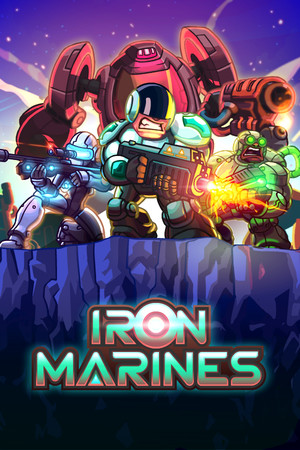
The tier labels below are recommendations, not official balance rankings. Community opinions differ, and a unit can move up or down sharply depending on its upgrades, the hero you use, the mission objective, and the difficulty.
Fast answer
The answer before the background
For most players, start with Rangers, then add Snipers and Shellstorms as the campaign introduces tougher targets and air threats. Diplomats are the strongest defensive support choice, while Brawlers are the best general-purpose heavy ground unit once they are available. Guardians are excellent for fast melee pressure, Engineers help against structures, and Flamewalkers are specialized crowd-control tools rather than an all-purpose pick. For base defenses, combine a damage tower with a shield or radar effect instead of trying to build only one structure type.
Direct recommendation
The practical unit tier list
Iron Marines does not have one permanently correct army. Its normal recruitable units fill three roles: Army units, Empyrean units, and Mechas. Each role covers a different tactical need, so the best composition is usually a small core backed by a counter unit rather than a full squad of one type.
For a blind first attempt at a mission, use Rangers as the core, add one long-range Sniper group, and keep a heavy unit ready for enemies that reach your line. Replace that heavy slot with a Shellstorm when the stage contains frequent aircraft, or with an Engineer when buildings and objectives matter more than combat. On harder missions, a Diplomat plus a Brawler is the most reliable defensive backbone.
- Top general-purpose choice: Ranger, especially after its defensive and grenade upgrades.
- Top support choice: Diplomat, because shields protect the units doing the damage.
- Top heavy ground choice: Brawler, because its armor and damage let it hold a position.
- Top long-range choice: Sniper, when you can protect it from melee attacks.
- Top anti-air Mecha choice: Shellstorm, when flying enemies are a major part of the wave.
- Best specialist choices: Engineer for structures and Guardian for fast melee attacks.
| Tier | Recommended units | Best use |
|---|---|---|
| S | Diplomat, Brawler | Hard defense, chokepoints, bosses, and late-game ground waves. |
| A | Ranger, Sniper, Shellstorm, Guardian | Flexible campaign play, priority targets, aircraft, and mobile assaults. |
| B | Engineer, Channeller | Structure damage, burst opportunities, and situations where their special ability is protected. |
| C | Flamewalker | Crowd control and burning zones, but too specialized to be the default investment. |
The official material confirms the game's unit variety, upgrades, heroes, towers, and mission variety. The tier placement itself is a gameplay recommendation based on unit roles and recurring community evaluations, not a developer-published ranking.
Progression plan
What to use from the first planet to the last
On Sagan-1, favor Rangers while you learn the campaign. The planet is introduced as a mining colony with natural dangers and alien enemies, so speed, steady ranged fire, and the ability to reposition are more valuable than committing early to a slow specialist. Add Engineers only when the objective or map layout makes structures a central problem.
On Ascendaar, expect missions where defensive positioning and mechanical threats matter more. This is the best point to invest in Snipers for priority targets and Shellstorms for air coverage. Keep Rangers or another durable frontline unit between fragile long-range troops and enemies that can close the distance.
On Borealis, use a more deliberate army. Frozen objectives and difficult defensive stages reward Diplomats behind Brawlers, with Snipers covering approaches and Shellstorms handling aircraft. Guardians are useful when the map demands a fast response force, but they should not replace all ranged damage because they cannot attack flying enemies.
The campaign contains 21 missions across three worlds, while the official store also lists 21 Special Operations and Casual, Normal, Veteran, and Impossible difficulty choices. That progression makes a flexible roster more useful than rushing one unit to maximum power.
- Early progression: Rangers first, then one Sniper group for long-range damage.
- Mid progression: Unlock or upgrade Shellstorms before air-heavy missions become a problem.
- Late progression: Prioritize Diplomats and Brawlers for defensive missions and Impossible Mode attempts.
- Keep at least one mobile or ranged option available for objectives that separate your army.
| Progression point | Core army | Swap when the map demands it |
|---|---|---|
| Early campaign | Rangers with a hero | Engineers for structure-heavy objectives. |
| Middle campaign | Rangers, Snipers, and a heavy unit | Shellstorms for air waves; Guardians for mobile assaults. |
| Late campaign | Diplomats, Brawlers, and protected ranged damage | Channellers for burst windows or special mission rules. |
The world order and campaign structure are documented by official and reference pages. The recommended unit order is an inference from the published unit roles and practical mission demands; it is not a guaranteed solution for every stage.
Map and mode advice
Choose by objective, not by a universal tier
For holdout and base-defense missions, place Brawlers where ground enemies must pass and keep Diplomats close enough to shield the frontline. Snipers should stand behind that screen, where their long range can remove dangerous targets before they reach the objective. Add a Shellstorm if the stage sends aircraft toward the base.
For rescue, escort, or multi-location missions, Rangers become more valuable because they can move quickly and still contribute respectable ranged damage. Guardians can reinforce a threatened side, but avoid sending your entire force away from the objective. A fast unit is only useful if you retain enough damage to protect the base.
For structure, hacking, or demolition objectives, Engineers deserve a temporary promotion in your priority list. Their plasma attack is designed to interact with structures, so they can save time even when another unit would deal more direct combat damage. Protect them with Rangers, Brawlers, or a Diplomat rather than expecting them to survive alone.
For Special Operations, read the rule before choosing your army. These stages use their own combat rules, so a unit that dominates a normal campaign mission may be inefficient when deployment, timing, or survival conditions change. In Impossible Mode, defensive support and efficient positioning generally matter more than flashy damage.
- Ground-heavy map: Brawler plus Diplomat, supported by Snipers.
- Air-heavy map: Shellstorm early, with Rangers or another ground unit covering it.
- Wide or mobile map: Rangers and a hero that can reposition quickly.
- Structure-heavy map: Engineers protected by a frontline unit.
- Special Operation: Select counters after reading the stage rule, not from the campaign tier list.
| Mission signal | First unit to consider | Reason |
|---|---|---|
| Many ground attackers | Brawler | Durable front line and strong ground damage. |
| Frequent flying enemies | Shellstorm | Its role is specifically suited to aerial threats. |
| High-value or armored targets | Sniper | Long range and high single-target damage. |
| Buildings or defensive structures | Engineer | Better objective pressure than a normal combat unit. |
| Several threatened locations | Ranger | Fast, flexible response unit. |
The official game page names Laser Turrets, Machine Guns, Missile Silos, Shield Generators, and Radars, but the sources reviewed do not provide a current numerical balance table. Treat them as complementary defenses: damage structures for immediate firepower, plus shield or radar support when the map rewards survival or information.
Execution checklist
How to build the army before pressing start
First, inspect the enemy preview and objective. If the stage emphasizes aircraft, buildings, or a timed defense, that information should change your roster. Second, establish one safe damage position rather than scattering every unit across the map. Third, deploy the frontline before fragile specialists, then place Snipers or Engineers where they can work without being surrounded.
Upgrade the units that match your actual failure point. If Rangers die too quickly, improve their defensive tools before buying another damage specialist. If tough targets survive to the base, invest in Snipers or Brawlers. If aircraft are reaching the objective, stop adding ground units and upgrade Shellstorms instead.
Finally, keep a reserve. A unit that is technically weaker in a tier list can be the correct choice if it reaches a distant objective, protects a structure, or answers an enemy type your main army cannot handle.
- Check the objective and enemy types before spending resources.
- Build one protected frontline and place fragile damage dealers behind it.
- Use heroes to cover weaknesses instead of duplicating the same role.
- Upgrade the unit that solves your current loss condition.
- Retain enough resources for an emergency reinforcement or special weapon.
Use Rangers to learn and progress, then make Diplomats and Brawlers the center of difficult defensive armies. Add Snipers, Shellstorms, Engineers, or Guardians as map-specific answers. That approach is more dependable than treating any single unit as the winner on every world and mode.
FAQ
Common questions
What is the best unit for new players?
Rangers are the safest starting choice. They are flexible, mobile, ranged, and durable enough to handle ordinary campaign pressure while you learn enemy patterns and objectives.
Are Diplomats really worth using on difficult missions?
Yes, as a recommendation rather than an official ranking. Their shielding role becomes increasingly valuable when a mission requires a frontline to survive repeated waves, especially when paired with Brawlers or other durable units.
Should I use Snipers or Engineers first?
Use Snipers for combat problems such as dangerous elites and distant targets. Use Engineers when buildings, generators, or other structures are the main obstacle. Neither should replace your frontline.
What counters flying enemies?
Shellstorms are the clearest dedicated choice among the listed Mecha roles. Keep them protected by ground units and avoid relying only on Guardians, because Guardians cannot attack flying enemies.
Is Flamewalker bad?
Not necessarily. Flamewalker is useful when area damage, burning zones, or crowd control solve the mission. It ranks lower here only because it is less dependable as a universal investment than Rangers, Diplomats, Brawlers, or Shellstorms.
Does this apply to Iron Marines Invasion?
Only partly. Invasion is a separate game with more unit groups, different worlds, and different mission rules. Its official description emphasizes combining heroes and units, so use this article for role principles rather than copying the exact ranking.
Sources
What we checked
Official listings establish current availability and product facts. Community pages are used for mechanics and build history, then labeled separately.
- OfficialIron Marines official Steam store page
- OfficialIron Marines official universe page
- OfficialIronhide Game Studio official Iron Marines Invasion page
- OfficialIron Marines Presskit
- ReferenceIron Marines Wikia unit reference
- CommunityCommunity unit tier-list discussion