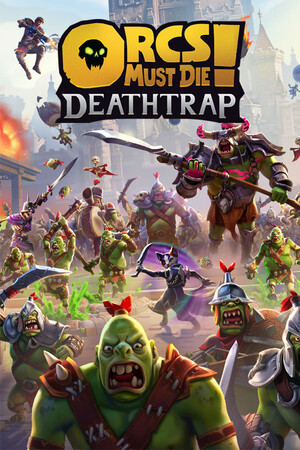
Some rankings are recommendations rather than official tier placements. The developers confirm hero weapon roles and several balance changes, but they do not provide a complete universal damage tier list.
Fast answer
The answer before the background
For a dependable all-round setup, use a ranged War Mage such as Vaan or Max, pair the weapon with Barricade, Tar, and one reliable damage trap, and take accessories that improve trap uptime or survivability. Use a close-range hero such as Harlow or Sophie when the stage gives you a compact kill box. For long corridors, prioritize repeatable area damage and crowd control. For Endurance or high skull difficulty, value trap economy, healing, and anti-air coverage over a weapon’s training-room damage.
Direct recommendation
Pick the build before the weapon
Deathtrap does not work like a traditional loot game in which you collect a superior sword and replace it later. Each War Mage has a distinctive primary weapon, abilities, hero trap, and movement option. That means the practical question is not simply which weapon has the highest damage. It is which hero gives your chosen trap package the best support.
For most runs, start with a hero who can contribute safely from range. Vaan is a strong default because his crossbow-style attacks are easy to use, while his abilities help protect the Rift and support a trap-focused plan. Max is another flexible ranged choice, especially when you want frequent stuns and strong direct intervention. These are recommendations, not official rankings.
- Use ranged attacks to remove fliers, hunters, unstable threats, or enemies that bypass the main lane.
- Use melee or short-range weapons only when the map lets you fight from behind barricades or inside a controlled kill box.
- Do not judge a hero by primary damage alone. Special abilities, movement, hero traps, and Threads can change the result of an entire run.
| Build goal | Recommended direction | Why it works |
|---|---|---|
| Safe solo learning | Vaan or Max with Barricade, Tar, and a dependable damage trap | You can handle leaks without abandoning the kill box. |
| Close-range kill box | Harlow or Sophie with slow, stun, or damage-amplifying traps | Short lanes let their stronger close-range tools stay active. |
| Trap-first control | Wren or Vaan with reset, slow, and trap-buffing options | The hero spends less time chasing individual enemies. |
| Support co-op | Kalos or another utility-focused hero with healing and control | The team gains recovery and safer opportunities to build combos. |
The official store description says War Mages have unique weapons, abilities, traps, and personalities. A developer explanation also states that weapons are intentionally tied to individual characters so heroes can have more varied identities.
By build
Best equipment packages for common playstyles
For a general-purpose damage build, combine a ranged hero weapon with Tar or another slowing tool, one area-damage trap, and one answer to fliers or large enemies. The slow effect is valuable because it increases the time enemies spend inside every other trap. Place the control trap before the main damage zone, not at the end of the lane.
For a physics build, choose a map with pits, lava, acid, or long drops. Barricades and a push, launch, or pull effect become more important than raw weapon damage. This approach can be excellent on suitable stages but unreliable on flat maps or against enemies that resist displacement. Do not spend every upgrade on physics equipment until you know the stage supports it.
For a status-effect build, mix damage types instead of stacking one effect blindly. Use a control effect to hold enemies in place, then apply damage from several trap categories. This is especially useful when a Thread or distortion changes enemy resistances or makes a familiar status effect less reliable.
For a sustain build, take healing, defensive, or revive-friendly equipment when playing Endurance, high skull difficulty, or unfamiliar maps. The best item is often the one that prevents a death, preserves Rift health, or lets you keep placing traps while under pressure.
- General damage: ranged weapon, Tar, area damage, anti-air, and one flexible slot.
- Physics: Barricade, displacement tool, and traps positioned around environmental hazards.
- Status control: slow or stun first, then damage-over-time and repeated area attacks.
- Endurance: healing, trap economy, cooldown reduction, and safe emergency tools.
| Use case | Best equipment priorities | Avoid |
|---|---|---|
| New player | Reliable ranged weapon, Tar, Barricade, and a simple damage trap | Highly positional physics traps on unknown maps |
| Boss waves | Single-target damage, large-enemy bonuses, and room to kite | A loadout that only kills light enemies |
| Fliers | Anti-air coverage plus a weapon that can aim accurately | Relying only on floor traps |
| Long corridors | Persistent area damage, slow effects, and traps with repeatable uptime | Short-range tools that require constant repositioning |
| Compact rooms | Blunderbuss or melee pressure, barricades, and close-range control | Weapons that need long sight lines |
Treat the weapon as one part of the build. A modest weapon supported by a well-shaped lane can outperform a stronger weapon used without control, combo setup, or anti-air coverage.
By stage and progression
How to adapt equipment during a run
On the first missions, favor cheap and dependable equipment. You need enough starting currency to create a functional lane, and an expensive trap that requires several upgrades may leave the early waves under-defended. Upgrade the traps that define your plan before spreading skulls across every unlocked option.
On larger maps, check ceiling space and the distance between spawners and the Rift. A ceiling-heavy setup may be excellent in a hallway but impossible in an outdoor section. The official updates added larger maps, Endurance, and new traps, so older advice that assumes a fixed map pool can be misleading.
During a run, choose Threads that reinforce what the map already offers. Trap cooldown, placement capacity, damage to large enemies, anti-air bonuses, and economy effects are usually safer than a bonus that only works when enemies stand in one exact location. Reroll or skip a poor option when the alternative would force you to abandon your build.
In Endurance, plan for the later waves rather than maximizing the first few. Keep a reserve of currency, leave a fallback lane near the Rift, and carry at least one answer to enemies that ignore or disrupt your preferred trap pattern.
- Before placing traps, identify the shortest route to the Rift and the safest final fallback.
- Build one reliable kill box before investing in secondary lanes.
- Check whether the stage gives you ceiling, wall, floor, or environmental opportunities.
- Save one equipment slot for threats the stage has already shown you.
| Stage condition | Adjustment |
|---|---|
| Open area | Use ranged attacks, anti-air, and traps that do not require a low ceiling. |
| Narrow hallway | Exploit Barricades, Tar, repeated area damage, and close-range weapons. |
| Multiple rifts | Prefer mobile heroes and flexible traps over a single specialized kill box. |
| Endurance | Value economy, healing, cooldowns, and fallback coverage. |
| Frequent hunters or fliers | Keep a weapon or trap that can target them without relying on ground pathing. |
The official September 2025 update added 25-wave Endurance missions, new accessories, and new traps. It also increased the available skull difficulty modifier to 20, making flexible late-run equipment more important than a narrow early-wave setup.
Practical verdict
A short ranking by use case
If you want one answer, choose a reliable ranged War Mage and build the lane around control. If you want the safest learning route, start with Vaan or Max. If you enjoy aggressive close-range play, Harlow or Sophie can be excellent when the map lets them stay near the kill box. If your group already has damage, add utility, healing, or trap support rather than duplicating the same role.
The strongest equipment is therefore conditional. Ranged weapons win for safety and coverage. Blunderbuss-style or melee weapons win in compact lanes. Trap-support heroes win when the team has enough damage but struggles with uptime, positioning, or recovery. No public official source establishes a single best weapon for every hero, stage, distortion, and difficulty.
- Best general-purpose choice: a ranged hero with control and anti-air support.
- Best close-range choice: a short-range hero behind barricades and slowing traps.
- Best trap-focused choice: a hero who improves placement, resets, or trap uptime.
- Best high-difficulty choice: the loadout that preserves Rift health and survives bad Threads.
- Best co-op choice: complementary roles rather than four identical damage builds.
| Ranking | Use case | Recommended answer |
|---|---|---|
| 1 | All-round solo | Vaan or Max with a control-first trap package |
| 2 | Compact kill box | Harlow or Sophie with close-range control |
| 3 | Trap specialist | Wren or Vaan with cooldown and placement support |
| 4 | Team sustain | Kalos or another utility-focused hero |
| 5 | Environmental gimmick | Physics equipment only on a stage built for it |
Community opinions often place different heroes or weapons at the top because maps, Threads, difficulty, and personal aim produce very different results. Use the ranking as a starting point, then replace one slot at a time after observing what actually leaks.
FAQ
Common questions
Is there one best weapon for every War Mage?
No. Weapons are tied to heroes, and each hero has different abilities, traps, movement, and upgrade paths. A ranged weapon is usually the safest general recommendation, but a close-range weapon can be better in a compact barricade kill box.
Should I prioritize weapon upgrades or trap upgrades?
Prioritize the upgrades that support the way enemies die on your map. Trap upgrades usually give better returns when your lane handles most enemies, while weapon upgrades matter more when you must personally remove fliers, hunters, bosses, or trap-resistant threats.
What is the best beginner equipment setup?
Use a reliable ranged hero, Barricade, Tar or another slow, one repeatable damage trap, and one anti-air or emergency option. This package teaches positioning, combo setup, and fallback defense without requiring a highly specialized map.
Are physics traps worth using?
Yes, but only when the stage provides a dependable hazard or a long launch route. They are powerful when the environment does the killing, but they are less consistent on flat maps, against resistant enemies, or when enemy paths change.
What should I bring into Endurance?
Bring equipment that remains useful for many waves: slow, repeatable area damage, anti-air coverage, healing or defensive support, and a flexible emergency slot. Keep currency for repairs and later additions instead of spending everything on the opening kill box.
Sources
What we checked
Official listings establish current availability and product facts. Community pages are used for mechanics and build history, then labeled separately.