Features, review counts, prices, and future plans can change. The recommendations below are based on verified store descriptions and developer announcements, not on unverified community claims or assumed patch content.
Fast answer
The answer before the background
Pick Rogue: Genesia if you want the more strategic and system-heavy game. It offers route choices, more than 300 passive upgrades, more than 50 weapons, artifacts, and multiple avatars. Pick Megabonk if you prefer immediate 3D action, randomly generated maps, loot, quests, and a large roster of characters. For a fair comparison, use vanilla Rogue: Genesia first. Mods can add excellent variety, but they change the balance and make direct comparisons less reliable.
Direct comparison
Which game fits your play style?
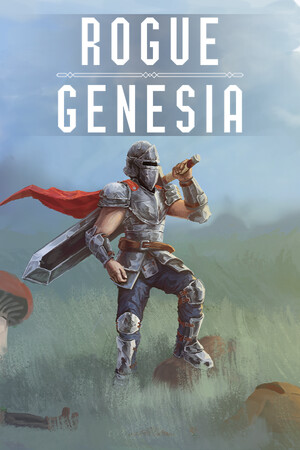
Both games belong to the horde-survival or bullet-heaven family, but they emphasize different kinds of decision-making. Rogue: Genesia is built around planning a run, choosing routes, shaping a build, and exploiting interactions between upgrades. Its store description lists more than 300 passive upgrades, more than 50 weapons, over 80 artifacts, and multiple avatars.
Megabonk is more immediately arcade-like. Its official Steam page highlights randomly generated maps, loot, randomly varying upgrade rarity, 240 in-game quests, 20 characters, and more than 70 unique items. That makes it the better fit when you want a run to feel like a fast, chaotic loot hunt rather than a carefully mapped build experiment.
- Choose Rogue: Genesia for strategic route choices, build planning, and long-term experimentation.
- Choose Megabonk for 3D movement, faster visual feedback, random maps, and a clear checklist of quests and unlocks.
- Neither is automatically better; they reward different kinds of attention.
| Decision criterion | Better choice | Why |
|---|---|---|
| Deep build planning | Rogue: Genesia | More passive upgrades, weapons, artifacts, and route decisions create more room for deliberate synergy hunting. |
| Fast arcade action | Megabonk | Its 3D presentation, random maps, loot, and upgrade rarity make the loop feel more immediate. |
| Structured unlock checklist | Megabonk | The store page explicitly lists 240 quests, 20 characters, and 70-plus items. |
| Strategic run routing | Rogue: Genesia | The game lets you choose the path through a run, including combat and shop-style decisions. |
| Mod experimentation | Rogue: Genesia | It has Steam Workshop support and a dedicated modding ecosystem. |
| Simple recommendation for newcomers | Megabonk | Its core loop is easy to understand: move, collect, level up, upgrade, and survive. |
If you are unsure, start with Rogue: Genesia when you enjoy theorycrafting and start with Megabonk when you want the quickest route to entertaining runs.
Practical choice
Rogue: Genesia modded vs vanilla
Vanilla is the correct starting point for most players and for any fair comparison with other games. It preserves the developer's intended balance, progression, achievements, and difficulty assumptions. It also gives you a stable reference point before you decide whether you want custom content.
The modded version is better treated as an extension rather than a separate edition. Rogue: Genesia has official Steam Workshop support, and the Workshop currently includes modding-related content. Community tools can add cards or alter systems, but the exact quality, compatibility, and balance depend on each individual mod.
Use this simple process: play enough vanilla runs to understand the baseline, back up saves if a mod recommends it, install one mod at a time, and disable mods when testing a guide or reporting a bug. Do not assume a mod works with every current build or with every other mod.
- Use vanilla for first impressions, achievements, guides, and competitive comparisons.
- Use mods for custom cards, balance experiments, novelty runs, or extending replay value.
- Treat modded results as non-standard because damage, progression, and available choices may change.
- Do not assume the announced future modding API and tools are already part of the live game.
| Version | Best for | Main drawback |
|---|---|---|
| Vanilla | Learning the intended systems and comparing games fairly | Less experimental variety than a heavily modded setup. |
| Modded | Custom content and replayability | Compatibility and balance vary by mod and game version. |
The developer has discussed a future 2.0 update involving a new modding API and tools, but the announcement describes it as planned work. It should not be counted as a released feature until the developer confirms its launch.
Alternatives
How the other games compare
Death Must Die is the closest alternative if you want a more character-focused roguelite RPG structure. Its official description centers on heroes, blessings from a pantheon of gods, personal stories, and attempts to defeat Death. Choose it when character identity and narrative framing matter more than route planning.
Halls of Torment is the strongest alternative for players who want short, clearly structured runs and a retro PC-RPG presentation. Its store page describes roughly 30-minute runs, quest-based meta progression, distinct heroes, unique items, multiple underground worlds, and bosses with their own attack patterns.
Soulstone Survivors is the best alternative for players who want a larger skill-and-crafting sandbox. Its current store description lists more than 350 skills, more than 100 unique weapons, a large skill tree, curses, multiple maps, and several game modes. That breadth makes it appealing if your priority is building and rebuilding characters rather than navigating a route.
- Choose Death Must Die for hero stories, god blessings, and a darker RPG tone.
- Choose Halls of Torment for compact runs, retro visuals, quests, and boss mechanics.
- Choose Soulstone Survivors for enormous skill variety, crafting, and deep character progression.
- Choose Rogue: Genesia when you want the strongest blend of route decisions and build experimentation.
| Alternative | Best reason to choose it | Compared with Rogue: Genesia |
|---|---|---|
| Death Must Die | Hero identity and narrative flavor | More character-and-story focused; less centered on route planning. |
| Halls of Torment | Short runs and retro RPG atmosphere | More structured and compact, with strong boss and quest emphasis. |
| Soulstone Survivors | Skills, weapons, crafting, and build breadth | A larger ability sandbox, especially for players who enjoy constant respec-style experimentation. |
Feature totals are not a complete measure of quality. A smaller roster or item list can still produce a better experience if its decisions, pacing, and presentation match your preferences.
Decision guide
A five-step way to choose
Use the following test before buying or switching. It focuses on how you actually want to spend your time rather than which store page lists the most content.
- Choose deliberate planning: If you enjoy deciding which route, shop, enemy, or upgrade to take, favor Rogue: Genesia.
- Choose immediate momentum: If you want to move through a 3D map, grab loot, and see power rise quickly, favor Megabonk.
- Choose character construction: If hundreds of skills, weapon crafting, and a broad skill tree are the main attraction, consider Soulstone Survivors.
- Choose short, readable sessions: If you want compact runs with clear quests and bosses, consider Halls of Torment.
- Choose narrative flavor: If heroes, gods, and personal stories sound more appealing than abstract build optimization, consider Death Must Die.
- Choose community experimentation: If custom cards and balance experiments are important, use Rogue: Genesia with Workshop content after learning the vanilla game.
| Your priority | Best first pick |
|---|---|
| Route choices and passive synergy | Rogue: Genesia |
| 3D loot-driven arcade runs | Megabonk |
| Hero stories and divine blessings | Death Must Die |
| Retro visuals and compact sessions | Halls of Torment |
| Huge skill and crafting sandbox | Soulstone Survivors |
For most players comparing the two headline choices, Rogue: Genesia is the deeper strategy game, while Megabonk is the more immediately accessible action game. Buy the former for systems and the latter for momentum.
Verdict
The final recommendation
Rogue: Genesia is the better pick for players who want to study systems, route a run carefully, and chase unusual interactions across weapons, passives, artifacts, and avatars. Its Workshop support also gives it the stronger long-term experimentation angle, although modded play should be separated from the vanilla baseline.
Megabonk is the better pick for players who want a fast, colorful, 3D survival loop with random maps, loot, quests, characters, and item synergies. It is easier to recommend as a straightforward arcade purchase because its core promise is simple and visible from the first run.
If you already own one, the other is worthwhile when you want contrast rather than a duplicate. Move from Rogue: Genesia to Megabonk for a lighter, more kinetic experience. Move from Megabonk to Rogue: Genesia when you want more deliberate route and build decisions.
- Best overall for strategy: Rogue: Genesia.
- Best overall for immediate action: Megabonk.
- Best mod-friendly option: Rogue: Genesia, using a verified Workshop mod and the matching game build.
- Best alternative for ability breadth: Soulstone Survivors.
- Best alternative for short retro runs: Halls of Torment.
FAQ
Common questions
Is Rogue: Genesia harder than Megabonk?
There is no universal difficulty winner. Rogue: Genesia can feel harder when its route and build decisions punish poor planning, while Megabonk can feel harsher when random upgrades or map pressure work against you. Compare their learning curves rather than assuming one has a fixed higher difficulty.
Should I play modded Rogue: Genesia immediately?
No. Start with vanilla so you understand the intended progression and can identify whether a later problem comes from the game or a mod. Add one Workshop mod at a time and check its compatibility notes.
Which game has more build variety?
The answer depends on how you measure variety. Rogue: Genesia emphasizes passive upgrades, weapons, artifacts, routes, and avatars. Soulstone Survivors advertises the largest raw ability and crafting sandbox among these comparisons. Megabonk focuses more on characters, items, loot, and randomly varying upgrades.
Is Megabonk a direct replacement for Rogue: Genesia?
It is a strong alternative, not a one-to-one replacement. Megabonk delivers more 3D arcade energy and loot-driven randomness, while Rogue: Genesia puts more weight on route selection and deliberate build planning.
Which alternative should I choose instead?
Choose Death Must Die for hero stories, Halls of Torment for short retro-styled runs, and Soulstone Survivors for skills, crafting, and a broad progression tree. Your preferred pacing and build structure matter more than the feature count.
Sources
What we checked
Official listings establish current availability and product facts. Community pages are used for mechanics and build history, then labeled separately.
- OfficialRogue: Genesia official Steam store page
- OfficialRogue: Genesia official Steam announcements
- CommunityRogue: Genesia Steam Workshop
- OfficialMegabonk official Steam store page
- OfficialDeath Must Die official Steam store page
- OfficialHalls of Torment official Steam store page
- OfficialSoulstone Survivors official Steam store page