Recommendations are partly evidence-led and partly practical judgment. The developer provides feature and patch information, but does not publish an official hero or weapon ranking. Community wiki data can also lag behind later balance changes.
Fast answer
The answer before the background
There are no placeable towers or conventional tower units in Scarlet Tower. For the closest equivalent to a tier list, build around a dependable area weapon, one high-impact fusion, and enough defense to survive the night cycle. Holy Bible plus Hellfire Staff is a strong general-purpose direction because it covers close-range protection and burning area damage through Underworld Tome. Sacred Water is an excellent early control option, while Glacial Staff or Blizzard Wand helps against dense waves. For bosses and high corruption, add a piercing or high-damage weapon such as Celestial Sword, Templar Shield, or a proven fusion, then spend permanent resources on the hero, racial trait, talents, equipment, and familiar that support that plan.
Important terminology
Scarlet Tower does not use towers
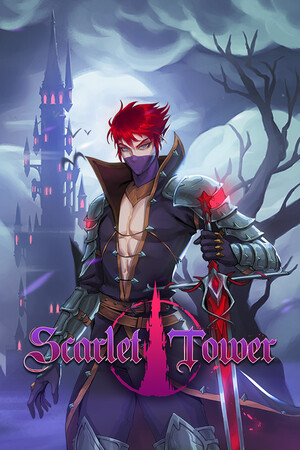
The game is a gothic survival roguelike rather than a tower-defense title. The official store describes heroes with unique weapons, abilities, and talents, more than 70 weapons, weapon fusion, passive abilities, familiars, runes, a day-and-night cycle, and Endless Mode. That means a conventional tower comparison would be misleading.
For this page, “best towers” means the strongest practical equivalents: heroes, main weapons, secondary weapons, fusions, and permanent progression choices. The ranking below is therefore a build guide, not an official in-game tier list.
- Verified: each hero has a unique main weapon and can use secondary weapons.
- Verified: weapon fusions combine two secondary weapons into one stronger weapon.
- Uncertain: no current official source confirms a definitive S-tier ranking for every hero or weapon.
| Need | Best practical direction | Why it works |
|---|---|---|
| General clearing | Holy Bible, Sacred Water, or Glacial Staff | Covers nearby enemies, creates area damage, or applies chill. |
| Boss damage | Celestial Sword, Templar Shield, or a high-damage fusion | Prioritizes piercing, large hits, or reliable damage during movement. |
| Nightmare survival | An area weapon plus defense, healing, or control | Prevents one damage type from carrying the entire run. |
| Endless progression | Several complementary weapons rather than one theme | Long runs expose weaknesses in range, cooldowns, and defense. |
The weapon roles above are recommendations based on the listed effects and fusion structure. They are not developer-published rankings.
Early progression
Best first build for new players
Start with the hero you can use consistently rather than spending early resources chasing a perfect roster. The first objective is to make the opening minutes safe enough to level, collect skulls or other run resources, and reach vendors and nighttime events without losing control of the screen.
A simple early plan is one close-range weapon, one area weapon, one control or defensive option, and then damage improvements. Holy Bible is a natural close-range pick because it orbits the character. Sacred Water adds a persistent damaging area, while Glacial Staff applies Chill and helps slow the pressure of dense groups. These choices also leave room to learn movement instead of relying on precise aiming.
Do not force a fusion before the run is stable. A rank-one fusion can be powerful, but abandoning basic coverage too early can make the minutes before the fusion dangerous. Take easy upgrades first, then complete the fusion when both required weapons are already useful.
- Prioritize area coverage before narrow single-target damage.
- Take cooldown, projectile, damage, and survivability upgrades that improve several weapons at once.
- Keep at least one weapon that protects the space immediately around the hero.
- Use vendors and nighttime-only opportunities when the route is safe; do not sacrifice a winning run for an optional pickup.
| Progression point | Priority | Avoid |
|---|---|---|
| First levels | Area damage and survivability | Stacking several slow, low-coverage weapons |
| Mid-run | Complete one dependable fusion | Chasing multiple unfinished fusion recipes |
| Before the first major boss | Boss damage or piercing | Pure crowd clear with no single-target answer |
| Permanent upgrades | Hero passives, racial traits, talents | Spreading resources evenly across every option |
A slightly weaker build that covers crowds, bosses, and emergencies is more reliable than a damage-only setup that collapses when the night cycle intensifies.
Mode and map choices
How to adapt the build by content
For ordinary map progression, favor flexible weapons that function without a narrow enemy type or perfect positioning. Holy Bible, Sacred Water, Glacial Staff, and their related upgrades are sensible foundations because they offer persistent coverage or control. Add one weapon that can reach or heavily damage elites and bosses.
Nightmare Mode is explicitly designed as a harder mode with stronger enemies and better rewards. The official update also added equipment, reforging, new passives, familiars, and new maps, so late-game strength is not determined by weapons alone. In this mode, defensive equipment, healing, armor, movement speed, or cooldown support can be worth more than another modest damage increase.
Ashen Woods and Holy Islands were added with the Ashen Nightmare content, while Scarlet Tower is identified by the community reference as the final playable map. The available sources do not provide a complete, verified per-map weapon ranking. Treat map-specific advice as a role check: use broad area damage in crowded routes, control where enemies compress, and add boss damage when the map’s threat is elite-heavy.
Endless Mode should be treated differently from a normal clear. A build that wins a short run may fail later because cooldowns, range, summon limits, or defense become limiting factors. Keep at least one scaling damage source and avoid filling every slot with weapons that do the same job.
- Normal progression: choose consistency and easy upgrades.
- Nightmare: trade some damage for defense, control, and equipment synergy.
- Final-map attempts: bring dependable boss damage and do not rely on one damage type.
- Endless: build for sustained coverage, cooldown efficiency, and late-run survivability.
| Content | Recommended emphasis | Reason |
|---|---|---|
| Early maps | Coverage and simple upgrades | You are still unlocking the roster and permanent systems. |
| Scarlet Tower | Boss damage plus defensive backup | The community reference lists dangerous elites and bosses on the final map. |
| Holy Islands and Ashen Woods | Flexible damage and equipment support | These areas belong to the newer 2.0 content and should not be judged by older guides alone. |
| Nightmare and Endless | Survival, scaling, and completed fusions | Longer or harder runs punish narrow builds. |
A current, developer-maintained table that ranks every weapon by map was not found. Any guide claiming a universal map-by-map tier list should be treated cautiously unless it shows its patch and testing method.
Build process
A practical five-step setup
Use the following process whenever you unlock a new hero, weapon, or map. It keeps the build adaptable without requiring a fixed tier list.
First, identify the hero’s main weapon and decide whether it already covers crowds, bosses, defense, or utility. Second, choose secondary weapons that fill the missing roles instead of duplicating the main weapon. Third, check the fusion recipe before committing several level-up choices. Fourth, use permanent talents, racial traits, runes, familiars, and equipment to reinforce the same plan. Finally, test the build on the target map and record what actually caused the failure: leaks, elites, bosses, damage taken, or an unfinished fusion.
This method is more dependable than copying a list made for a different patch. The official 2.0 update changed the equipment and balance environment, and later official fix posts show that the game continued receiving 2.0.x adjustments.
- Keep one slot for immediate crowd control or protection.
- Keep one slot for elite and boss damage.
- Complete one fusion before starting a second ambitious recipe.
- Upgrade permanent systems that benefit several heroes when resources are limited.
- Retest after balance updates, especially if a weapon’s cooldown, damage, or fusion behavior changes.
| If you keep dying to... | Change first |
|---|---|
| Small enemies surrounding you | Add orbiting, area, chill, or defensive damage. |
| Elites reaching you | Add piercing, stronger burst, or more movement speed. |
| Bosses taking too long | Replace a redundant crowd weapon with a high-damage or boss-focused option. |
| Nightmare attrition | Improve healing, armor, defense, equipment, or cooldown support. |
The process is a recommendation. The verified parts are the game’s hero, weapon, fusion, map, mode, equipment, and progression systems described by the official store and update material.
FAQ
Common questions
Is there an actual tower tier list for Scarlet Tower?
No verified official tower tier list was found, and the game does not use placeable towers in the usual tower-defense sense. The useful comparison is between heroes, weapons, fusions, talents, familiars, and equipment.
What is the best weapon combination for beginners?
Use one close-range or protective option, one persistent area weapon such as Sacred Water, and one control or wave-clear option such as Glacial Staff. Add a boss-damage weapon before the first major boss, then complete the easiest useful fusion available.
What should I use for Nightmare Mode?
Do not copy a pure damage setup automatically. Nightmare rewards stronger enemies with better rewards, so combine area damage with defense, healing, control, equipment bonuses, and a weapon that can hurt elites and bosses reliably.
Are Holy Bible and Hellfire Staff always the best choices?
They are strong general-purpose recommendations, not guaranteed best-in-slot choices for every hero, map, or patch. Their value comes from combining close-range protection with burning area damage through Underworld Tome, but a different fusion can be better when your hero or equipment favors another damage type.
Why do different guides disagree about the best build?
Scarlet Tower has many interacting systems, including hero passives, racial traits, talents, familiars, runes, equipment, fusions, corruption, map events, and difficulty. A build that is excellent for a short normal clear can be poor in Nightmare or Endless, and later 2.0.x fixes may also change results.
Sources
What we checked
Official listings establish current availability and product facts. Community pages are used for mechanics and build history, then labeled separately.