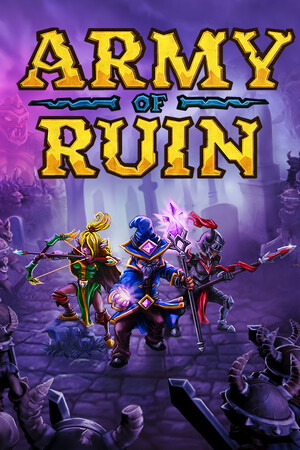
Some character details and build recommendations come from community references because the developer does not publish a complete modern character database. Treat those recommendations as practical starting points, not permanent rankings.
Fast answer
The answer before the background
Start with Saul if you want the most forgiving general-purpose route. Level Magic Staff early, then add one close-range weapon, one screen-wide weapon, and one control option while prioritizing fire rate, projectiles, damage, and experience. Choose Ogol for health regeneration and melee safety, Neptune for large-area control and freeze or poison packages, and Midas when the goal is currency rather than the fastest first clear. In every case, secure early coverage before committing to elemental weapon evolutions.
Fast answer
Pick the class for the job
Army of Ruin characters function like classes: each enters a mission with a fixed primary weapon, a charged active skill, and passive traits that shape the run. The official character system is therefore more important than a universal tier list. A weapon that is excellent for one passive can be awkward on another character.
For learning stages, choose reliable coverage and low setup cost. For bosses, add focused damage and a safe way to keep enemies away. For endless or stationary objectives, favor regeneration, pickup range, automatic attacks, and knockback. Challenge runs can reverse the order because the required weapon, element, or movement rule may matter more than raw power.
- Saul: easiest general-purpose starter and a strong lesson in fire-rate scaling.
- Ogol: durable melee class with health regeneration, attack size, and emergency crowd control.
- Neptune: control-oriented specialist that benefits from broad area scaling.
- Midas: economy specialist whose active skill and passive route are strongest when farming gold.
| Character | Best role | Main stats | Main risk |
|---|---|---|---|
| Saul | Learning and balanced clears | Fire rate, trinket levels, damage, projectiles | Magic Staff loses impact against dense late waves. |
| Ogol | Close-range sustain | Attack size, health, regeneration, damage | Slow primary attack can leave gaps without extra weapons. |
| Neptune | Control and area denial | Size, duration, projectiles, fire rate | The opening can feel weak before area effects scale. |
| Midas | Gold farming and economy runs | Cooldown, experience, pickup range, gold support | Needs enough combat power to survive while farming. |
The class roles above are recommendations based on the documented passives, weapons, and community testing. They are not developer-issued rankings.
Build framework
Use a three-stage route
The most consistent route is to solve the next danger before optimizing the final build. During the opening, level the character’s primary weapon only as far as needed to kill ordinary enemies and collect experience. Add a dependable close-range or directional weapon immediately if the starter weapon has poor coverage.
In the middle of the run, build three jobs rather than six copies of the same damage type: a general clearing weapon, a boss or elite killer, and a defensive control tool. Then choose trinkets that improve the whole package. Fire rate and projectiles usually increase damage directly, while size and duration improve coverage and safety. Experience and pickup range help you reach the finished build sooner.
Late in the run, evolve only when the required elements support the rest of the loadout. A forced evolution that consumes two valuable trinket slots can be worse than keeping a strong level-five weapon and taking broadly useful stats.
- Opening: secure one reliable weapon, then raise damage or fire rate enough to stabilize the first dense wave.
- Middle: add coverage, knockback, freeze, poison, or another control effect before filling every weapon slot.
- Late: prioritize the stats that scale multiple weapons and reserve chests for the evolutions that solve your target stage.
| Stat | When to prioritize it | Why it matters |
|---|---|---|
| Damage | Boss stages and high Ruin levels | Improves kill speed and reduces the time enemies remain dangerous. |
| Fire rate | Most projectile or burst weapons | Raises output and often improves burst timing. |
| Attack size | Ogol, area weapons, melee routes | Extends coverage and makes short-range weapons safer. |
| Projectiles | Projectile-heavy and Neptune routes | Multiplies coverage and improves crowd control. |
| Experience | Any farming or fast-growth route | Reaches key weapon and trinket levels sooner. |
| Pickup range | Midas, stationary, and hectic stages | Collects experience and currency without dangerous detours. |
A stat is valuable when several equipped weapons use it. Check the item descriptions and evolution requirements before choosing a specialist trinket.
Character routes
Saul and Ogol builds
Saul begins with Magic Staff, Magic Missiles, and a passive that reduces attack cooldown for equipped trinket levels, up to the documented cap. That makes him straightforward: keep adding trinkets while improving fire rate and damage. Magic Staff is useful early because it fires quickly, but its targeting and damage can become unreliable when crowds thicken. Add a close-range weapon and a screen-covering weapon before investing heavily in the staff evolution.
A practical Saul route is Magic Staff for early experience, a reliable area weapon for crowd control, a boss-focused weapon, and one defensive weapon or status effect. Prioritize fire rate, damage, projectiles, and experience. The official Update #3 increased the Magic Staff evolution’s damage and fire rate, but the weapon still should not be your only late-game answer.
Ogol starts with Wolf’s Fang, Warcry, and a passive package of increased attack size and health, reduced speed, and health regeneration that improves with levels. Attack size is the key offensive and defensive stat: it makes the short-range fang reach farther and gives Warcry more room to create an escape. Save Warcry for a dangerous surround instead of spending it on ordinary packs.
For an Ogol route, take one additional area weapon, one ranged weapon, and one status or control weapon. Damage and attack size come first, followed by health and regeneration when the stage is attrition-heavy. Wolf’s Fang evolves with Earth-infusing trinkets, so only pursue that evolution when the required Earth package does not block more important upgrades.
- Saul route: Magic Staff, broad area damage, close-range protection, then boss damage.
- Ogol route: Wolf’s Fang, attack-size scaling, health sustain, ranged backup, and emergency control.
- Both characters benefit from pickup range because safer collection produces faster leveling.
| Route | First priority | Second priority | Avoid |
|---|---|---|---|
| Saul | Fire rate and experience | Coverage and projectiles | Relying on Magic Staff alone after the early waves |
| Ogol | Attack size and damage | Health, regeneration, and ranged coverage | Taking only melee weapons and losing a safe answer to distant enemies |
Saul’s Magic Staff, Magic Missiles, cooldown passive, and Ogol’s Wolf’s Fang, Warcry, health, speed, size, and regeneration traits are documented in the referenced character pages. Exact results still vary with meta-upgrades and stage modifiers.
Specialist routes
Neptune and Midas builds
Neptune is best treated as a control and area-scaling class rather than a simple damage pick. Community references identify Bronze Starfish as the associated weapon and Squid Tentacles as the active skill. The practical route is to increase attack size, duration, projectiles, and fire rate so the screen stays covered while enemies are slowed, damaged, or pushed away. Add one concentrated boss weapon because broad area control may not finish elites quickly enough.
A Neptune build works well with freeze, poison, or knockback support, but do not take every status effect at once. Choose one control package, then fill the remaining slots with damage that benefits from your chosen stats. If the opening feels weak, use chests and level-ups to stabilize the primary weapon before chasing its ideal evolution.
Midas is the economy specialist. Community build testing commonly pairs his gold-producing active skill with Coin Purse, Emerald Ring, Enchanted Harp, and Onyx Coin. The route is not to abandon combat; it is to reach a stable damage threshold, then convert extra skill activations, pickup range, experience, and gold bonuses into stronger meta-progression.
For a Midas gold run, take an early defensive or control weapon, then add one long-range screen clearer and two weapons that scale with fire rate or projectiles. Pickup range is especially important because it lets you collect experience and coins without breaking formation. If you are still unlocking upgrades, use fewer specialist economy choices and more direct damage until the run is secure.
- Neptune route: size, duration, projectiles, fire rate, then one focused boss weapon.
- Midas route: survive first, then stack cooldown support, pickup range, experience, and gold bonuses.
- For either specialist, test the route on the exact stage and Ruin level that matters.
| Character | Recommended build route | When to switch plans |
|---|---|---|
| Neptune | Area weapon plus control status, then projectile and size scaling | Switch to direct damage if elites survive inside your control zone. |
| Midas | Stable clearing core, then gold and cooldown support | Drop economy trinkets when early waves overwhelm you. |
The developer’s official pages confirm the character system and balance updates but do not provide a complete current build table for Neptune or Midas. Their named weapon and economy routes are therefore community-supported recommendations, not official prescriptions.
Practical checklist
How to finish a run reliably
Before starting, read the stage challenge and check which weapon, element, or character is required. During the first few levels, take the upgrade that solves immediate survival rather than saving every choice for a theoretical final build. Once the first dense wave is manageable, choose a coherent stat package and stop taking items that do not scale with it.
Use the result screen to identify the real weakness. If damage was low but survival was comfortable, add damage or fire rate. If damage was high but enemies reached you, add size, duration, knockback, freeze, health, or regeneration. If the build became strong too late, raise experience, pickup range, or early weapon reliability on the next attempt.
- Favorite the core weapons or trinkets that define the route when the game allows it.
- Keep at least one answer for nearby enemies and one answer for distant or elite targets.
- Do not judge a class from a single unlucky level-up sequence.
- Recheck official patch notes after a balance update, especially when using a starter weapon as the centerpiece.
| Problem | First adjustment | Second adjustment |
|---|---|---|
| Dying early | Add direct damage, health, or control | Use a safer starter route and improve meta-upgrades |
| Bosses survive | Add focused damage and fire rate | Replace a low-impact utility weapon |
| Cannot collect experience | Increase pickup range or movement safety | Add a screen-wide clearer |
| Build starts too slowly | Prioritize experience and a reliable level-one weapon | Delay specialist trinkets until the core is stable |
There is no single permanent best route. The strongest build is the one whose passive, weapons, trinkets, and stage objective reinforce each other.
FAQ
Common questions
Which class should a new player use first?
Saul is the clearest starting point because Magic Staff fires quickly and his cooldown passive rewards ordinary trinket progression. Add extra coverage early so the staff does not have to carry the entire late game.
Is Ogol better than Saul?
Not universally. Ogol is more forgiving when enemies reach melee range because of his health and regeneration, while Saul is easier to understand and scales naturally with trinket levels. Choose Ogol for sustain and Saul for a balanced learning route.
What is the best Midas route for gold?
Build enough combat power to survive first, then support the gold-producing skill with cooldown, pickup range, experience, and economy trinkets. Coin Purse, Emerald Ring, Enchanted Harp, and Onyx Coin are community-tested starting points, not mandatory requirements.
How should Neptune be built?
Treat Neptune as an area-control specialist. Prioritize attack size, duration, projectiles, and fire rate, then add one focused weapon for elites and bosses. If the opening is too weak, delay status-focused choices until the primary weapon is stable.
Should every weapon be evolved?
No. Evolutions are valuable when their required elements fit the rest of the build. A strong level-five weapon plus broadly useful stats can outperform an evolution that consumes two trinket slots and weakens your overall route.
Sources
What we checked
Official listings establish current availability and product facts. Community pages are used for mechanics and build history, then labeled separately.
- OfficialMilkstone Studios, Army of Ruin Update #3
- OfficialArmy of Ruin official Steam announcement: Saul and Ariana
- CommunityArmy of Ruin Wiki: Heroes overview
- CommunityArmy of Ruin Wiki: Saul
- CommunityArmy of Ruin Wiki: Ogol
- CommunityArmy of Ruin Wiki: Magic Staff
- CommunityArmy of Ruin Wiki: Wolf's Fang
- ReferenceXboxAchievements Army of Ruin achievement guide