Both games contain cartoon violence against large numbers of enemies. Halls of Torment adds darker imagery and some top-down cartoon gore.
Fast answer
The answer before the background
Pick Army of Ruin if you want an exploration-focused survivors-like game with heroes, weapon evolutions, permanent upgrades, and many unlock objectives. Pick Brotato if you want faster, more demanding arena runs built around buying items and combining up to six weapons. The former usually feels more rewarding between runs, while the latter asks more from your movement, economy management, and build decisions during a run. For couch co-op, Brotato has the clearer advantage because its Steam listing supports shared-screen play; Army of Ruin is listed as a single-player game.
Direct comparison
The core difference is exploration versus arena efficiency
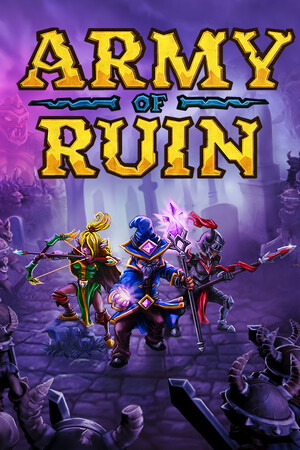
Army of Ruin follows the more traditional survivors-like structure. You guide a hero through a larger stage, collect experience, improve a growing arsenal, complete objectives, and return to a progression system that unlocks more options. Its official description emphasizes legendary heroes, automatic weapons, equipment, trinkets, and weapon combinations that can evolve beyond their normal limits.
Brotato is more deliberately structured as a compact arena shooter. You control a potato carrying up to six weapons, survive enemy waves, and spend the money from each round in a shop. The arena is smaller and the run structure is more compressed, so decisions about weapon tags, item stats, economy, and positioning matter almost immediately.
That difference explains why neither game is simply a strict upgrade over the other. Army of Ruin gives you more reasons to explore and build toward future unlocks. Brotato gives you more pressure per minute and makes each shop visit a major part of the game.
- Choose Army of Ruin when you want a stage to move through, enemies to chase, and objectives that guide long-term progress.
- Choose Brotato when you want a focused combat puzzle in which every wave and shop refresh can change your build.
- Choose Brotato for local co-op. Its Steam listing supports local co-op, while Army of Ruin is listed as single-player.
| Decision criterion | Better fit | Why |
|---|---|---|
| Exploration and stage movement | Army of Ruin | Its structure is built around stages, objectives, heroes, and unlock progression. |
| Short, repeatable combat runs | Brotato | Its wave-and-shop format gets to the important decisions quickly. |
| Build experimentation | Brotato | Six weapon slots and character-specific constraints create strong run-to-run variation. |
| Weapon evolution and collection | Army of Ruin | Weapon combinations and upgrade paths are a central part of progression. |
| Couch co-op | Brotato | The current Steam listing advertises local co-op support. |
| Relaxed first sessions | Army of Ruin | Its power growth is generally easier to read before the highest difficulty layers. |
If you are undecided and can only buy one, choose the game that matches your preferred source of satisfaction. Pick Army of Ruin for unlocking and collecting. Pick Brotato for solving a difficult build under time pressure.
Build advice
Fire rate and cooldown are not interchangeable
A common Army of Ruin question concerns attack fire rate versus skill cooldown. The developer has explained that attack fire rate increases how quickly weapons shoot, while skill cooldown reduces the time before the hero’s special skill can be used again. In practical terms, fire rate is usually the offensive stat for your automatic weapons; skill cooldown is primarily for the character ability.
When comparing upgrades, inspect the affected weapon or skill rather than choosing a larger-looking percentage blindly. A fire-rate bonus can be excellent on a weapon that already deals reliable damage but fires slowly. Skill cooldown is more valuable when your hero’s ability has strong crowd control, burst damage, or defensive utility.
This distinction also helps explain why Army of Ruin can feel more forgiving than Brotato. Your build is often assembled around a hero, a set of weapons, and compatible trinkets. Brotato instead asks you to balance several competing stats across a shop-driven build, and a poor purchase can weaken the next wave immediately.
- Use attack fire rate for weapons whose damage improves substantially when they fire more often.
- Use skill cooldown when your hero’s special ability is central to surviving elites or bosses.
- Do not assume that a stat affecting a weapon also affects the hero’s special skill.
- Check the current in-game description after updates, because terminology and balance values can change.
| Stat or system | What it does | Best reason to prioritize it |
|---|---|---|
| Attack fire rate | Makes automatic weapons fire more frequently. | You need more consistent damage or better crowd control. |
| Skill cooldown | Shortens the recharge time of the hero’s special skill. | Your ability is the main answer to elites, bosses, or dangerous swarms. |
| Weapon evolution | Transforms or substantially improves a weapon after meeting its requirements. | You are building around a specific high-impact combination. |
| Brotato shop economy | Lets you buy weapons, items, and stat improvements between waves. | You want a stronger build without wasting limited purchases. |
The fire-rate and skill-cooldown distinction is supported by a developer response. Exact weapon values, caps, and interactions should be checked in the current game because older community guides may describe earlier balance versions.
Alternatives
How the other survivors-like games compare
Halls of Torment is the closest alternative if Army of Ruin’s progression appeals to you but you want a darker, more action-RPG presentation. Its official store description highlights heroes, quests, traits, items, multiple underground areas, bosses, and a large collection of unlockable content. It is single-player, so it does not replace Brotato as a co-op option.
Soulstone Survivors is the better alternative for players who want the largest build laboratory. Its current store page advertises hundreds of skills, more than one hundred craftable weapons, a skill tree, curses, multiple modes, and colossal bosses. That depth comes with a busier interface and a steeper learning curve, so it is less suitable if you want a simple first survivors-like.
Spirit Hunters: Infinite Horde is a good middle ground. It keeps the automatic-attack structure but focuses on passive attacks, abilities, soul collection, permanent Oracle upgrades, and a roster of hunters. It is a reasonable choice when you want more meta-progression than a minimalist game without moving as far into complex crafting as Soulstone Survivors.
Vampire Survivors remains the baseline recommendation for the genre’s simplest and most accessible formula. It emphasizes time survival, minimal controls, gold-funded upgrades, and a large amount of additional content. Its current Steam listing also supports local co-op, making it a strong choice for casual multiplayer sessions.
- Choose Halls of Torment for quests, dark fantasy atmosphere, and character-focused progression.
- Choose Soulstone Survivors for the deepest ability combinations and boss encounters.
- Choose Spirit Hunters for a familiar formula with strong permanent progression and a large roster.
- Choose Vampire Survivors for the simplest entry point and broad co-op accessibility.
| If you want... | Try... | Main reason |
|---|---|---|
| A more structured progression journey | Halls of Torment | Quests, traits, items, heroes, and multiple areas give each unlock a clear purpose. |
| The biggest build sandbox | Soulstone Survivors | Its official feature list emphasizes hundreds of skills and extensive weapon crafting. |
| A direct but less famous alternative | Spirit Hunters: Infinite Horde | It combines passive attacks, hunters, abilities, and permanent upgrades. |
| The genre’s most accessible starting point | Vampire Survivors | Its minimal control scheme makes the basic loop easy to understand. |
| A difficult shop-and-wave challenge | Brotato | Each run is built around six weapons, economy choices, and demanding positioning. |
Player discussions often praise Brotato for depth and difficulty while preferring Army of Ruin for presentation, progression, or a more traditional survivors-like flow. Those are useful preference signals, not objective performance measurements.
Buying guide
A practical way to choose before you commit
Start with the kind of run you want to repeat. If you imagine moving around a map, collecting experience, chasing objectives, and watching a weapon evolve, Army of Ruin is the safer match. If you imagine checking a shop, replacing one weapon, protecting your economy, and surviving a tightly tuned wave, Brotato is the better match.
Next, decide how much difficulty you want in the first few hours. Brotato can feel demanding earlier because enemy waves, limited arena space, and shop decisions interact constantly. Army of Ruin generally gives you more room to become powerful through unlocks and equipment, although its higher difficulty settings can still provide a serious challenge.
Finally, consider replay motivation. Army of Ruin is a stronger choice for completionists who enjoy objectives, heroes, weapon paths, and permanent improvements. Brotato is stronger for players who enjoy repeating a compact ruleset with different characters and discovering how far a specialized build can go.
For a low-risk buying order, start with Brotato if you value replayable challenge and multiplayer. Start with Army of Ruin if you mainly play alone and want a more colorful, progression-heavy alternative to Vampire Survivors. If neither format sounds ideal, try Halls of Torment for a quest-driven option or Soulstone Survivors for maximal build complexity.
- Buy Army of Ruin when collection and progression matter more than perfect run efficiency.
- Buy Brotato when you want every purchase and movement decision to carry immediate weight.
- Avoid choosing solely from review scores, because the games target noticeably different pacing and difficulty preferences.
- Recheck current store prices and platform support on September 24, 2026 or whenever you purchase.
| Your priority | Best recommendation | Reason |
|---|---|---|
| Solo progression and weapon collecting | Army of Ruin | Its heroes, equipment, trinkets, and evolving weapons support a longer unlock journey. |
| High-pressure build testing | Brotato | The shop, six-weapon limit, and wave structure create frequent meaningful decisions. |
| Quest and achievement hunting | Halls of Torment | Its store listing specifically emphasizes a large quest and trait structure. |
| Complex theorycrafting | Soulstone Survivors | Its skill, weapon, curse, and character systems are the most expansive here. |
| Casual co-op | Brotato or Vampire Survivors | Both current Steam listings advertise multiplayer features, unlike the single-player listings for the other choices. |
There is no universal winner. Army of Ruin is the better progression game, Brotato is the better pressure cooker, Halls of Torment is the better quest-driven alternative, and Soulstone Survivors is the better build-crafting extreme.
FAQ
Common questions
Is Army of Ruin more like Brotato or Vampire Survivors?
It is closer to Vampire Survivors in its stage-based movement, automatic weapons, experience collection, and evolving arsenal. Brotato shares the same broad survivors-like foundation but uses a tighter wave-and-shop structure with stronger emphasis on economy and build constraints.
Which game is harder, Army of Ruin or Brotato?
Brotato usually feels harder earlier because the arena is compact and mistakes in movement, shopping, or stat balance are punished quickly. Army of Ruin can become difficult at higher ruin levels, but its progression systems often give new players more ways to improve between attempts.
Does attack fire rate reduce skill cooldown?
No. The developer has described attack fire rate as the stat that makes weapons shoot more quickly, while skill cooldown reduces the recharge time of the hero’s special skill. Treat them as separate effects unless the current in-game description says otherwise.
Is Halls of Torment a better alternative than Brotato?
Choose Halls of Torment if you want quests, heroes, item collection, and dark fantasy atmosphere. Choose Brotato if you want compact runs, local co-op, and a more demanding shop-based build system.
Is Soulstone Survivors worth choosing instead?
It is worth choosing when you want extensive skill combinations, weapon crafting, bosses, and a large progression system. It is less suitable if you prefer a simpler interface or a short, easily understood route to a finished build.
Sources
What we checked
Official listings establish current availability and product facts. Community pages are used for mechanics and build history, then labeled separately.
- OfficialArmy of Ruin official Steam store page and update history
- OfficialBrotato official Steam store page
- OfficialArmy of Ruin developer clarification on fire rate and skill cooldown
- OfficialMilkstone Studios Army of Ruin update notes
- OfficialHalls of Torment official Steam store page
- OfficialSoulstone Survivors official Steam store page
- OfficialSpirit Hunters: Infinite Horde official Steam store page
- OfficialVampire Survivors official Steam store page