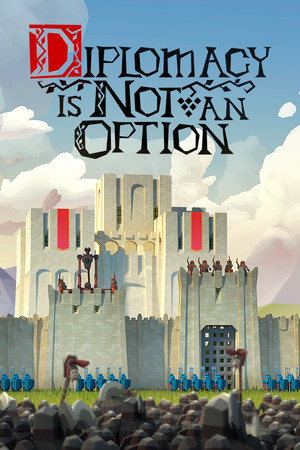
This guide covers ordinary gameplay. It does not recommend trainers, save editing, or sandbox cheats, which can damage saves or invalidate the intended economy.
Fast answer
The answer before the background
For the best gold farm, build a stable food and wood economy first, secure nearby stone and iron, then sell only the surplus at the Market. Clear the map in safe stages because resource piles, enemy structures, and strong enemy rewards can supplement production. Keep storage close to distant work sites, expand food before adding population, and move lumber camps or mining operations as local deposits are exhausted. Soul crystals are a separate resource: earn them through enemy activity and use the Alchemical Transgressor once unlocked. Gold is not a separate coin, diamond, or gem system, and there is no confirmed infinite-resource loop in normal play.
Verified economy
What each resource actually does
The game’s economy is built around food, wood, stone, iron, gold, and soul crystals. The Steam store describes food, wood, stone, iron, and gold as the foundations of the city economy, while soul crystals support the magic system. Gold is the resource players often call coins or money, but the game does not use separate currencies called diamonds or gems.
Gold is obtained primarily through the Market. A community-maintained resource reference lists the base exchange as one gold for 40 food, 40 wood, 20 stone, or 10 iron. Treat those values as a useful reference rather than a promise that every map, balance pass, or mode behaves identically. The important practical rule is that iron is the most valuable of those listed inputs, while food and wood are the easiest to produce but also the easiest to waste.
Food is consumed by the population and is also needed for recruitment. Wood pays for much of the early construction and supports several production chains. Stone and iron become increasingly important for advanced buildings, research, defenses, and troops. Soul crystals are not a Market substitute: they are tied to spells and magical progression.
- Verified: gold is the game’s money-like resource.
- Verified: the Market is the normal conversion point for resources into gold.
- Recommendation: keep enough food, wood, and iron for the next wave before selling anything.
- Uncertainty: exact trade values and availability should be checked in the current in-game Market if a patch changes the economy.
| Resource | Main source | Best use in a farming loop |
|---|---|---|
| Food | Food-producing buildings and map supplies | Maintain population and recruitment; sell only a safe surplus. |
| Wood | Lumber camps and map supplies | Construction, research, recruitment, and controlled Market sales. |
| Stone | Stone deposits and map supplies | Tier II construction, research, and selected military needs. |
| Iron | Iron deposits and map supplies | Advanced construction, troops, research, and high-value sales. |
| Gold | Market sales and occasional map rewards | Tier III buildings, research, and advanced units. |
| Soul crystals | Enemy rewards, special enemies, and Alchemical Transgressor | Spells and magical progression. |
If a search asks how to get coins, diamonds, or gems, read it as a question about gold or soul crystals. No separate premium-currency system has been verified for the standard game.
Repeatable route
The reliable resource-farming loop
Start by securing the area immediately around the Town Hall. A production building that is technically placed but exposed, blocked, or too far from storage is not a useful farm. Clear enough nearby enemies to open safe work areas, then establish food and wood production before committing to a large population increase.
Next, push outward in short, defensible steps. Clearing enemy huts, hovels, and other map threats can open deposits, resource piles, and safer routes. Community gameplay guidance specifically recommends clearing the map because it can reveal more territory, resource carts or piles, soul crystals, and more favorable final-wave conditions. Do not treat clearing as a side activity: it is part of the economy.
When a work site is distant, place the appropriate storage nearby and keep the route between workers, storage, and the town as short as practical. This is especially useful for stone and iron, where long walking distances can erase the benefit of an otherwise rich deposit. If a lumber camp is no longer near useful trees, relocate or rebuild the operation instead of accepting a long commute.
After the next wave is funded, sell the surplus through the Market. Sell in batches rather than emptying a resource completely. A good farming cycle is: produce, collect map resources, clear a safe expansion lane, reserve wave costs, sell the remainder, and spend the gold immediately on the next economic or military breakpoint.
- Secure first, then expand; an unprotected resource route is not a farm.
- Use storage near distant mines and production clusters.
- Move lumber operations as forests are depleted.
- Clear map threats in stages to collect rewards without exposing the settlement.
- Sell surplus after reserving food, building materials, and the next wave’s military budget.
| Stage | Priority | Reason |
|---|---|---|
| Opening | Food and wood | Supports population, housing, construction, and early defense. |
| Expansion | Stone and iron access | Unlocks stronger buildings, research, and advanced troops. |
| Midgame | Storage and route efficiency | Reduces walking time and prevents production from idling at full storage. |
| Gold push | Market surplus | Converts excess materials into the money needed for advanced spending. |
| Magic push | Enemy clearing or Transgressor | Builds soul-crystal income without confusing it with gold. |
Use compact production clusters near storage, keep food storage close to food buildings, and leave expansion corridors for roads and defensive movement. There is no single universal farm layout because deposits, mountains, enemy directions, and wave timing change by map.
Special resources
Food, soul crystals, and map rewards
Food farming fails most often because players count buildings but not consumption. Population consumes food regularly, and recruitment adds another demand. Expand food production before housing or army size reaches the limit of your current supply. Keep a reserve before a wave rather than converting every surplus unit into gold.
Soul crystals follow a different loop. Developer information confirms that the Alchemical Transgressor can produce them after the appropriate technology, using iron as an input, and that only one Transgressor can be built in a settlement. The developers also added large soul-crystal rewards for killing certain extremely powerful enemies, without requiring the Soul Steal research. This makes aggressive map control a legitimate crystal route, but not a passive gold farm.
Do not expect soul crystals to function like diamonds or a universal premium currency. They are primarily a magic resource. If spells are not part of your immediate defense plan, spending iron on crystal production may be less valuable than strengthening the economy or army.
- Verified: the Alchemical Transgressor is an alternative crystal source after its technology is available.
- Verified: some extremely powerful enemies can provide large crystal rewards.
- Recommendation: use enemy clearing for crystals when the route is safe and the military reward justifies the risk.
- Uncertainty: map-specific enemy placement and exact reward amounts are not uniform enough to state as a universal farm rate.
Limits and mistakes
What is not an infinite-resource strategy
Normal play does not provide a verified infinite-resource loop. Production buildings depend on workers, deposits, food, storage, time, or map space, and Market sales convert resources rather than creating them. The closest sustainable approach is an efficient cycle of production, expansion, map clearing, and controlled selling.
Avoid selling food or iron merely because the Market offers the best nominal exchange. Food protects population and recruitment, while iron supports advanced production and can feed the Alchemical Transgressor. Selling too much can force a longer recovery than the gold was worth.
Also avoid building every resource structure at once. A smaller number of fully supplied, efficiently routed buildings usually outperforms a crowded layout with idle workers and long walks. Check worker assignments, storage capacity, deposit distance, and upcoming wave costs before adding another production building.
- Do not sell below the reserve needed for the next attack.
- Do not call a trainer or save edit a normal farming method.
- Do not assume a community-reported layout works on every procedural map.
- Do not hoard gold while food, storage, or defenses are bottlenecks.
Developer announcements support the Alchemical Transgressor and special enemy crystal rewards. Market exchange figures and some layout advice come from community references, so verify the live in-game values before committing a large trade.
FAQ
Common questions
How do you get coins in Diplomacy is Not an Option?
Use the Market to sell surplus food, wood, stone, or iron for gold. Gold is the game’s money-like resource; there is no separately verified coin currency.
What is the best gold farm?
Build a stable food and wood base, secure stone and iron, clear nearby map threats, collect resource piles, and sell only the surplus after reserving wave costs. Iron usually gives the strongest exchange in the commonly documented base rates, but it is also valuable for advanced production.
How do you get diamonds or gems?
No separate diamond or gem currency has been verified in the standard game. Players usually mean gold or soul crystals. Gold comes from Market sales, while soul crystals come from enemy activity and the Alchemical Transgressor.
What are the best food tips?
Expand food production before housing and recruitment push consumption upward. Keep food storage near producers, avoid selling your reserve, and check that workers are not walking excessive distances or waiting because storage is full.
Can you farm infinite resources?
Not through a confirmed normal gameplay loop. You can sustain an economy through production, map clearing, resource piles, and Market conversions, but each input has a cost or limitation. Sandbox tools and external trainers are not equivalent to a standard resource farm.
Sources
What we checked
Official listings establish current availability and product facts. Community pages are used for mechanics and build history, then labeled separately.
- OfficialOfficial Steam store page
- OfficialOfficial developer announcement on soul crystals and the Alchemical Transgressor
- OfficialOfficial post-release patch announcement covering map resources and powerful-enemy crystal rewards
- CommunityCommunity resource reference
- CommunityCommunity gameplay tips on storage, clearing, and resource routes