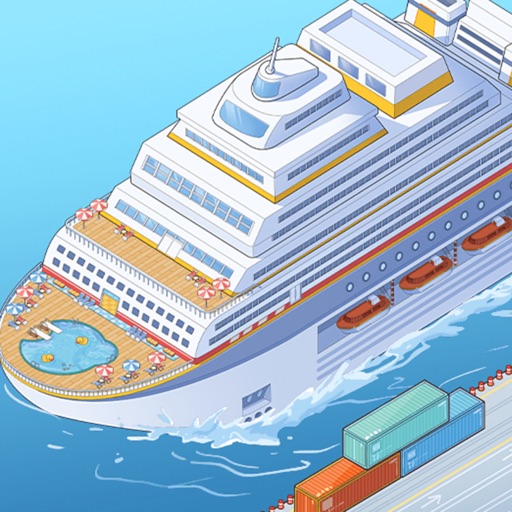
The game includes advertisements and optional in-app purchases. Store listings describe offline availability, but online events, rewarded ads, account features, and some services may require a connection.
Fast answer
The answer before the background
Your best opening is simple: complete the captain’s tutorial, build or upgrade the facilities it introduces, and spend your first earnings on capacity and essential services rather than decorations. Keep cabins improving, add the passenger facilities the game requests, collect income before storage fills, and start each available voyage. When a choice appears, select the reward that helps your next upgrade unless you specifically need fuel or another limited resource. Progress one unlock at a time, revisit the ship after idle earnings accumulate, and use optional ads only when the extra reward is worth the time. The core loop is building, serving passengers, upgrading, and sailing to new destinations.
Start here
A reliable first-session plan
Verified: The store descriptions present the game as a single-player cruise-ship management game built around managing, building, and upgrading a ship. They also identify cabins, entertainment, dining, toilets, passenger needs, destinations, and reputation as part of the experience.
Recommendation: Treat the opening as a guided tutorial rather than an optimization puzzle. Complete every prompted action before experimenting. The early instructions teach the important rhythm: construct or improve a facility, collect the money it generates, satisfy passengers, and unlock the next ship improvement.
After the tutorial, use this order for your first session. First, collect every available payout. Second, buy the cheapest upgrade that increases capacity, income, or passenger service. Third, add the essential facility requested by the next objective. Fourth, begin a voyage or destination action as soon as it becomes available. Finally, return to the ship and repeat the collection-and-upgrade cycle.
Do not spend your first resources on appearance alone. Decorations can make the ship look better, but an income or service upgrade usually helps you reach the next unlock sooner. If the game offers several upgrades with no clear advantage, choose the one tied to the active objective because objective progress is the safest way to reveal more systems.
- Keep the tutorial active until its required steps are complete.
- Prioritize cabins, passenger capacity, and basic services.
- Collect earnings before the facility’s visible storage becomes full.
- Start voyages promptly when the required resources are available.
- Save cosmetic spending for a later surplus.
| Early choice | Best beginner priority | Reason |
|---|---|---|
| New room or decoration | New room or income facility | It supports progression and future earnings. |
| Basic service or cosmetic item | Basic service | Passenger needs are part of the management loop. |
| Voyage or idle waiting | Voyage, if affordable | It advances destinations and keeps the ship active. |
| Optional reward | Take it only when useful | Ads and bonuses are choices, not a substitute for planning. |
The stores verify the ship-building theme and facility categories. The exact best upgrade order is a recommendation because the official listings do not publish complete costs, output values, or unlock tables.
Build with purpose
How to progress without wasting resources
The safest progression path is to improve the ship in layers. Begin with basic cabins and the services needed to keep early passengers satisfied. Then expand earning capacity and add entertainment or dining as the game makes those categories available. After the core ship is functioning, invest more heavily in luxury improvements and optional presentation upgrades.
Think of each purchase as serving one of three jobs: earning money, allowing more passengers, or satisfying a requirement that blocks the next objective. A purchase that does none of these jobs should normally wait. This rule is especially useful when the ship offers attractive decorations before your income engine is established.
Voyages and destinations are not merely background scenery. The official description says that guests can disembark, new guests can be attracted, and the ship can visit different places. Therefore, include sailing in your normal loop instead of treating it as a late-game feature. When a voyage has a resource cost, compare that cost with the next upgrade: sail when the trip advances an unlock or produces a meaningful reward, and upgrade first when the voyage would leave you unable to afford an essential facility.
Reputation is also listed as a progression goal. The practical implication is to avoid building only one type of facility. A ship with cabins but poor passenger services may earn less effectively than a smaller ship whose basic needs are covered. Expand broadly enough to keep the current passenger flow working, then return to the strongest income upgrades.
- Use income upgrades to fund the next unlock.
- Add essential services before luxury extras.
- Keep voyages in the regular gameplay cycle.
- Expand passenger capacity only when the ship can support it.
- Use reputation and objectives as signals that the ship is ready to broaden its facilities.
| Progression stage | Main focus | What to delay |
|---|---|---|
| Opening ship | Tutorial objectives, cabins, basic services | Large cosmetic purchases |
| Growing ship | Income, capacity, dining, and entertainment | Luxury spending that does not unlock content |
| Established ship | Destination progression, reputation, and balanced facilities | Replacing useful upgrades for minor visual gains |
The official Android listing shows a September 7, 2026 update and a limited-time event ending September 25, 2026. Event tasks and rewards can change, so do not build a permanent strategy around one temporary offer.
Avoidable problems
Common mistakes that slow new players down
The most common mistake is buying whatever is cheapest without checking its purpose. Low price does not always mean high value. Before purchasing, ask whether the item increases income, capacity, service quality, or objective progress. If the answer is no, keep the currency for a more useful upgrade.
Another mistake is leaving generated money uncollected for too long. The game’s management loop depends on facility income, and community feedback on the store pages indicates that some players encounter low storage limits. The exact limits are not documented officially, so the practical rule is simple: collect whenever you return to the ship and whenever a facility looks full.
Do not treat every rewarded advertisement as mandatory. The game is listed as containing ads and in-app purchases, while player reviews describe optional multipliers and complaints about ad frequency. Rewards and ad prompts may vary by build. Take a bonus when it meaningfully shortens a long timer or funds an important upgrade; skip it when the base reward already completes your next step.
Avoid spending premium currency immediately, rushing every timer, or purchasing a bundle just because it appears during a bottleneck. First determine whether the delay is actually blocking progress. In an idle management game, some waiting is part of the intended loop, and preserving premium resources gives you more flexibility later.
Finally, do not copy unverified code lists or precise upgrade charts without checking the current game. The official pages found for this title describe the game and update history but do not publish a universal code list, drop-rate table, or complete upgrade spreadsheet.
- Do not buy decorations before the economy is stable.
- Do not let facility income sit at its storage limit.
- Do not assume every ad reward is worth watching.
- Do not spend premium currency just to remove a short wait.
- Do not rely on unsupported codes, drop rates, or fixed upgrade tables.
| Mistake | Better habit |
|---|---|
| Buying the cheapest item | Buy the item that helps income, capacity, service, or the next objective. |
| Ignoring the ship while away | Return periodically and collect stored earnings. |
| Using every ad bonus | Compare the bonus with the time and your immediate need. |
| Rushing every timer | Wait unless the timer blocks a valuable unlock or voyage. |
| Following old guides blindly | Check the current store listing and in-game requirements. |
The official listings do not document every economy value or all event rules. Recommendations in this section are deliberately general so they remain useful when costs, menus, or rewards change.
FAQ
Common questions
Is an internet connection required?
The official Google Play listing labels the game as playable offline, but that does not prove every feature works offline. Treat basic ship management as the most likely offline activity and expect events, rewarded ads, account services, or other online features to need a connection.
What should I upgrade first?
Start with the facility or cabin connected to the current tutorial objective. After that, favor income, passenger capacity, and essential services over decoration. The exact strongest choice depends on the costs and unlocks shown in your current build.
Should I watch every optional advertisement?
No. Use an optional ad when its reward directly funds your next important upgrade or saves a long wait. Skip it when the normal reward is enough or when the bonus would not change your next decision.
When should I spend on decorations?
Decorate after your ship has dependable income, adequate passenger capacity, and the essential services required by current objectives. If a decorative item is also required for an unlock, it can move earlier in the order.
Are online code lists and exact upgrade orders reliable?
Not automatically. The official pages reviewed for this guide do not publish a universal code list, complete upgrade costs, or fixed drop rates. Use in-game requirements and current official announcements as the authority, and treat community claims as unverified unless the developer confirms them.
Sources
What we checked
Official listings establish current availability and product facts. Community pages are used for mechanics and build history, then labeled separately.