Both games can be demanding. Ratropolis can end a run after a poorly managed defense, while Ratopia can punish weak economic planning, inadequate services, or an unprepared settlement.
Fast answer
The answer before the background
Ratropolis is the better choice if you want a compact, replayable strategy game where deckbuilding, real-time defense, and quick decisions are the main event. Ratopia is the better choice if you want a more traditional colony simulator with individual citizens, an economy, city policies, exploration, and broader long-term management. They share a setting and developer, but they are not interchangeable: Ratropolis feels like a card game with city defense, while Ratopia feels like a colony and city builder with survival pressure. If you are unsure, choose Ratropolis for immediate action and Ratopia for slower, more systems-heavy planning.
At a glance
The main difference is the gameplay loop
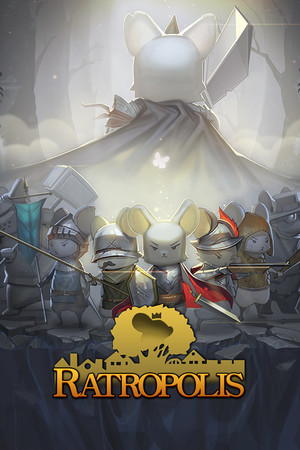
Ratropolis is built around a run-based structure. You begin with a small deck, add or remove cards, improve your options, and defend your settlement against increasingly dangerous threats. The official store page describes it as a combination of roguelite, deckbuilding, tower defense, city building, and real-time strategy. Its advertised content includes more than 500 cards, over 100 events, six leaders, and multiple endings.
Ratopia puts less emphasis on discrete runs and more on developing a living settlement. Its store description highlights citizens with their own capital and personalities, work and consumption connected through exchanges, economic policy, services, exploration, and city growth. The official update history also shows continued additions such as tourism and artifacts, which expand the management side rather than changing the game into a card battler.
- Ratropolis: draw cards, build quickly, react to threats, and survive the next defense.
- Ratopia: establish production, manage citizens, balance the economy, explore, and expand the city.
- Shared foundation: single-player strategy games made by Cassel Games with a cute rat setting and serious survival pressure.
| Decision factor | Ratropolis | Ratopia |
|---|---|---|
| Core genre | Real-time deckbuilding roguelite with tower-defense and city-building elements | Colony simulation, city building, economic management, survival, and exploration |
| Primary objective | Build an efficient deck and keep the settlement alive through escalating attacks | Create a sustainable city while keeping citizens supplied, employed, and stable |
| Pacing | Fast and reactive | Slower, broader, and more management-focused |
| Main source of variety | Cards, leaders, events, upgrades, and changing runs | City layouts, policies, citizens, production chains, exploration, and settlement development |
| Best for | Players who enjoy compact strategy runs | Players who enjoy detailed colony and city simulations |
The shared rat theme can make the games look like direct sequels in the same genre, but the moment-to-moment play is substantially different. Treat the comparison as a choice between two related strategy formats, not as a simple newer-versus-older upgrade.
Choose Ratropolis
Pick the card battler if you want speed and replayable runs
Ratropolis is the stronger option for players who like making many decisions under pressure. Cards are used for economic development, construction, military actions, and skills, so your deck determines how efficiently you can grow and respond to danger. The city is important, but it mainly provides the setting and tactical problem that your deck must solve.
This structure makes each attempt easy to understand: improve the deck, stabilize the settlement, survive the next threat, and use the result to make a stronger future run. It also suits players who prefer sessions with a clear beginning, middle, and end instead of maintaining one settlement for a long time.
- Choose it if you enjoy deckbuilding and trimming weak cards.
- Choose it if real-time defense matters more to you than detailed citizen simulation.
- Choose it if you want random events and leader choices to reshape each attempt.
- Choose it if you prefer immediate tactical feedback over long production chains.
| You will probably prefer it when you want... | Why it fits |
|---|---|
| A focused challenge | The game concentrates attention on the next defense and the cards needed to survive it. |
| High replay value | Randomized events, card choices, leaders, and run outcomes encourage repeated attempts. |
| Less social simulation | Citizens matter as part of the defense economy, but the game is not primarily about individual life stories. |
| Rapid decisions | The official description emphasizes fast-paced gameplay and real-time judgment. |
If you dislike losing a run, rebuilding a deck, or reacting quickly while several systems compete for attention, the roguelite structure may feel harsher than rewarding.
Choose Ratopia
Pick the colony simulator if you want depth and control
Ratopia is the better fit for players who want to design how a settlement works. Citizens have personal resources and personalities, and the economy is based on exchanges rather than one abstract pool that represents everyone equally. That creates more responsibility: jobs, services, production, taxation, consumption, and policy decisions can affect different parts of the city in different ways.
Its side-view colony format also supports exploration outside the immediate settlement. The official game page presents surrounding areas and underground locations as places to discover and develop, while later official updates added tourism and artifacts. Those additions reinforce the idea that the city is a long-term project with multiple systems competing for space and resources.
- Choose it if you enjoy optimizing jobs, services, production, and citizen needs.
- Choose it if you want more freedom to shape a city rather than mainly preparing a defense deck.
- Choose it if exploration and unlocking new areas are important parts of your ideal colony game.
- Choose it if you want adjustable difficulty and the option to save at any time, both listed on the current Steam page.
| You will probably prefer it when you want... | Why it fits |
|---|---|
| A management sandbox | The central challenge is designing an economy and settlement that can sustain itself. |
| Visible citizen consequences | Individual citizens have their own capital and personalities, making economic decisions more personal. |
| Long-form planning | Infrastructure, services, policies, and exploration all contribute to broader settlement goals. |
| A gentler entry point | The current store page lists adjustable difficulty, including options intended to let players focus more on management. |
Ratopia asks you to learn more interacting systems. If you want a clean tactical loop with minimal economic administration, its city management may feel like overhead rather than depth.
Alternatives and decision steps
How to decide before buying
Use the following quick test rather than choosing only by art style or release order. Both titles use the same broad setting, but your preferred decision rhythm matters more than the shared characters and visual identity.
- Buy Ratropolis first if your favorite games include roguelite deckbuilders, tower defense, or short strategy runs.
- Buy Ratopia first if your favorite games include colony sims, city builders, production chains, or economic sandboxes.
- Choose Ratropolis when you want the game to tell you what problem needs solving next: the next wave, event, or deck decision.
- Choose Ratopia when you want to create the problem yourself through expansion, policy, staffing, or resource planning.
- If you want both, start with Ratropolis for a more concentrated introduction to Cassel Games' rat setting, then move to Ratopia when you want a larger management commitment.
- If neither sounds right, look for alternatives centered on either side of the split: deckbuilding roguelites for the Ratropolis style, or colony and city simulators for the Ratopia style. Do not assume another rat-themed game will provide the same systems.
| Your priority | Recommended choice |
|---|---|
| Fast tactical pressure | Ratropolis |
| Deep economy and citizen management | Ratopia |
| Many short attempts | Ratropolis |
| One settlement to develop over time | Ratopia |
| Cards as the main strategic tool | Ratropolis |
| Policies, services, and exploration | Ratopia |
Pick the older game for a sharper card-and-defense challenge, and pick the newer game for a broader colony-management experience.
FAQ
Common questions
Is Ratopia a direct sequel to Ratropolis?
It is a related game from the same developer and continues the rat-focused setting, but it changes the format substantially. The first game is centered on roguelite deckbuilding and real-time defense, while the newer game focuses on colony simulation, economic management, city building, and exploration.
Which game is easier to learn?
Ratropolis has the simpler overall structure, but its real-time pressure and run-ending failures can make it difficult to master. Ratopia may feel slower at first, yet it introduces more management systems. The better learning curve depends on whether you find card decisions or colony administration more intuitive.
Which one has more replay value?
Ratropolis provides obvious run-to-run replay value through cards, leaders, events, and different outcomes. Ratopia offers replay value through city layouts, economic choices, exploration, difficulty settings, and the challenge of building a more efficient settlement. Neither is automatically better; they repeat for different reasons.
Should I play Ratropolis before Ratopia?
No. There is no gameplay requirement to play them in order. Start with Ratropolis if you want a fast, card-led strategy experience. Start with Ratopia if you are specifically looking for a colony simulator with citizens, services, policies, and exploration.
Are they good alternatives to each other?
They are alternatives only at a broad level. Both are single-player strategy games about protecting and developing rat settlements, but their main loops differ enough that one may not satisfy someone seeking the other. Use pacing and preferred systems as your deciding criteria.
Sources
What we checked
Official listings establish current availability and product facts. Community pages are used for mechanics and build history, then labeled separately.