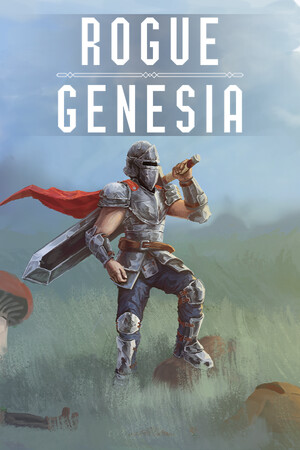
This guide contains unlock and build advice that may reveal progression systems, card requirements, and late-run synergies.
Fast answer
The answer before the background
Start most runs with Forged Iron for damage multiplier and Sharpening Stone for base damage. Add Cardio when your weapon scales well with attack speed, or choose Stone Skin, Durability, and Healthy when incoming damage is limiting the run. Keep the card pool focused: take only the normal cards that support your weapon, unlock synergy cards through their component cards, and avoid spending banishes on useful low-rarity cards too early. For equipment, the required soul card level means your accumulated card-level total, not the number of different cards you own. Soul Shop upgrades can make a single tainted selection count for several levels, so upgraded tainted cards are an efficient way to activate early equipment.
Verified fundamentals
How cards and decks actually work
Rogue: Genesia does not use a conventional deck that you assemble before combat. Instead, your run gradually builds a card pool from level-up choices, stage rewards, shops, events, and other reward sources. Your practical deck is the set of cards that remain eligible to appear. Picking, completing, banishing, avoiding, and unlocking cards therefore changes future offers.
Tainted cards are the low-rarity foundation of that system. The currently documented tainted pool includes Cardio, Durability, Forged Iron, Healthy, Low Pressure, Sharpening Stone, and Stone Skin. They provide modest gains per level, but most can be raised to extremely high levels. Soul Shop upgrades improve how much value each selection provides and are the main reason these cards remain useful deep into progression.
One important difference is selection behavior. Most cards become more likely to appear after you already own a level in them, while tainted cards do not receive that same increase. That makes a narrow build less reliable if you remove every alternative too early. Keep enough useful cards available to prevent dead selections, especially before your artifacts, equipment, and Soul Shop bonuses are established.
- Damage multiplier: Forged Iron is the safest general-purpose offensive foundation.
- Base damage: Sharpening Stone is especially attractive for weapons with strong projectile or hit frequency.
- Attack speed: Cardio is best when the weapon has a useful firing animation or cooldown to accelerate.
- Defense and health: Stone Skin, Durability, and Healthy are defensive fixes rather than automatic picks.
- Utility: Low Pressure improves pickup range and helps maintain experience and resource flow.
| Card | Best use | Typical priority |
|---|---|---|
| Forged Iron | Universal damage scaling | Very high |
| Sharpening Stone | Base damage and early power | Very high |
| Cardio | Fast-firing or cooldown-based weapons | High when compatible |
| Stone Skin | Defense-focused or contact-risk runs | Medium to high |
| Durability | Large health pool and equipment setups | Medium |
| Healthy | Healing or regeneration-focused builds | Situational |
| Low Pressure | Experience collection and safer farming | Situational |
The strongest choice depends on the weapon, avatar, challenge rules, and equipment. Treat the priorities as a starting point, then favor the stat that removes your current failure condition.
Build planning
Three reliable deck templates
A damage-and-tempo deck is the default option for ordinary Rog's Mode progression. Start with Forged Iron and Sharpening Stone, then add Cardio if your weapon benefits from more attacks. Choose one projectile-supporting normal card, such as projectile count, size, lifetime, or speed, only when it directly improves the weapon you are using. This keeps the pool lean without sacrificing a necessary multiplier.
A defensive scaling deck is better when enemies reach you reliably or when a challenge reduces your damage options. Combine Stone Skin with Durability, then add Healthy if your build can actually benefit from regeneration. Defense should buy time for your weapon to work; do not spend every selection on health while leaving damage behind, because a slow build can become impossible to stabilize.
A pickup-and-growth deck uses Low Pressure as a quality-of-life foundation. It is strongest with weapons that clear large groups and builds that rely on frequent level-ups, gold, or experience collection. Pair it with one or two damage foundations rather than treating pickup range as a substitute for offense. Once collection is comfortable, return to damage and attack speed.
These templates are recommendations rather than fixed lists. The best deck is the smallest pool that contains your weapon's required cards, your intended synergy components, and enough fallback cards to keep selections useful.
- Choose the weapon before committing to specialized projectile or critical-hit cards.
- Do not take every attractive card. Extra cards dilute the chance of seeing the upgrades that matter.
- Use banish or avoid effects on cards that contradict the build, but preserve flexible cards until the run is stable.
- Keep at least one defensive route unless the challenge or equipment makes defense irrelevant.
| Template | Core cards | Add when needed | Main risk |
|---|---|---|---|
| Damage and tempo | Forged Iron, Sharpening Stone | Cardio and weapon-specific projectile cards | Can be fragile |
| Defensive scaling | Stone Skin, Durability | Healthy and mitigation cards | May lack damage |
| Pickup and growth | Low Pressure plus one damage card | Cardio, experience, or range support | Utility can delay power |
The game has added card-avoidance and improved automatic card-selection tools in recent updates. Use them after you understand the run, not before, because an avoided card may be a useful fallback in a difficult stage.
Synergy choices
How to unlock and use powerful combinations
Synergy cards generally appear only after their component cards have been acquired. That means you should plan the components early, but you should not automatically take every component at every level. A component is worthwhile when it is already useful on its own or when the resulting synergy solves a clear problem.
Fiery Dash is the straightforward example: it requires Fire Spirit and Dash, and it rewards a build that already wants mobility and fire-related effects. Divine Smite requires Absolute Focus and Analysis and is a critical-hit payoff, so it belongs in a crit-focused build rather than a generic damage pool. Rift requires Attraction and Recursion and is more defensive or control-oriented, making it useful when enemy contact is the main threat.
Ascended cards can be much stronger, but their costs and corruption effects make them build-defining rather than routine upgrades. Holy Conversion, for example, converts corruption into several final-stat benefits, so it is best when the run already has a controlled way to gain or tolerate corruption. Do not choose an ascended card only because its rarity is higher; compare the drawback with your current defenses and win condition.
The exact list and unlock requirements should be checked in the in-game encyclopedia because the developer can change cards between patches. Community reference tables are useful for planning, but they are not a substitute for the current tooltip.
- Take synergy components for their immediate value first.
- Do not force a synergy that weakens your weapon before the payoff appears.
- Treat ascended cards as packages of power and risk, not simple upgrades.
- If a requirement is unclear, inspect the encyclopedia and current card tooltip before spending rerolls.
| Synergy direction | Good pairing | When to avoid |
|---|---|---|
| Dash and fire | Fire Spirit plus Dash into Fiery Dash | Low-mobility builds that rarely dash |
| Critical hits | Absolute Focus plus Analysis into Divine Smite | Builds with little critical chance |
| Control and defense | Attraction plus Recursion into Rift | Runs already struggling to deal damage |
| Corruption conversion | Corruption-generating cards into Holy Conversion | Low-health or low-defense runs |
The component requirements and listed effects are documented in community references, while the recommendations about timing and risk are gameplay guidance based on how those effects interact.
Equipment threshold
Understanding the required soul card level
The required soul card level shown on equipment is a threshold for your accumulated card levels. It is not the number of different cards in your inventory. Check the current total in the run's stats area, then compare it with the equipment requirement.
This distinction matters because a highly upgraded tainted card can contribute several levels from one selection. Community testing reports that Soul Shop-enhanced tainted picks can count as four cards each time, although the exact contribution can depend on the relevant upgrade and current game rules. Use the in-game total as the authority if it differs from an older guide.
A practical equipment plan uses two milestones. First, equip an early item with a low requirement so its effect helps you reach the next threshold. Then replace or supplement it with higher-threshold equipment once your card-level total is stable. Do not delay a strong early item merely because its negative modifier looks unattractive; it may provide enough power to reach better gear sooner.
If an item appears equipped but inactive, confirm both its required soul card level and any additional condition shown in its tooltip. Equipment activation can also depend on the item tier, slot, weapon state, or a separate requirement.
- Count total card levels, not unique card names.
- Use upgraded tainted picks to reach early thresholds efficiently.
- Check the in-game stats panel instead of relying on memory or an old guide.
- Build an early equipment set and a later equipment set when progression allows it.
| Situation | Best approach | Reason |
|---|---|---|
| Early run | Take efficient tainted levels and low-threshold gear | Activates useful effects quickly |
| Mid run | Keep damage online while reaching the next threshold | Prevents equipment chasing from weakening combat |
| Late run | Replace conditional or negative gear when stronger options activate | High thresholds become easier to satisfy |
| Conflicting tooltip | Trust the current in-game requirement | Patch changes can invalidate old tables |
The public references explain the threshold concept, but equipment activation details can vary by item and patch. If your result differs, record the exact item tooltip and current version before assuming the game is bugged.
FAQ
Common questions
Are tainted cards always the best cards to pick?
No. They are excellent foundations because Soul Shop upgrades let them scale far beyond their starting values, but a normal, synergy, or ascended card can be better when it supplies a required projectile stat, weapon interaction, critical effect, or defensive mechanic.
What is the rogue genesia required soul card level used for?
It is the accumulated card-level threshold needed to activate certain equipment effects. It refers to total levels gained during the run, not the number of different cards collected. Check the current total in the stats panel.
Should I banish low-rarity cards?
Only when they are clearly harmful or no longer useful. Early banishes are valuable, but removing too many cards can leave the pool with poor options. Tainted cards also do not receive the same owned-card appearance boost as most other cards, so keeping useful ones available can be safer.
How many synergies should one deck use?
Usually one main synergy and its required components are enough. Add a second only if its components are independently useful and do not dilute the cards your weapon needs.
Why is my equipment equipped but not active?
Check the required soul card level first, then inspect the full tooltip for tier, slot, weapon, or other conditions. Recent updates also changed equipment and card-selection systems, so an old guide may describe a requirement that no longer matches the current build.
Sources
What we checked
Official listings establish current availability and product facts. Community pages are used for mechanics and build history, then labeled separately.
- CommunitySoul Cards reference, including tainted cards, rarity, effects, and synergy requirements
- OfficialOfficial Steam announcements and recent Rogue: Genesia patch notes
- OfficialOfficial Rogue: Genesia Steam store page
- CommunityCommunity discussion explaining required soul card level and tainted-card contributions