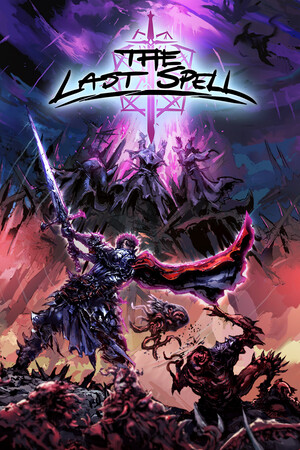
Weapon rankings are recommendations rather than an official in-game tier list. DLC weapons and recent balance changes can shift the value of specific skills, so check the weapon tooltip and modifiers on the item you actually found.
Fast answer
The answer before the background
For most runs, prioritize Hand Crossbow for multi-hit damage, Wand for flexible ranged magic and action-point utility, Druidic Staff or Flower for poison and propagation, Scepter for momentum and elite-target damage, and Tome of Magic for area damage plus weakening. Use Shortbow or Pistol in the opening nights when you need dependable range, then replace them as better weapons appear. For late-game specialist builds, pair a primary damage weapon with an off-hand or secondary set that supplies movement, debuffs, armor breaking, or a different damage pattern rather than stacking two weapons with the same weakness.
Quick ranking
A practical weapon tier list
The strongest all-round choices are Hand Crossbow, Wand, Druidic Staff, Flower, Scepter, and Tome of Magic. They either scale well with common stats or solve problems that repeatedly decide difficult nights: clearing groups, reaching distant targets, applying debuffs, or finishing high-health enemies.
A second group includes Two-Handed Sword, Crossbow, Magic Orb, Rifle, Boomerang, Gauntlet, and Cannon. These can be outstanding with the right map, weapon roll, and perk plan, but they are less universally reliable. Two-Handed Sword wants movement and momentum; Rifle wants propagation and safe lines; Gauntlet wants careful positioning around its range-changing identity; and Cannon needs a build that can manage its heat.
Spear, Dagger, Longbow, Shortbow, Pistol, Sword, Axe, Hammer, War Shield, Claws, and Boomerang should not be dismissed as weak. They are more dependent on timing, isolation, armor, status effects, or a particular role. Their lower ranking here means they are less forgiving, not that they cannot carry a run.
- S tier for general use: Hand Crossbow, Wand, Druidic Staff, Flower, Scepter, Tome of Magic.
- High A tier: Two-Handed Sword, Crossbow, Magic Orb, Rifle, Boomerang, Gauntlet, Cannon.
- Specialist or setup-dependent: Dagger, Spear, Longbow, Shortbow, Pistol, Sword, Axe, Hammer, War Shield, Claws.
| Weapon | Best role | Main requirement |
|---|---|---|
| Hand Crossbow | Multi-hit cleanup and focused ranged damage | Multi-Hit, accuracy, and enough range |
| Wand | Flexible magic damage, movement, and utility | Multi-Hit, skill range, and action-point economy |
| Druidic Staff | Poison, propagation, and lane control | Propagation, poison, mana, and safe positioning |
| Flower | Poison-focused area control | Poison damage, propagation, and status support |
| Scepter | Momentum single-target damage | Movement, momentum, crit, and opportunism |
| Tome of Magic | Debuffs, propagation, and area damage | Magic damage, propagation, mana, and range |
The game is classless and equipment supplies most active skills. Official descriptions also emphasize that weapons have distinct skill sets and playstyles. Therefore, a tier list is best used as a shopping priority, not as a rule that every hero should use the same weapon.
Builds
Best weapon combinations by build
For a multi-hit carry, start with Hand Crossbow and add Wand, Dagger, Spear, or another weapon that benefits from repeated attacks. The crossbow is usually the safer primary because it can thin enemies from range before they reach the walls. Wand is especially useful when the hero needs mobility or a second damage pattern rather than pure output.
For poison and propagation, use Druidic Staff or Flower as the main weapon. Druidic Staff is the more dependable general option because it can contribute early and control a lane, while Flower becomes more attractive when the build already has substantial poison damage, propagation, or status support. A Hand Crossbow secondary set helps finish isolated survivors without spending all of the poisoner's resources.
For a momentum assassin, choose Scepter or Two-Handed Sword. Scepter is better when you need to delete a priority target after moving into position. Two-Handed Sword is better when movement can be converted into a large area attack. Dagger is a strong late-run finisher against isolated enemies, but its short range makes it a poor default starting weapon on many maps.
For debuff and control support, Tome of Magic is the safest foundation. Its value is not only damage: weakening, propagation, and area coverage help the entire squad. Pair it with a ranged weapon when the hero needs a low-cost way to finish enemies outside the tome's ideal pattern.
For a defensive bruiser, War Shield, Hammer, Axe, or Cannon can work when the hero is designed to absorb pressure or exploit counter-oriented effects. These are role picks rather than automatic damage upgrades. Make sure another hero can handle distant targets and large groups.
- Multi-hit carry: Hand Crossbow plus Wand or a short-range finisher.
- Poison controller: Druidic Staff or Flower plus Hand Crossbow or a utility off-hand.
- Momentum assassin: Scepter plus Two-Handed Sword, Dagger, or a movement-focused secondary set.
- Support controller: Tome of Magic plus a ranged cleanup weapon.
- Bruiser: War Shield, Hammer, Axe, or Cannon with defensive stats and a clear frontline job.
Progression
What to use in each stage of a run
In the opening nights, prioritize range, low resource cost, and reliable damage. Shortbow, Pistol, Wand, Hand Crossbow, and Tome of Magic are usually easier to use immediately than Dagger, Claws, or a highly momentum-dependent weapon. Early enemies are less durable, so a weapon that can attack safely from behind walls or buildings often saves more health and mana than a theoretically higher-damage melee option.
In the middle of a map, begin specializing. Replace temporary weapons when a higher-level item offers the correct primary damage and useful secondary attributes. This is the point where Druidic Staff, Scepter, Two-Handed Sword, Crossbow, Rifle, and Gauntlet can pull ahead because their distinctive mechanics have enough stats and perks to function consistently.
In the final nights, prioritize scaling and target coverage. Hand Crossbow and Wand remain reliable because they can convert multi-hit and action-point investment into repeated attacks. Druidic Staff and Flower become much stronger when propagation and poison have accumulated. Scepter and Dagger can remove dangerous elites, while Tome of Magic helps soften or control groups before the main damage dealers act.
When comparing two items, do not choose solely by weapon name. Check level, rarity, damage type, range, skill uses, mana cost, and secondary modifiers. A lower-ranked weapon with the right range and a useful damage bonus is often the correct purchase for the current night.
- Early game: choose safe range and low-cost attacks.
- Mid game: specialize around one damage mechanic.
- Late game: combine group clearing with a dedicated elite killer.
- At every stage: prefer a usable high-level roll over a theoretical tier-list upgrade.
Verified facts include the classless equipment system, the existence of DLC weapon groups, and the Version 1.3 balance changes. The S, A, and specialist labels are editorial recommendations based on those mechanics and recent player discussion, not developer-issued grades.
Practical checks
How to choose equipment during a run
First, identify the hero's job for the next night. If the hero must hold a lane alone, favor range, area coverage, or reliable control. If another hero already clears groups, use a weapon that specializes in elite damage, debuffs, or cleanup.
Second, match the weapon to the stats you can realistically obtain. Multi-Hit favors repeated attacks, propagation favors clustered targets, momentum favors movement before attacking, and poison needs enough time and damage support to pay off. Do not force a build around a mechanic when the available gear does not support it.
Third, cover the weapon's weakness with the second set. Short-range weapons need movement or a ranged fallback. Slow area weapons need a way to finish survivors. Poison builds need direct damage when an enemy must die immediately. Momentum weapons need room to move and a safe route back.
Finally, test the full skill bar rather than judging the first attack. A weapon with one excellent skill and several awkward ones may be worse than a balanced weapon that works every turn. Off-hand skills and utility actions can be worth more than a small damage increase.
- Ask what the hero must kill, how far away it is, and how much mana the night allows.
- Keep one answer for crowds and one answer for priority targets across the squad.
- Do not overinvest in a weapon whose ideal perk combination has not appeared.
- Use the shop and weapon comparison screens to replace outdated gear before the final nights.
FAQ
Common questions
Is Hand Crossbow the best weapon overall?
It is the safest general-purpose recommendation for many runs because multi-hit scales well and the weapon can contribute from range. It is not automatically best on every hero or map. Wand, Druidic Staff, Flower, Scepter, and Tome of Magic can be better when their specific mechanics match the build.
Are DLC weapons stronger than base-game weapons?
Not universally. The DLC adds distinct options such as War Shield, Cannon, Gauntlet, Claws, Boomerang, and Flower, but several are more specialized. They expand the build pool rather than replacing every base-game choice.
What is the best early-game weapon?
Shortbow, Pistol, Wand, Hand Crossbow, and Tome of Magic are dependable early choices because they offer safe range or useful low-cost actions. Dagger, Claws, and momentum-focused weapons usually need more support before they feel consistent.
What is the best weapon for bosses and elite enemies?
Scepter is a strong momentum-based answer, while Dagger excels when isolation and close-range access are available. Hand Crossbow is safer and more flexible, and Tome of Magic helps by weakening or controlling the surrounding wave.
Should every hero use a top-tier weapon?
No. The squad needs complementary jobs. A specialist weapon can be excellent if another hero supplies crowd clearing, armor breaking, poison, movement, or debuffs. Team coverage matters more than forcing every character into the same ranking.
Sources
What we checked
Official listings establish current availability and product facts. Community pages are used for mechanics and build history, then labeled separately.
- OfficialOfficial Steam game page and equipment overview
- OfficialOfficial Steam DLC page listing Dwarves, Elves, and Tales of Torment
- OfficialOfficial Version 1.3 patch notes for Tales of Torment and weapon changes
- OfficialOfficial developer article explaining weapon types, damage rules, and equipment variants
- CommunityCommunity weapon tier-list discussion reflecting post-DLC player experience
- CommunitySteam community discussion on weapon rankings after later weapon changes