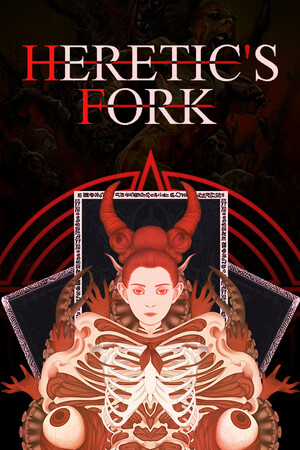
Build recommendations combine verified game information with community-tested strategies. The game does not appear to have one developer-designated strongest build, and exact card availability depends on unlocks, employee, stage choices, and random offers.
Fast answer
The answer before the background
The safest general setup is a Judgment-centered Holy or Unholy damage build with one fast damage source, one crowd-control option, and enough healing or shielding to survive the next circle. For Endless, use John Fenriz or Niya Biblyat when available, preserve draw cards, and build toward a compact deck with repeated damage buffs. Greezy is the best economy-focused option, but he needs early gold, luck, and banish-value cards before his scaling becomes reliable.
Verified baseline
How to judge a strong setup
Heretic’s Fork combines tower defense with deckbuilding: you punish waves of sinners, improve towers and cards, and work through different circles of Hell. A good build therefore needs more than a large damage number. It must answer four practical problems: early-wave clearing, enemies that reach the tower, elite or boss pressure, and the increasing health of later waves.
The strongest general principle is specialization. Choose one main damage type or tower family, then spend most upgrades on the stats that improve it. A mixed deck can work while unlocking cards, but too many unrelated towers dilute card draws and make upgrades less reliable. Keep a small number of emergency tools for healing, shielding, slowing, pushing, or burst damage rather than collecting every attractive card.
- Sustained damage clears ordinary waves and protects you from attrition.
- Crowd control buys time for towers to fire and is more valuable as waves become denser.
- Healing or shielding prevents a strong run from ending to one bad draw.
- Card draw, energy efficiency, and deck thinning matter more in Endless than in a normal clear.
| Situation | Best priority | Why it works |
|---|---|---|
| First Normal clear | Judgment plus sustained damage | It gives a clear damage plan without requiring a complicated loop. |
| High Torment | Damage, crowd control, and survival | Modifiers punish fragile builds and make consistency more important than peak output. |
| Endless score push | Draw, cooldown reduction, scaling buffs, and compact deck | Later enemy health eventually outgrows ordinary tower damage. |
| Greezy economy run | Banish income, luck, and shop access | His economy can convert weak or unwanted cards into long-term power. |
The game’s official store and update posts explain the core deckbuilding and tower-defense systems, but they do not publish a tier list. The rankings below are practical recommendations based on repeatable interactions reported by experienced players.
Normal mode
Best all-purpose build for a first clear
Start with Judgment when it is offered, then pair it with a fast, dependable damage source. Community-tested clears commonly use Judgment as the main investment because it can scale through tower damage, projectile count, projectile speed, pierce, area of effect, and the relevant damage type. The second tower should cover the weakness of the opening draw: choose sustained single-target damage if Judgment lacks tempo, or area damage if ordinary waves are overwhelming you.
During the first circles, take the cheapest upgrade that makes the current board safer. Do not sacrifice a working tower merely to chase a perfect future combination. If a healing or shielding card appears before a dangerous transition, take it unless your tower is already comfortably stable. Normal mode rewards a build that arrives at the next circle alive more than one that has slightly higher theoretical damage.
For a Holy route, focus on Holy damage and broad wave coverage. For an Unholy route, add critical-hit chance, attack speed, and pulse or projectile effects when they directly support the towers already in play. These are recommendations rather than hard rules: the best choice is the damage type for which your early cards provide the clearest upgrades.
- Choose one main tower to receive most upgrades.
- Add one complementary damage source instead of several mediocre towers.
- Buy or keep one defensive answer before the first serious difficulty spike.
- Use rerolls to improve the current plan, not to search endlessly for one named card.
| Player goal | Suggested core | Important supporting effects |
|---|---|---|
| Learn the game | Judgment plus a fast damage tower | Basic damage, projectile speed, and one defensive card |
| Fast Normal clear | Area damage plus sustained single-target damage | Projectile count, attack speed, and pierce |
| Safe first win | Judgment plus healing or shielding support | Crowd control and reliable recovery |
| Experimenting | Two towers sharing one damage type | General tower buffs and a small emergency package |
At an early stage, take immediate board strength. In middle stages, begin removing weak cards and concentrating upgrades. In later stages, favor scaling, cooldown control, and survival over another untested tower.
Endless and Torment
Builds for long runs and high scores
Endless changes the evaluation completely. Enemy health rises until ordinary tower scaling may no longer be enough, so the build must create repeated value from cards or active abilities. John Fenriz is a particularly comfortable choice because his ability can lock sacrifice slots and retain useful cards, while community reports also rate Niya Biblyat highly for extra draw and power-charge access. Neither employee is mandatory, and the official materials do not declare one as the universal best.
A reliable Endless shell has three layers. First, establish consistent damage with Judgment, Unholy MG, Unholy Pulse, or another tower family that your opening cards support. Second, add control such as pushing, slowing, or grouping enemies. Third, collect draw and cooldown tools so you can play important buffs more often. Community examples specifically mention Invigaron for cooldown reduction and Butcher of Sins as a late-run active ability that can remain relevant when enemy health becomes extreme.
Keep the deck compact. Upgrade or banish cards that do not improve your chosen plan, but do not remove every defensive card before your damage is stable. If you are building toward an infinite or near-infinite turn, protect the draw cards first and only thin the deck after you have enough energy and a repeatable way to continue drawing.
- Use the first safe circles to build a damage floor, not a finished combo.
- Save strong draw cards when the employee or strategy benefits from retaining them.
- Add cooldown reduction before the late-game health curve makes tower damage unreliable.
- Treat Butcher of Sins and similar actives as a long-run plan, not an early substitute for damage.
- Expect Endless to be less consistent than Normal mode because its scaling and offers can punish narrow builds.
| Endless goal | Recommended direction | Main risk |
|---|---|---|
| Reach 200,000 score | John or Niya with draw, buffs, and control | A setup that draws well but lacks early damage |
| Survive very late waves | Unholy or Holy specialization with cooldown support | Tower damage eventually falling behind enemy health |
| Complete a difficult Torment | Balanced damage plus healing and control | Taking greedy upgrades before the next modifier is covered |
| Test a new card combo | Start with a proven damage floor | Losing the run while waiting for the combo to appear |
Community guides disagree on the single best Endless core. Some favor Unholy MG and pulse effects, while others build around Judgment, control, and active abilities. Treat those as tested directions, not guarantees.
Employee choice
When each playstyle makes sense
John Fenriz is the safest recommendation for players who value consistency and card management. His retention and sacrifice-slot utility make it easier to preserve a key buff or prepare the next turn. Niya Biblyat is attractive for players who already understand draw-heavy openings and can convert extra cards into immediate tempo.
Greezy is a specialist rather than a beginner-friendly default. His strongest runs use gold from banishing, luck increases, shop access, and cards such as Insurance or High Roller according to community reports. The payoff is a powerful late economy, but the opening circles can be rough if the required cards do not appear. Use him when your goal is economy, experimentation, or a high-roll Endless run.
An unremarkable employee with a strong opening hand is usually better than a favored employee with no usable damage. Start from the cards and towers actually offered, then select the employee whose ability solves the run’s current weakness.
- Pick John for retention and flexible card sequencing.
- Pick Niya for draw-heavy openings and early power-charge access.
- Pick Greezy for economy scaling after his early game is secured.
- Pick another employee when the starting cards naturally form a stronger, simpler plan.
| Goal | Best fit | How to play |
|---|---|---|
| Consistency | John Fenriz | Retain useful cards and avoid wasting energy. |
| Draw-focused Endless | Niya Biblyat | Use extra draw to assemble buffs, control, and cooldown tools. |
| Economy and shops | Greezy | Banish aggressively once your early damage and survival are secure. |
| Learning fundamentals | Any straightforward employee | Prioritize a stable tower core over employee-specific tricks. |
Some recommended cards, employees, and variants may not be available on a fresh profile. If a named card is locked, replace it with the closest effect: damage, draw, control, healing, shielding, or cooldown reduction.
Practical route
A simple decision process for every run
At the start of a run, identify the best damage card or tower in the opening offer and commit to it. Before the next circle, ask whether your board can clear ordinary waves without perfect draws. If not, take immediate damage, area coverage, or control instead of economy. Once the board is safe, remove low-impact cards and begin collecting upgrades that scale the same tower family.
Before a boss or stage transition, spend resources on reliability. A small amount of healing, shielding, or crowd control can be worth more than another generic damage card. In Endless, begin preparing the draw engine early, but never let that preparation make the next wave unwinnable. If the run starts offering cards from a different damage type, change direction only when the new option is clearly stronger than your existing core.
Finally, review the cause of each loss. If enemies leaked early, improve area damage or control. If the tower died after a long stable run, add healing or shielding. If enemies survived despite a full board, prioritize scaling, critical effects, cooldown reduction, or an active ability instead of another low-impact tower.
- Early stage: secure damage and wave coverage.
- Middle stage: specialize, upgrade, and remove dilution.
- Late stage: add scaling, cooldowns, and survival.
- After a loss: fix the failure mode rather than copying a whole build blindly.
For most players, start with Judgment and a complementary damage tower, specialize into Holy or Unholy, and add control plus defense as soon as the board is stable. Move to John or Niya with a compact draw-and-buff deck for Endless. Choose Greezy only when you specifically want an economy-driven run.
FAQ
Common questions
What is the strongest build for Normal mode?
A Judgment-centered build with one complementary sustained-damage tower is the safest general recommendation. Specialize into the damage type supported by your early cards, then add area coverage, control, and one defensive option.
What should I use for Endless mode?
Use a consistent damage core first, then build around card draw, cooldown reduction, crowd control, and a compact deck. John Fenriz is a comfortable choice for retaining cards, while Niya Biblyat suits draw-heavy openings. The exact tower core can vary between Judgment, Unholy MG, Unholy Pulse, and other supported options.
Is Greezy worth using?
Yes, but mainly for economy-focused players. Greezy can scale through gold from banishing, luck, and shop access, yet his early game is less forgiving. Secure damage and survival before chasing a large economy.
Should I mix Holy and Unholy towers?
You can, especially while learning or when the offers are poor, but specialization usually produces cleaner upgrades. Mix types only when the second tower solves a clear problem such as weak single-target damage, poor wave clear, or missing control.
Why does my late Endless build suddenly fail?
Endless enemy health eventually outpaces ordinary tower growth. Add scaling buffs, cooldown reduction, draw, and a strong active ability before that point. Also check whether your deck has become too diluted to draw the cards your build depends on.
Sources
What we checked
Official listings establish current availability and product facts. Community pages are used for mechanics and build history, then labeled separately.
- OfficialHeretic’s Fork Steam store page
- OfficialHeretic’s Fork official Steam announcements and patch notes
- CommunitySteam community achievement and strategy guide
- CommunitySteam community Endless-mode discussion
- ReferenceGameplay Tips Endless guide
- ReferenceGameplay Tips basic guide