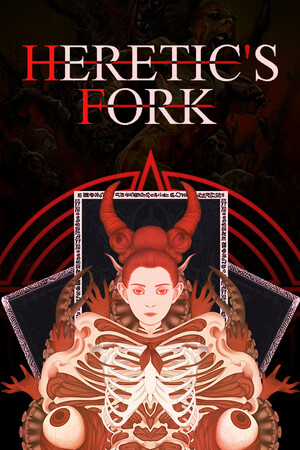
The game includes demonic imagery, cartoon violence and references to punishment in Hell.
Fast answer
The answer before the background
Start with a focused tower, Holy, Unholy or Hellfire deck. Keep the deck close to 13 to 15 cards, take useful reward cards rather than skipping them, and reserve a few repeatable buff cards for every cycle. Merge matching cards when you want a guaranteed stronger version, but leave working towers separate unless you need an open slot. For House of Cards, use Retribution four times while you have a shield, then remove the shield with Strip or another effect and reach the next round.
Verified overview
What the card pool contains
Heretic's Fork uses cards as both your run deck and your defensive toolkit. The game combines tower defense, roguelike drafting and bullet-heaven combat, so a card may place a tower, summon a garrison, apply a temporary effect, improve a stat or manipulate your hand. The official game description confirms that decks are central to the defense system, but the developer's public announcements do not provide a complete static catalogue.
The safest way to read any public card list is as a snapshot. Cards can enter the pool through normal unlocks, promotions, challenges and character-specific content. The September 2023 Collection Bloat update added Replenish, Variety, Mimic, Severance and Easy Choice, while later announcements and patch notes mention cards such as Synergist, Trinity and Intimidation Tactic. That means an older list can help identify names, but it should not be treated as a definitive inventory.
Confirmed examples include combat cards such as Retribution, Strip, Double Down and Blessing of Protection; repeatable or defensive options such as Regenerate; and build-support cards such as Synergist, Trinity, Crafter, Insurance, Bazaar and Jackpot. The names are verified by developer patch notes or established community guides. Exact effects, costs and availability should always be checked on the card in your version.
- Damage families include Holy, Unholy and Hellfire.
- Other important tags include Towers, Garrisons, draw, luck, shields, healing and card cycling.
- Some cards disappear after use, while lower-tier structures can be reusable; inspect the card's marker before planning around it.
| Card or group | Use | Best practice |
|---|---|---|
| Retribution | Records or converts shield-related value for a task and defensive setup | Pair with a shield, then plan how to remove that shield. |
| Blessing of Protection and Regenerate | Create protection or sustain | Use them to survive a setup turn, not as your only damage plan. |
| Strip | Removes shields or other useful effects | Keep it available when a challenge requires shield destruction. |
| Double Down | Helps repeat a card effect or cycle a setup | Save it for a key payoff instead of spending it on filler. |
| Synergist and Trinity | Support broad build scaling or conditional power | Read the current text carefully after patches; both have received fixes. |
No official source found during research publishes every card, every level value and every unlock condition in one maintained list. This guide therefore separates confirmed card names and mechanics from recommendations rather than inventing missing entries.
Deck building
How to assemble a dependable run deck
Choose a primary identity as soon as the first stage offers meaningful options. A tower deck wants tower damage, range, attack speed or projectile improvements. A Holy, Unholy or Hellfire deck wants its matching damage cards and only the support effects that improve that family. Mixing every damage type usually creates weak cards that help nothing on the field.
Keep the deck compact. A long-running community guide reports a minimum deck size of 13, with rocks added when the active collection falls below that threshold, and recommends staying around 13 to 15 cards. A compact deck makes each draw more predictable and lets you see your key pieces more often. Adding every interesting card can dilute the plan even when each individual card is strong.
Do not skip rewards automatically. A card that is not ideal for the current board may still save several merge steps later, especially if it arrives at a higher rarity. The better rule is to take the highest-value card offered, then remove or consume weak cards when the game gives you a safe opportunity. Keep at least one defensive or recovery option until your damage is already stable.
- Early run: secure one reliable damage source and enough range, area coverage or projectile speed to handle waves.
- Middle run: add one or two scaling buffs, then improve the main tower or damage family rather than starting a second plan.
- Late run: prioritize cards that multiply an established strategy, improve cycling or solve a specific stage weakness.
- Check a tower's detailed tags before buying upgrades; not every buff affects every tower.
| Deck plan | Core cards to seek | Main risk |
|---|---|---|
| Focused towers | One strong tower, tower damage, range and attack speed | A tower may ignore some generic buffs. |
| Holy or Unholy | Matching damage cards plus area or projectile support | Off-type cards dilute the draw. |
| Hellfire | Hellfire sources, area damage and compatible sustain | The build can need more unlocks and careful scaling. |
| Garrison | Garrison lifespan, spawn or damage support | Units expire, so timing and persistence matter. |
For a first clear, a focused tower or single damage-family deck is more forgiving than a mixed deck. Hellfire and Garrison builds can work, but community testing consistently describes them as more dependent on unlocks and execution.
Upgrades and merging
When to merge cards and when to keep them
Cards use levels or rarities, and merging two cards of the same rarity produces a stronger result. Combining two copies of the same card can offer a guaranteed upgraded version of that card when the version is unlocked, which is much safer than merging unrelated cards and accepting a random result. This is especially valuable for a core tower or a card that defines your deck.
Do not merge two active towers simply because the button is available. Community testing notes that separate lower-level towers can sometimes deliver comparable output to one merged tower, while the real benefit of merging is often freeing a placement slot. Merge when you need room, when the upgraded tower gains an important breakpoint, or when the board is already stable.
For non-structure cards, ask whether the upgrade improves immediate survival or merely raises a number on a card you rarely draw. A repeatable buff can be better left at a lower level if you want to play it every cycle. Conversely, a one-use payoff may be worth upgrading when it ends an elite wave or fixes a known boss problem.
- Prefer matching pairs when you need a specific upgraded card.
- Keep a strong card in the merge slot if you cannot afford or safely play it yet; it can remain for the next round.
- Use high-rarity cards you do not need as merge material only after checking whether their rarity is more valuable than the random result.
- Treat rocks as useful temporary merge material, not as a reason to over-expand the deck.
| Situation | Recommended choice | Reason |
|---|---|---|
| Two matching core cards | Merge them | You can target the same card's stronger version. |
| Two different useful towers | Keep both | Separate towers may cover more enemies and preserve board flexibility. |
| Full tower board | Merge only if the upgrade matters | The slot is often more valuable than a small level increase. |
| Weak high-rarity card | Use it carefully as material | Higher rarity can skip several lower-level merge steps. |
The developer has fixed saving and loading behavior for many card effects, including Synergist, Trinity, Retribution and several fire, healing and draw cards. If a card behaves differently from an old guide, trust the text and your current build first.
Task solution
How to complete the House of Cards task
The most consistently documented solution uses Retribution with a shield card. The community walkthrough recommends playing Retribution four times while holding any amount of shield, then destroying the shield and reaching the next round. Blessing of Protection or Regenerate can provide the shield, while Strip is a convenient way to remove it.
Use a character or variant with flexible card access, and avoid effects that change your initial draw unless you understand how they interact with the task. Multiple copies of Retribution make the setup easier, while Double Down can help repeat the needed effect. Do not destroy the shield before all four Retribution uses are active.
A practical sequence is: first secure Retribution; next create a shield; cycle until Retribution has been used four times; play Strip or another shield-removing effect; then survive the remainder of the turn and start the next round. The task should unlock at that point. This method is community-verified rather than explained in an official task document, so wording or requirements may differ after a future update.
- Do not accidentally spend Retribution on a turn when the shield is absent.
- Keep enough energy or card-draw support to complete four uses.
- If the task does not trigger, repeat the setup without draw-modifying cards and confirm that the shield was actually removed after the fourth use.
| Step | Action | Purpose |
|---|---|---|
| 1 | Find Retribution | It is the required setup card in the documented method. |
| 2 | Gain a shield | Blessing of Protection or Regenerate are examples. |
| 3 | Use Retribution four times | Build the required count before removing protection. |
| 4 | Remove the shield | Strip is the clearest documented option. |
| 5 | Reach the next round | This is when the task is reported to unlock. |
The task guide is a high-quality community reference, not an official developer explanation. If it fails on your platform, check for a changed challenge description or a patch-specific bug before assuming the card interaction is wrong.
Quick reference
Best synergy principles
The strongest synergies are usually functional rather than name-based. Pair a damage source with the stat it actually uses, then add one defensive layer and one way to cycle or improve card quality. For example, a tower that benefits from range should not consume several attack-speed upgrades that its tag ignores. Similarly, a Garrison deck needs lifespan or spawn support before broad tower bonuses become attractive.
Luck, draw and shop cards can be powerful because they improve access to higher-tier cards, but they are enablers rather than a complete damage plan. Insurance, Bazaar and Jackpot are most attractive when your route already generates or spends meaningful gold. Crafter is strongest when your hand contains several rocks that you can turn into more useful material.
The best upgrade is the one that improves the next several waves, not necessarily the card with the biggest printed number. Upgrade your main source when a breakpoint is near, leave repeatable buffs available for repeated use, and keep one answer to the stage's most dangerous enemy type.
- Tower plus matching range or damage is the safest general-purpose pairing.
- Hellfire plus area damage and Healing Flame supports crowd control with sustain.
- Garrison plus lifespan support prevents your investment from disappearing too quickly.
- Shield plus Retribution is the key documented House of Cards interaction.
- Draw or luck plus a compact deck improves access to your chosen payoffs.
| If your run is struggling with | Choose first | Avoid |
|---|---|---|
| Crowds | Area damage, projectile speed or a second compatible tower | Single-target upgrades only |
| Fast enemies | Range, attack speed and reliable coverage | Slow setup cards without immediate damage |
| Survival | Shield, healing or recovery | Removing every defensive card for greed |
| Bad draws | Draw, luck or a smaller deck | Adding unrelated cards just because they are rare |
Use the in-game card text as the final authority. Public guides are excellent for discovering interactions, but the developer's later fixes show that card logic can change.
FAQ
Common questions
Is there an official complete card list?
No maintained, public list was found that combines every card, level, rarity and unlock condition. The pool expands through unlocks, promotions and challenges, so older lists should be treated as snapshots.
How many cards should be in a deck?
Aim for roughly 13 to 15 cards once your plan is established. The game fills undersized collections with rocks, while a much larger deck makes key cards harder to draw.
Should I merge every pair immediately?
No. Merge matching cards when you want a guaranteed stronger version, or merge active towers when you need a free slot. Otherwise, separate towers and repeatable low-tier cards may provide more value.
What is the easiest House of Cards setup?
Use Retribution with a shield from Blessing of Protection or Regenerate. Play Retribution four times, remove the shield with Strip or a similar effect, then reach the next round.
Are Hellfire and Garrison decks bad?
No, but they are less forgiving while your collection is small. They need more specific support, such as Hellfire scaling or Garrison lifespan, so focused tower, Holy or Unholy plans are usually simpler for early clears.
Sources
What we checked
Official listings establish current availability and product facts. Community pages are used for mechanics and build history, then labeled separately.