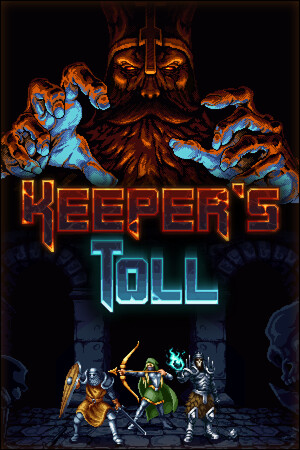
This guide separates verified game information from recommendations. Class rankings are practical judgments based on the available official material and recent player reports, not an official developer tier list.
Fast answer
The answer before the background
For most players, start with Pyromancer and prioritize fire damage, critical-hit synergy, ability cooldown, and movement speed. Blood Maiden is the better all-round class if you want strong area damage with more forgiving recovery. Bogatyr is the safest choice for Hard Mode and high-curse attempts because of his defense and healing. Ranger rewards precise movement and aiming, while Necromancer is now a credible specialist after Version 1.3 added Hollow Flame Skeletons. Shadow Monk is playable but needs more deliberate positioning and a focused skill plan.
Quick verdict
Best class for each player goal
Keeper's Toll has six heroes with separate abilities and progression trees, so the strongest choice depends on what you want from a run. The official game description confirms the full roster: Shadow Monk, Pyromancer, Blood Maiden, Necromancer, Ranger, and Bogatyr.
The recommendations below are not absolute damage measurements. They are build priorities designed around each hero's documented mechanics, recent official updates, and consistent community experience.
- Best general pick: Pyromancer. His ranged fire kit clears groups quickly and scales especially well when critical hits create additional fire effects.
- Best all-rounder: Blood Maiden. She combines area damage, sustain, and a forgiving close-to-mid-range playstyle.
- Best defensive pick: Bogatyr. Build defense, health, and healing to make difficult stages and curse stacks more manageable.
- Best ranged specialist: Ranger. Prioritize arrow coverage, mobility, and the controls that let you keep enemies at a safe distance.
- Best summon specialist: Necromancer. Build around Raise the Dead, then use Hollow Flame after unlocking it for stronger piercing fire projectiles.
- Best deliberate-control challenge: Shadow Monk. Focus on cooldowns, positioning, and the abilities that make his major power spike easier to use.
| Goal | Recommended hero | Core priorities |
|---|---|---|
| Fast normal clears | Pyromancer | Fire damage, critical chance, cooldown, movement speed |
| Safer Hard Mode | Bogatyr | Defense, maximum health, healing, reliable area attacks |
| Flexible first serious run | Blood Maiden | Area damage, critical synergy, sustain, cooldown |
| Mobile ranged play | Ranger | Arrow coverage, attack speed, movement speed, cooldown |
| Summon-focused build | Necromancer | Raise the Dead, skeleton upgrades, survivability, pickup sustain |
| High-control melee challenge | Shadow Monk | Cooldown, defensive timing, movement, ultimate support |
The developer has explained that Knowledge points are intentionally limited so players must choose a direction rather than max every option. Treat the rankings as a starting point, then adjust them for your control scheme and preferred pace.
Build plans
How to build the top three heroes
Pyromancer is the cleanest recommendation for a first win or a fast farming run. Begin with the fire attacks that cover the largest area, then invest in critical-hit support and cooldown. Movement speed matters because his damage works best when you kite enemies through overlapping fire rather than stand still. Keep one defensive or healing option available instead of committing every choice to damage.
Blood Maiden is the most balanced recommendation when you want damage without feeling fragile. Start with her broad area abilities, then add critical-hit or attack-speed support and cooldown reduction. Her sustain lets you take a more aggressive route through enemy packs, but do not treat healing as permission to ignore boss patterns. Maintain enough movement and defensive investment to escape when elites or invaders close in.
Bogatyr is the best practical answer for players struggling with Hard Mode. Take defense and maximum-health improvements early, then add his reliable damage tools. Healing has more value on this hero because it extends the number of mistakes a run can survive. His lower speed means you should clear threats before they surround you and avoid choosing several slow, narrow attacks at once.
- Pyromancer opening: take the widest fire attack available, then improve critical-hit effects and ability cooldown. Add movement speed before the final stage if your run feels unsafe.
- Blood Maiden opening: choose a dependable area skill first, follow with sustain or critical support, and use cooldown improvements to keep her screen-clearing abilities available.
- Bogatyr opening: take defense or health, secure a dependable attack pattern, and then improve healing and cooldown rather than chasing maximum damage immediately.
| Hero | Strength | Main weakness | Best use |
|---|---|---|---|
| Pyromancer | Long-range area damage and strong scaling | Can be punished by healing-related curses or close pressure | Fast clears and experienced players |
| Blood Maiden | Damage, sustain, and flexible positioning | Some abilities need aggressive spacing | First clear and general play |
| Bogatyr | Defense, healing, and mistake tolerance | Slower pace and less flexible reach | Hard Mode and high curses |
| Ranger | Mobile ranged damage and strong kiting | Aiming and corridor coverage require practice | Players who enjoy precision |
| Necromancer | Persistent summons and a unique scaling path | Needs time to establish its army | Longer specialist runs |
| Shadow Monk | Distinctive ability timing and active control | Less forgiving if skills are unfocused | Players seeking a technical style |
Version 1.3 introduced the Hollow Flame evolution for Raise the Dead. After the required Necromancer progression, the evolved skeletons gain longer targeting range, increased damage, and piercing fire projectiles, while attacking somewhat more slowly.
Mode and stage advice
Change the plan as difficulty rises
For early normal stages, damage and movement are usually more valuable than a heavily defensive setup. The goal is to establish a reliable attack pattern before enemies become dense. Take one recovery tool when available, but do not spend every early upgrade on survival if your damage is failing to keep pace.
For later stages, prioritize coverage over single-target burst. Narrow horizontal attacks can leave gaps when enemies approach from several directions, especially in enclosed routes. Ranger benefits from better directional coverage, while Pyromancer and Blood Maiden can rely on broad area effects. Necromancer should protect the summon engine long enough for the army to become the main source of damage.
For Hard Mode and curse-heavy runs, replace one damage choice with defense, healing, or movement. Bosses and curses create more dangerous moments than ordinary enemies, so a build that clears slightly slower but survives contact is often stronger in practice. Bogatyr is the easiest recommendation for this goal, with Blood Maiden close behind for players comfortable with aggressive movement.
For the final areas, stop rerolling purely for your favorite attack. Fill gaps in the build instead. If you already have damage, seek cooldown, movement, defense, or a tool that handles enemies outside your main firing direction. A complete build beats a theoretically stronger collection of duplicate effects.
- Early stage: secure one dependable area attack and one movement or recovery option.
- Mid stage: add cooldown and coverage so elite enemies do not force constant retreat.
- Late stage: choose defense, healing, or mobility if your damage is already clearing regular waves.
- Boss stage: keep at least one ability that can damage while you reposition instead of relying only on close-range attacks.
| Situation | Best adjustment |
|---|---|
| Normal mode learning | Prioritize damage and movement while learning enemy patterns. |
| Hard Mode | Trade some damage for defense, healing, and reliable escape routes. |
| High curses | Avoid fragile builds and favor repeatable damage over risky burst. |
| Boss-focused run | Keep a long-range or repositioning attack available. |
| Ranger corridor stages | Take wider arrow coverage and practice the current aiming scheme. |
| Necromancer progression | Protect the skeleton engine until its upgrades become the main damage source. |
The developer has announced updates and balance fixes, but there is no complete public table proving that one hero has the highest damage in every stage, curse level, or control setup. Rankings can shift with future patches.
Practical setup
How to spend skills without ruining a run
Do not spread Knowledge points evenly across every available option. The developer has explicitly said that players are meant to choose among limited upgrades, so each hero should have a clear job. A simple rule is to fund one primary damage engine, one support engine, and one survival layer.
For the primary engine, select the attack or summon that kills most enemies. For support, choose effects that improve the same engine, such as critical synergy for Pyromancer, area and sustain for Blood Maiden, or skeleton upgrades for Necromancer. For survival, choose movement, defense, healing, or cooldown depending on the hero and the stage.
If a run is failing, identify the failure rather than blindly adding damage. Dying while surrounded calls for coverage or movement. Losing to a boss calls for sustained single-target pressure and safer repositioning. Falling behind early usually means the first damage choice was too narrow or the build spent too many upgrades on utility.
- Lock in one primary damage plan before taking several unrelated abilities.
- Prefer upgrades that improve both ordinary wave clear and boss damage.
- Use rerolls to repair a missing build role, not only to chase one favorite skill.
- Respec between heroes when possible; a defensive Bogatyr setup is not automatically correct for Pyromancer.
- Check the current patch before copying an old community build, especially for Necromancer and Ranger.
| If you are struggling with... | Try this first |
|---|---|
| Regular enemies reaching you | Add wider coverage, movement speed, or cooldown. |
| Bosses taking too long | Add sustained damage that works while moving. |
| Frequent deaths | Replace one damage upgrade with defense or healing. |
| Ranger shots missing | Use the most comfortable aiming scheme and prioritize coverage. |
| Necromancer feeling weak | Commit to summons instead of splitting points between skeletons and unrelated attacks. |
Patch Build 1.3.2 changed the Sacrifice Altar so accepting a sacrifice cannot kill a low-health player and added a cap to the health it can consume. That makes altar decisions less punishing, but it does not remove the need to protect a fragile run.
FAQ
Common questions
What is the best class for a new player?
Blood Maiden is the safest general recommendation because she combines area damage and sustain. Pyromancer is better if you are comfortable kiting, while Bogatyr is better if surviving mistakes is your priority.
What is the best class for Hard Mode?
Bogatyr is the most forgiving choice because his defensive and healing tools let him survive mistakes. Blood Maiden is a strong alternative when you prefer faster clears and more aggressive positioning.
Is Pyromancer still the strongest damage class?
It is the strongest general damage recommendation in this guide, but that is not an official ranking or a universal damage test. Your results depend on upgrades, stage layout, curses, control method, and how consistently you maintain distance.
How should I build Necromancer after Version 1.3?
Build around Raise the Dead and protect the summon engine until it is established. After unlocking Hollow Flame, use the evolved skeletons for longer-range piercing fire damage, while keeping enough movement and defense to survive until the army takes over.
Should I max every skill or Knowledge option?
No. The developer has said the system is designed around choosing a direction rather than maxing everything. Specialize around one main damage engine and add only the support and survival upgrades that solve your current weakness.
Sources
What we checked
Official listings establish current availability and product facts. Community pages are used for mechanics and build history, then labeled separately.
- OfficialOfficial Steam store page and hero roster
- OfficialOfficial developer news feed, Version 1.3 and Hollow Flame details
- OfficialOfficial developer discussion on limited Knowledge-point choices
- CommunityCommunity comparison of classes and high-curse runs
- OfficialOfficial Ranger build advice from the developer