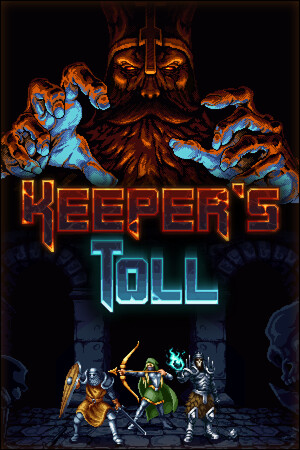
This guide discusses combat-focused recommendations and late-game progression. Exact numerical tier lists are not presented because the developer does not publish a complete, current balance table for every hero.
Fast answer
The answer before the background
Pyromancer is the best all-purpose starting pick because its wide attacks make early waves and crowded stages easier to control. Blood Maiden is the best close-range alternative, with sweeping attacks and strong offensive momentum. Bogatyr is the safest choice for learning bosses or playing on higher difficulty. Necromancer becomes a strong specialist after its Hollow Flame upgrade, while Ranger is best for players comfortable with movement and directional attacks. Shadow Monk can perform well, but its close-range combo game demands more precision than the other recommendations.
Direct recommendation
The short list: who should you pick?
Keeper’s Toll does not use cosmetic character variants. The six heroes have distinct abilities, progression trees, and game-defining mechanics, so the best choice depends heavily on how you handle movement, aim, and enemy pressure.
For most players, start with Pyromancer. The developer describes the hero as a wide-area attacker whose chaotic flames sweep across the battlefield. That makes it easier to remove surrounding enemies while you focus on positioning and boss patterns. Community feedback also consistently identifies Pyromancer as one of the strongest early performers, although that judgment is not an official tier list.
Blood Maiden is the strongest alternative when you prefer to fight near enemies. Her glaive attacks cover broad arcs, and her blood-based kit supports an aggressive rhythm. Bogatyr is the safest option when surviving matters more than clearing speed. His identity is built around heavy defenses and short-range earth-infused attacks, which makes mistakes less punishing.
- Best first pick: Pyromancer.
- Best aggressive melee pick: Blood Maiden.
- Best defensive pick: Bogatyr.
- Best summon specialist: Necromancer.
- Best ranged control pick: Ranger.
- Best technical melee pick: Shadow Monk.
| Goal | Recommended hero | Why it fits | Main drawback |
|---|---|---|---|
| Learn the game | Pyromancer | Wide attacks reduce pressure from ordinary waves. | Less focused if you prefer deliberate single-target combat. |
| Clear enemies quickly | Pyromancer or Blood Maiden | Both apply strong area pressure through different attack patterns. | Both still require movement against bosses. |
| Survive difficult fights | Bogatyr | Defense-focused tools give you more room for mistakes. | Short reach can make some encounters slower. |
| Play with summons | Necromancer | Skeletons and spirit attacks create a distinct minion-focused plan. | Its best current upgrade is tied to late progression. |
| Fight from range | Ranger | Traps, arrows, agility, and kiting support distance management. | Directional aiming can take practice. |
| Master advanced movement | Shadow Monk | Fast strikes and disabling combos reward precise positioning. | Close-range execution is less forgiving. |
The six hero identities and their broad playstyles are documented by Stingbot Games. The labels such as “best first pick” and “safest” are practical recommendations based on those mechanics, official balance notes, and clearly labeled community feedback rather than a developer-published ranking.
By mode and difficulty
Best choices for normal runs, Hard Mode, and late progression
For a normal run, Pyromancer gives the clearest route to consistent progress. Prioritize upgrades that improve coverage, damage uptime, and the ability to keep moving. The goal is not to stand still and maximize a single attack; it is to keep escape routes open while the fire handles groups.
Blood Maiden is also excellent for normal content if you are comfortable reading melee range. Her broad strikes are particularly useful when enemies surround you, but you should avoid treating her as a stationary tank. Use the attack sweep to create space, then reposition before the next wave closes in.
For Hard Mode, Bogatyr is the most forgiving recommendation. The official description emphasizes heavy defenses, and the developer has continued to fix and tune his defensive systems. That does not make him invulnerable. Short-range attacks still require you to respect telegraphs, hazards, and boss mechanics.
Necromancer is the best choice for a late-progression or completionist goal if you enjoy building around summons. Version 1.3 added the permanent Hollow Flame evolution after defeating Kalinov as the Necromancer. At Rank 5, skeletons gain stronger fire-projectile behavior, longer targeting range, and piercing attacks, with slightly slower attack speed as the trade-off. Because that upgrade is locked behind a specific achievement condition, it should be viewed as a payoff for progression rather than a reason to select the class for a first blind run.
There is no verified evidence here for a universal “best” hero in every Hard Mode stage. Enemy layouts, talent investment, control preference, and familiarity with boss patterns all matter. Treat the rankings as starting points, not guarantees.
- Normal progression: Pyromancer first, Blood Maiden second.
- Hard Mode learning: Bogatyr first, Blood Maiden second.
- Late summon build: Necromancer after unlocking Hollow Flame.
- High-control ranged play: Ranger, provided you are comfortable with kiting.
| Mode or objective | Best starting recommendation | Reason |
|---|---|---|
| First clear | Pyromancer | The broad attack profile is easier to use while learning enemy patterns. |
| Hard Mode practice | Bogatyr | Defense-focused play gives more time to react and recover. |
| Boss-focused melee | Blood Maiden | Sweeping attacks maintain pressure without requiring a purely defensive plan. |
| Completionist Necromancer run | Necromancer | Its later skeleton evolution adds a permanent progression target. |
| No-hit or movement challenge | Ranger or Shadow Monk | Both emphasize positioning, but they demand more execution. |
The official developer news confirms the Necromancer additions on Steam and says console ports are updated separately. If you play on Switch, PlayStation, Xbox, or Microsoft Store for Windows, confirm that Version 1.3 content is available before planning around Hollow Flame.
By stage and goal
Which hero fits each area?
Keeper’s Toll has four documented areas: Linden Forest, Usvit Castle, Usvit Depths, and End of Time. The official descriptions identify their different enemy themes and hazards, but they do not publish a formal character-by-stage tier list. The recommendations below are therefore matchup guidance, not verified win-rate statistics.
For Linden Forest, Pyromancer is the most practical general pick. Open pressure and broad attacks help when the area’s guardians approach from several directions. Ranger is a good alternative if you prefer to use traps and keep enemies at distance.
Usvit Castle favors heroes who can maintain control while dealing with indoor pressure. Blood Maiden’s sweeping melee pattern is useful when routes become crowded, while Pyromancer remains the easier generalist. Shadow Monk can work well for experienced players who are comfortable slipping through attacks rather than absorbing them.
Usvit Depths is the stage where defensive and summon-focused choices become more attractive. Bogatyr gives you a safer learning run, and Necromancer can establish a protective frontline while spirit attacks add damage. Do not assume the summon plan is automatically easier; it becomes more attractive as its talent tree and later upgrades develop.
End of Time is the strongest argument for choosing a hero you already understand. Its late-game encounters introduce severe pressure and unusual mechanics, so familiarity with attack timing matters more than a simple tier label. Use Bogatyr for consistency, Pyromancer for area control, or Necromancer if you have already unlocked and practiced Hollow Flame.
- Linden Forest: Pyromancer for general clearing, Ranger for distance.
- Usvit Castle: Blood Maiden for close pressure, Pyromancer for simplicity.
- Usvit Depths: Bogatyr for safety, Necromancer for summon control.
- End of Time: Use your most practiced hero; Bogatyr and Pyromancer are the safest recommendations.
| Stage | Recommended pick | Practical approach |
|---|---|---|
| Linden Forest | Pyromancer | Keep moving through open space and use wide attacks to thin groups. |
| Usvit Castle | Blood Maiden | Use sweeping melee attacks to create exits before the room closes in. |
| Usvit Depths | Bogatyr or Necromancer | Choose defense for learning or summons for a progression-focused run. |
| End of Time | Your most practiced hero | Prioritize boss knowledge and reliable defensive decisions over novelty. |
No official source found during research provides measured clear rates by hero and stage. The stage recommendations are informed judgments from documented class mechanics and the game’s stated emphasis on unique bosses, hazards, and skill-based play.
Practical setup
How to choose and improve your first character
First, select Pyromancer unless you specifically want melee, defense, summons, ranged aiming, or combo play. The game’s heroes are intentionally distinct, and the developer has stated that they are meant to play like separate classes rather than simple skins.
Second, complete several runs before judging a hero. Each character has a separate progression tree, so a weak first impression may reflect unfinished talents rather than the hero’s final potential. Spend early progression on the parts of the kit that solve your immediate problem: coverage for wave control, defensive tools for survival, or cooldown and summon improvements for ability-driven builds.
Third, match your controls to the character. Ranger has a documented kiting mode indicator and directional arrow behavior, so practice movement and firing before taking it into a difficult stage. Shadow Monk similarly expects deliberate positioning because its identity revolves around fast strikes and disabling combos.
Finally, use the in-game damage and survival feedback where available, but do not compare one short run directly with another. A character can look weaker while learning its control scheme or stronger after a talent milestone. The most useful test is whether the hero reliably solves the problem that caused your previous run to fail.
- Play three to five runs before switching permanently.
- Finish the early talent nodes that improve your main damage pattern.
- Keep one defensive option in the build for boss attempts.
- Use Ranger and Shadow Monk only after their movement controls feel natural.
- Re-test Necromancer after unlocking Hollow Flame rather than judging only its early form.
| If your runs fail because of... | Try this adjustment |
|---|---|
| Enemies surround you | Choose Pyromancer or Blood Maiden and prioritize area coverage. |
| You die to avoidable hits | Switch to Bogatyr or add defensive talents before chasing damage. |
| Bosses outlast your build | Use more sustained damage and avoid spending every cooldown on minor waves. |
| You cannot control distance | Practice Ranger kiting or move to Pyromancer before returning to it. |
| Summons feel too weak | Continue Necromancer progression and test the post-Hollow Flame version. |
Verified details in this guide come from the developer’s game page, official store descriptions, and official Steam announcements. Community opinions are used only as supporting context for perceived early strength and control difficulty, not as definitive balance data.
FAQ
Common questions
Is Pyromancer the easiest hero for new players?
It is the safest recommendation for most beginners because its wide attacks reduce the pressure of ordinary enemy waves. You still need to learn movement and boss patterns, but the class generally asks less precise positioning than Shadow Monk or Ranger.
Is Necromancer better after the 1.3 update?
It has a stronger late-progression case because Version 1.3 added Hollow Flame, a permanent skeleton evolution unlocked by defeating Kalinov as the Necromancer. The upgrade improves projectile behavior and damage potential, but it is not available immediately.
Which hero is best for Hard Mode?
Bogatyr is the most forgiving recommendation because his identity centers on defense and sturdy short-range attacks. That does not guarantee a clear, and a practiced Pyromancer or Blood Maiden can outperform him for players who already understand the encounters.
Should I use Ranger or Shadow Monk for a first run?
Choose Ranger if you enjoy distance, traps, and directional attacks. Choose Shadow Monk if you want fast melee combos and are comfortable reacting at close range. Neither is the most forgiving blind pick, so Pyromancer is usually a better starting point.
Are the same rankings valid on console?
Use them as general guidance, but verify your platform’s installed update. The developer documents separate console rollout timing for newer content, so Necromancer recommendations tied to Hollow Flame may not apply until that content is present.
Sources
What we checked
Official listings establish current availability and product facts. Community pages are used for mechanics and build history, then labeled separately.
- OfficialStingbot Games: official Keeper’s Toll game page and hero descriptions
- OfficialSteam store page: official release details, six heroes, and game systems
- OfficialStingbot Games official Steam news: Version 1.3.0 and 1.3.1 Necromancer updates
- OfficialStingbot Games official Steam news: Version 1.3.2 and platform update notes
- CommunityDeveloper response and player discussion on character balance and controls