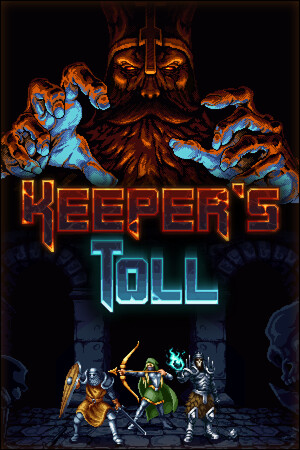
This guide contains minor progression spoilers about class availability and talent-tree rewards.
Fast answer
The answer before the background
The playable roster contains six heroes: Shadow Monk, Pyromancer, Blood Maiden, Necromancer, Ranger, and Bogatyr. You do not need to complete a hidden quest or find a drop to access the classes; the developer says all six are available at the start. Their progression is class-specific, so you unlock more skills by filling out the selected hero's talent tree. The final two talent slots provide that hero's unique abilities. Choose by playstyle: Shadow Monk favors fast disabling combos, Pyromancer uses broad fire attacks, Blood Maiden sweeps with a glaive, Necromancer controls the dead, Ranger combines agility, traps, and arrows, and Bogatyr relies on defense and short-range earth attacks.
Roster
All six playable heroes
Keeper's Toll uses a class-based hero system rather than a large collection of lightly modified survivors. The official descriptions give each hero a different weapon pattern, combat rhythm, and defining mechanic. That makes the first choice meaningful, but it also means that early upgrades should be judged against the hero's intended role instead of treated as universally interchangeable.
The roles below are practical summaries of the developer's descriptions. They are not a formal in-game tier list, and the available evidence does not establish a universal strongest character. Map familiarity, talent choices, and personal control will affect results.
- Shadow Monk is a fast melee skirmisher. He uses quick strikes, evasive movement, and disabling combos, making him a natural choice for players who prefer entering and leaving danger repeatedly.
- Pyromancer is a wide-area damage specialist. His elemental attacks sweep across groups and are suited to players who want chaotic ranged pressure and strong crowd coverage.
- Blood Maiden is a close-range bruiser built around sweeping glaive attacks and corrupted blood. She is a good fit for players who want to stand near enemies and clear space with broad swings.
- Necromancer combines summoned or reanimated support with direct combat. He commands the dead, channels spirit attacks, and can fight at close range with his flail.
- Ranger is a mobile ranged hunter. She uses agility, traps, and arrows, giving her a control-oriented style that rewards positioning and preparation.
- Bogatyr is the defensive option. He emphasizes heavy defenses, divine power, and short-range earth-infused attacks, which suits a slower, sturdier approach.
| Hero | Primary role | Best starting expectation |
|---|---|---|
| Shadow Monk | Mobile melee control | Fast attacks and disabling combos. |
| Pyromancer | Area damage | Large elemental attacks against groups. |
| Blood Maiden | Melee bruiser | Sweeping glaive strikes and blood effects. |
| Necromancer | Summoner and hybrid melee | Reanimated allies, spirits, and flail attacks. |
| Ranger | Ranged control | Traps, agility, and sustained arrows. |
| Bogatyr | Defensive melee | Durability and short-range earth attacks. |
The official roster pages do not provide a full numerical stat table, definitive difficulty rating, or universal tier ranking for these heroes. Treat claims that one class is objectively best as player opinion unless supported by a specific patch or developer statement.
Unlocks
How character access and progression work
All six classes are available at the start according to a developer response on the game's Steam community page. That means the game does not require you to finish the first area, defeat a particular boss, collect a currency, or meet a hidden condition before trying another hero. If a class appears unavailable on your platform, check the game's current installation and menu state rather than assuming an unlock quest exists.
The important distinction is between unlocking a character and progressing that character. The hero roster is open immediately, but each class has its own talent tree. Skills and later upgrades are earned through that class's progression, so progress made on one hero should not automatically be treated as progress for another.
The same developer response states that every class has two unique abilities at the end of its talent tree. These end-of-tree rewards are class-specific, which gives you a reason to continue developing a hero even after you understand its starting attacks.
- To try a different style, return to the character-selection screen and choose another hero immediately.
- To improve a chosen class, play runs with that hero and invest in that hero's talent tree.
- Do not expect one class's completed tree to unlock another class's abilities.
- If you are testing a hero, give its talent design time before judging it solely by its starting kit.
- For a first run, choose based on control preference: mobility, area damage, melee reach, summons, ranged traps, or defense.
| Goal | What to do | What to expect |
|---|---|---|
| Try another class | Select any of the six heroes from the start. | No separate character unlock condition is required according to the developer. |
| Unlock more class power | Progress through the selected hero's talent tree. | The rewards are tied to that hero. |
| Reach the end of a tree | Complete the class progression. | The final two slots contain two unique abilities for that class. |
| Build a second main | Repeat progression with another hero. | The available evidence does not confirm shared talent-tree progress. |
The developer confirms the access model and end-of-tree rewards, but the available sources do not publish every talent-tree node or the exact requirements for each individual skill. Do not rely on an unverified list of node names or costs.
Recommendations
Which hero should you choose first?
There is no verified official ranking, so the safest recommendation is to match the hero to the way you like to handle danger. Players who enjoy constant repositioning should start with Shadow Monk or Ranger. Players who prefer clearing several enemies at once can begin with Pyromancer or Blood Maiden. Necromancer is the clearest choice for a hybrid or summon-focused fantasy, while Bogatyr is the most natural starting point for players who value durability over speed.
A practical way to compare them is to play short test runs rather than committing to a single main immediately. Focus on whether the attack range, movement demands, and recovery windows feel comfortable. Because each hero has a separate progression tree, early experimentation is useful before spending most of your long-term effort on one class.
For difficult encounters, choose the role that helps you read the fight. A mobile hero can make repositioning easier, a wide-area hero can reduce pressure from crowds, and a defensive hero can give you more time to learn attack patterns. These are playstyle recommendations, not confirmed balance conclusions.
- Choose Shadow Monk if you want speed, close-range pressure, and disabling attacks.
- Choose Pyromancer if your priority is clearing groups with broad elemental damage.
- Choose Blood Maiden if you prefer sweeping melee attacks and aggressive positioning.
- Choose Necromancer if you want a mixed style involving reanimated enemies and spirit attacks.
- Choose Ranger if traps, distance, and precision sound more appealing than trading blows.
- Choose Bogatyr if you want a sturdier fighter with defensive tools and short-range power.
FAQs
Named hero questions answered
These answers use the names and descriptions published by the developer rather than adding unverified lore or statistics.
FAQ
Common questions
How many playable characters are in Keeper's Toll?
The current official roster lists six playable risen heroes: Shadow Monk, Pyromancer, Blood Maiden, Necromancer, Ranger, and Bogatyr.
Are the heroes locked at the beginning?
No. A developer states that all classes are available from the start. You do not need to unlock the heroes through bosses, drops, or a character-specific quest.
Who is the fastest hero?
The official description most clearly associates fast reflexes and quick strikes with Shadow Monk, while Ranger is described as agile. The sources do not provide a formal movement-speed ranking, so calling either one definitively fastest would be unverified.
Does each hero have a unique talent tree?
Yes. The developer describes class-specific progression and says the final two slots in each talent tree unlock two unique abilities for that hero.
Are there playable towers or recruitable units?
The official character information identifies six playable heroes, not a separate tower-defense or recruitable-unit roster. Necromancer does reanimate the dead as part of his combat identity, but the available sources do not describe those entities as selectable characters.
Which hero is best for beginners?
There is no official beginner ranking. Bogatyr may appeal to players who want a defensive style, while Pyromancer may feel intuitive for players who prefer broad attacks. Start with the hero whose combat rhythm matches your preferences, then use the talent tree to deepen that style.
Sources
What we checked
Official listings establish current availability and product facts. Community pages are used for mechanics and build history, then labeled separately.