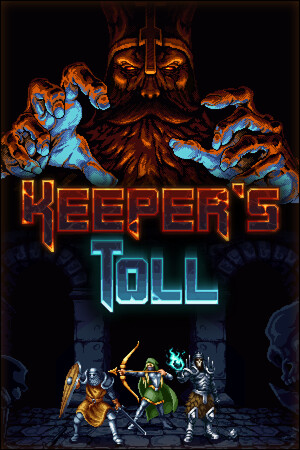
This guide discusses bosses, stage progression, achievements, and several secret or late-game objectives. It avoids giving a complete secret-by-secret solution, but some progression spoilers are unavoidable.
Fast answer
The answer before the background
For a first session, choose one hero, stay mobile, and focus on collecting Souls without entering dangerous spaces for a small pickup. Spend permanent currency on upgrades that improve survivability or make your preferred damage plan more reliable. Clear the first stage, note which enemies and boss attacks caused trouble, then repeat it before pushing forward. After you can consistently reach bosses, begin targeting Tomes of Knowledge, altars, stage clears, and character-specific mastery. Save high-risk challenges, large kill totals, and secret objectives for later runs when your Knowledge upgrades make them much less demanding.
Start here
A direct opening plan
Keeper’s Toll combines horde-survival pressure with action-RPG movement and boss encounters. The safest beginner approach is not to chase every reward immediately. First, learn how far your hero can move, which attacks can be interrupted or avoided, and how quickly enemies surround you.
On your first few runs, choose the hero whose basic attacks are easiest for you to control. The store lists six playable heroes: Shadow Monk, Pyromancer, Blood Maiden, Necromancer, Ranger, and Bogatyr. This is verified game information, but there is no official statement that one hero is universally best for beginners. The recommendation here is to stay with one character long enough to understand that character’s progression tree instead of restarting whenever a run goes badly.
- Move in broad circles rather than standing still and making tiny corrections.
- Collect nearby Souls, but do not cross a dense enemy pack for a single pickup.
- Use level-up choices to support one damage plan instead of taking unrelated upgrades.
- Pause before a boss if you need to read your build, health, and available abilities.
- After a defeat, identify one mistake to fix on the next attempt rather than changing everything.
| Early objective | What to do | Why it matters |
|---|---|---|
| Survive | Keep an escape lane open and avoid corners. | Most deaths come from losing room to maneuver. |
| Scale damage | Choose upgrades that improve the attacks you already use. | A focused build clears threats before they surround you. |
| Learn stages | Explore safely after the immediate wave is under control. | Tomes, altars, merchants, and unusual encounters support long-term progress. |
| Prepare for bosses | Stop taking unnecessary fights near the arena entrance. | Boss attempts are easier when you arrive healthy and organized. |
The developer describes the game as skill-based and methodical, with unique heroes, progression trees, and mechanically distinct bosses. The movement rules and upgrade priorities above are practical recommendations based on that design, not official mandatory requirements.
Build discipline
How to spend runs and permanent progress
Treat each run as having two goals: improve the current character and build knowledge for the next attempt. During a run, favor choices that solve the danger in front of you. If fast enemies are reaching you, movement, control, or area coverage is usually more valuable than a small increase to an attack that already works.
Between runs, use Souls and the Knowledge system deliberately. The developer introduced Tomes of Knowledge as progression that should mostly arise naturally through play rather than requiring an arbitrary grind. That makes exploration worthwhile, but it also means you should not assume every Tome comes from killing a specific number of enemies. If a Tome, altar, or event is unclear, record where you found it and test the condition on a later run instead of wasting several attempts on an unverified theory.
Merchant improvements are also worth understanding before you spend heavily. An older developer response explains that merchant upgrades were tied to individual level shops and could unlock stronger items for that level. Because this information comes from an earlier development period, treat it as historical guidance and confirm the current behavior in your build. The recommendation remains sound: invest in a shop you regularly use, but do not delay essential survivability for an expensive convenience upgrade.
- Keep a simple note of which stage contains a difficult Tome, altar, or secret-looking interaction.
- Choose permanent upgrades that help several heroes unless you are deliberately preparing a mastery run.
- Do not spend a full run farming one enemy type if normal progression is already providing the same kills.
- When a patch changes a character or event, retest the build rather than assuming old advice still applies.
| Progression phase | Priority | Leave for later |
|---|---|---|
| First clears | Movement comfort, reliable damage, basic survivability | Perfect runs and large cumulative totals |
| Boss learning | Boss attack recognition, arena spacing, emergency abilities | Optional secrets that require risky detours |
| Achievement cleanup | Character talent completion, altars, special kills, unusual objectives | Nothing, once the relevant build is stable |
| Late farming | Soul totals and remaining kill counters | Only objectives that require a specific event or platform condition |
Patch 1.3.2 changed Sacrifice Altar behavior so accepting a sacrifice can no longer kill a low-health player and now has a health-consumption cap. Older guides that warn the altar will always take enough health to kill you are therefore outdated for that patch.
Avoidable setbacks
Common mistakes that slow progression
The most common error is treating every pickup as mandatory. Souls are important, but a safe route through the stage is more valuable than a risky detour that costs most of your health. Plan a retreat before you enter a narrow area, especially when a new enemy type is about to appear.
Another mistake is changing heroes after every failed run. The game gives each hero a distinct mechanic and progression tree, so constant switching prevents you from learning what the character is designed to do. Switch only when you have a clear reason, such as preparing for a talent-related achievement or testing a different movement style.
Do not force a challenge achievement during your first successful clear. Objectives such as taking no damage for a time limit, surviving multiple Curses, defeating a boss without evading, or maxing a hero’s talents are easier when attempted as dedicated runs. Mixing them with exploration and first-time boss learning creates conflicting priorities.
Finally, do not rely on old achievement lists without checking your platform. Community references list base achievements, title updates, and later content separately, while PlayStation and Xbox listings can use trophy or achievement structures that do not match Steam one-for-one. The objective itself may be familiar, but the platform’s total and naming can differ.
- Do not spend health at an altar when the run is already unstable unless the reward is part of a planned attempt.
- Do not chase a mimic, rare pickup, or side encounter through an active enemy wave.
- Do not assume a boss can be safely ignored while farming; some encounters are designed around direct mechanics.
- Do not copy an old build without checking later balance changes and character updates.
| Mistake | Better habit |
|---|---|
| Standing still to maximize damage | Attack while preserving a route around the incoming wave. |
| Taking every upgrade offered | Pick the option that improves your current plan or fixes a weakness. |
| Attempting several challenge objectives together | Give each difficult objective its own focused run. |
| Trusting an old guide blindly | Check the patch date and confirm the mechanic in your version. |
Public community lists are useful for discovering objectives, but they are not official balance documentation. If a requirement conflicts with the in-game description or a developer patch note, favor the current in-game text and the developer’s latest announcement.
Finish the route
A practical progression path
Use this order if you want a clean beginner route. First, complete enough short runs to understand movement, level-up choices, and the merchant. Second, clear the earliest stage consistently and explore it without sacrificing every run to optional objectives. Third, push into the next areas and learn each boss separately. The game’s achievement lists include stage-clear objectives connected to kindling the fire and defeating the end boss in several areas, so reaching and finishing stages is a natural backbone for completion.
Once you can finish stages, return to earlier areas with a specific purpose. Collect missing Tomes, activate Sacrifice or Cursed Altars, search for unusual encounters, and build cumulative enemy counts. Then complete hero-focused goals by maxing the talents of the relevant character. Save the most demanding challenges for the end of the route, when your general knowledge and permanent upgrades are at their strongest.
For late content, check the developer’s update notes. Version 1.3 added Necromancer Hollow Flame Skeletons after defeating Kalinov as the Necromancer, while later updates added related objectives and a Dusk Knight unlock. These are verified update-specific goals, not requirements for learning the opening game. They are best treated as cleanup after you understand the base progression.
- Clear stages before optimizing completion routes.
- Use one run for exploration and another for a focused challenge.
- Track unfinished objectives by hero, stage, and special condition.
- Recheck update notes when a character, altar, or achievement behaves differently than an older guide describes.
| Order | Main target | Completion benefit |
|---|---|---|
| 1 | Learn one hero and finish early runs | Builds control and basic permanent progress. |
| 2 | Clear stages and study bosses | Unlocks the main route and removes uncertainty. |
| 3 | Collect Tomes and use altars | Improves the account and completes exploration goals. |
| 4 | Max hero talents | Targets character-specific objectives efficiently. |
| 5 | Farm cumulative kills and special challenges | Cleans up the remaining achievements with fewer distractions. |
If you can reliably reach a boss but cannot win, stop pushing deeper for a while. Repeat the stage with a focused build, improve your movement, and spend permanent currency. Progress in this game is not only the next clear; it is also learning which danger caused the last failure.
FAQ
Common questions
Is there one best beginner hero?
No official source identifies a universally best hero. The game presents six heroes with different mechanics and progression trees. For a first playthrough, choose the one whose attacks and movement feel easiest to control, then stay with it long enough to learn its strengths.
Should I farm Souls before progressing?
Usually, no. Take safe Souls during normal runs, but do not turn every attempt into a dangerous farming expedition. Push stage progress until a boss or enemy pattern is the problem, then repeat the safest available area to improve permanent upgrades.
When should I attempt difficult challenges?
Attempt them after you can clear the relevant stage consistently. No-damage, multi-Curse, boss-condition, and max-talent objectives are easier as dedicated runs because exploration and challenge play often demand different decisions.
Are older altar warnings still accurate?
Not always. Patch build 1.3.2 changed Sacrifice Altar behavior by adding a health-consumption cap and preventing the altar from killing a low-health player when the sacrifice is accepted. Check the current patch and in-game behavior before following older advice.
How long does full achievement completion take?
A community achievement reference estimates roughly 25 to 30 hours for the base-game achievements, excluding later content packs. Treat that as an estimate rather than a guarantee, because route knowledge, platform, patch state, and personal skill can change the total substantially.
Sources
What we checked
Official listings establish current availability and product facts. Community pages are used for mechanics and build history, then labeled separately.
- OfficialKeeper’s Toll Steam store page and official feature list
- OfficialOfficial Steam Community announcements and patch notes
- OfficialOfficial developer announcement about Tomes of Knowledge
- CommunityCommunity achievement list and completion estimate
- CommunityCommunity guide index for Tomes, secrets, and achievements