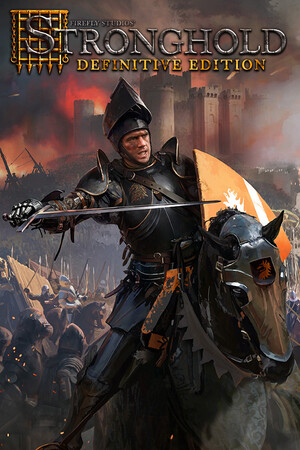
This guide includes story roles and campaign outcomes. The main cast list is spoiler-light, but the DLC section identifies villains and rescue targets.
Fast answer
The answer before the background
The named roster is the unnamed player Lord, the King, Lord Woolsack, Sir Longarm, the Rat, the Snake, the Pig and the Wolf, plus the Jewel of the North, the young captain, the Sergeant, Captain Hogsfoot and the new campaign narrator. The four villains are the main opponents of the original 21-mission campaign. The Jewel is the rescue target rather than a normally controllable hero, while the young captain is the playable viewpoint in that campaign. There is no skill-tree or party system: characters appear through campaign progression, mission briefings and AI-controlled castles.
At a glance
Who counts as a character?
Stronghold: Definitive Edition uses “character” in two overlapping ways. Named lords and story figures drive the campaign, while workers and soldiers represent the people and army of your castle. The first group has dialogue, portraits and plot roles. The second group is recruited or assigned through buildings and resources, so they are better treated as units or professions rather than heroes.
The most important distinction is control. You directly manage the player Lord’s castle and army, but you do not build a personal party around the named cast. Enemy lords are AI-controlled in their campaigns, and loyal allies generally exist to brief missions, provide context or support the story.
- Named story figures: the player Lord, allies, villains and Jewel-campaign characters.
- Economic characters: workers such as farmers, woodcutters, hunters, quarrymen, miners and craftsmen.
- Military units: archers, crossbowmen, spearmen, pikemen, macemen, swordsmen, knights, tunnelers, laddermen, engineers and black monks.
- The Lord is a special military character because losing him ends the game.
| Character group | Main role | How you encounter it |
|---|---|---|
| Player Lord | Castle ruler and defeat condition | Every normal game and campaign mission |
| Friendly named figures | Briefings, objectives and story guidance | Campaign missions |
| Enemy lords | AI opponents with distinct castles and tactics | Military campaign and related missions |
| Workers | Produce food, goods and resources | Economic buildings |
| Military units | Attack, defend, siege and support | Barracks, mercenary posts and siege workshops |
The official manual describes the Lord as the most important character and separately lists non-military characters and military units. It does not present a hero roster with experience levels, equipment slots or recruitable named companions.
Named roster
Main characters and their roles
The original campaign follows the unnamed player character, commonly called the Boy by fans and reference works. That name is a descriptive label rather than a player-selected in-game identity. He is the surviving noble who builds power from a small base and retakes the kingdom county by county.
Lord Woolsack and Sir Longarm are the principal loyalist figures. Woolsack is the measured adviser associated with planning and governance, while Longarm is the more forceful military figure. The King is the rightful ruler whose capture establishes the central conflict.
The four classic enemies are the Rat, Snake, Pig and Wolf. Their nicknames are the names most players see in menus and dialogue, while reference material also gives them personal titles such as Duc de Puce, Duc Beauregard, Duc Truffe and Duc Volpe. Treat the nicknames as the practical database names: they are the campaign opponents, not four recruitable hero classes.
- The Rat: an early antagonist and campaign opponent associated with a relatively modest stronghold and aggressive political bluster.
- The Snake: a calculating rival whose storyline involves opportunism, alliances and betrayal.
- The Pig: a major enemy in the later campaign and in the Swine's Bay rescue storyline.
- The Wolf: the final major villain of the original conflict and the focus of Valley of the Wolf.
- The Jewel of the North: Sir Longarm's niece and the rescue target of the new narrative campaign.
- The young captain: the viewpoint character leading the Jewel Campaign missions.
- The Sergeant: a new supporting figure who guides the captain through the Jewel-related story.
- Captain Hogsfoot: the slaver and antagonist introduced by Swine's Bay.
| Name | Side or function | Availability |
|---|---|---|
| The Lord or the Boy | Player-controlled ruler and protagonist | Available from the start |
| Lord Woolsack | Loyalist adviser | Campaign story |
| Sir Longarm | Loyalist military leader and the Jewel's uncle | Campaign story |
| The King | Rightful ruler | Campaign story |
| Rat, Snake, Pig and Wolf | Four main hostile lords | Original military campaign; some return in new content |
| The Jewel | Rescue target and central new character | Jewel Campaign; not a standard player hero |
| The Sergeant | Guide and mission-support character | Jewel Campaign and related content |
| Captain Hogsfoot | DLC antagonist | Swine's Bay |
The game’s story and manual use titles and nicknames inconsistently across contexts. “The Boy” is useful for identifying the protagonist in references, but your own displayed ruler name is entered when you first start the game.
Progression
What unlocks, and when?
There is no traditional character-unlock menu. Progression comes from choosing a campaign, reaching the relevant mission and owning any required downloadable campaign. The original 21-mission military campaign gives you the clearest look at the four classic enemies. The Jewel Campaign opens a separate 14-mission narrative about rescuing Longarm's kin and introduces its own supporting cast.
For practical purposes, the player Lord and ordinary workers are available immediately. Military troops become available when you construct the appropriate production buildings and obtain their weapons or resources. Named allies and enemies are unlocked by story access rather than by spending experience points.
If you are checking for “new characters,” start with the Jewel Campaign. It is the Definitive Edition’s major character-focused addition. Swine's Bay continues the rescue plot around Captain Hogsfoot, while Valley of the Wolf continues it against the Wolf. These additions expand the story cast, but they do not turn the named figures into a selectable party.
- Start the original military campaign to meet the Rat, Snake, Pig and Wolf in the classic conflict.
- Start the Jewel Campaign to follow the young captain and learn about the Jewel and Sergeant.
- Install or purchase Swine's Bay to access Captain Hogsfoot's campaign.
- Install or purchase Valley of the Wolf for the later Wolf-focused rescue chapter.
- Use Free Build, Siege and multiplayer for units and castle systems rather than expecting a separate hero roster.
| Content | Character access | Important limitation |
|---|---|---|
| Original military campaign | Player Lord, Woolsack, Longarm, King and four enemy lords | Story characters are not party members |
| Jewel Campaign | Jewel, young captain, Sergeant and returning antagonists | The Jewel is primarily a rescue objective |
| Swine's Bay | Captain Hogsfoot and returning campaign figures | Requires the relevant DLC |
| Valley of the Wolf | Wolf-focused continuation and returning figures | Requires the relevant DLC |
| Free Build and multiplayer | Your Lord, workers and military units | No campaign cast progression |
For the full named cast, play the original military campaign first, then the Jewel Campaign, followed by Swine's Bay and Valley of the Wolf. That order follows the story’s intended escalation and avoids confusing the new rescue plot with the original campaign.
Gameplay roles
Workers and troops are not heroes
A character database can easily become misleading if every animated villager is described as a named character. Workers are job roles produced by the population system. Bakers make bread, farmers produce food, woodcutters supply wood, quarrymen and miners gather stone or iron, and craftsmen turn resources into weapons or other goods. Their value comes from the building they serve, not from individual statistics or identities.
Military units are similarly role-based. Archers and crossbowmen provide ranged pressure, spearmen and pikemen hold lines or answer mounted threats, macemen and swordsmen provide stronger melee power, and knights offer mobility. Tunnelers, laddermen and engineers support sieges, while black monks are a special religious military option. The manual lists these as unit types, not named characters.
This matters when answering questions about unlocks. You unlock a unit through buildings, technology-like prerequisites and available goods. You do not unlock a baker, knight or engineer as a persistent named character between missions.
- Economic roles keep popularity, food and production moving.
- Ranged troops defend walls and soften attackers.
- Armored melee troops protect the keep and break through enemy defenses.
- Siege-support troops create access to castles or operate specialized equipment.
- The Lord remains the exceptional character: if he dies, the mission is lost.
| Role | Examples | Best use |
|---|---|---|
| Economic worker | Baker, farmer, woodcutter, quarryman, miner | Resource and food production |
| Ranged troop | Archer, crossbowman | Wall defense and focused fire |
| Melee troop | Spearman, pikeman, maceman, swordsman | Holding ground and assaulting defenses |
| Mounted troop | Knight | Fast attacks and raids |
| Siege support | Tunneler, ladderman, engineer | Breaching or operating siege plans |
| Special troop | Black monk | Religious military support |
The manual is the reliable source for gameplay categories. It does not assign personal names to ordinary workers, so this guide does not invent names or claim that their visual variants are separate characters.
Practical answers
How to identify a character in-game
First, check whether the figure has a portrait, spoken dialogue or a campaign title. If so, it is probably a named story character or lord. If the figure appears repeatedly at a production building and carries a resource, it is a worker role. If it can be selected in an army group and has a military name, it is a unit type.
Second, check the mode. Campaign briefings and videos contain the named cast. Free Build and multiplayer emphasize your Lord, villagers, workers and troops. A character mentioned in a briefing may never become directly controllable, so “appears in the game” does not mean “can be recruited.”
Finally, check your installed content before assuming a missing character is locked. The base release includes the new Jewel story, but later rescue chapters are separate additions. If a guide lists characters from Stronghold Crusader: Definitive Edition, it is describing a different game and a different roster.
- Do not confuse the original game with Stronghold Crusader: Definitive Edition.
- Do not treat the Jewel as a recruitable hero merely because she is central to the story.
- Do not expect campaign villains to become selectable after defeating them.
- Use the campaign title and mission list to identify DLC-only characters.
- Treat community nicknames as reference labels unless the game itself uses them.
| Question | Short answer |
|---|---|
| Who is the main hero? | The unnamed player Lord, often called the Boy in references. |
| Who are the original villains? | The Rat, Snake, Pig and Wolf. |
| Are there new characters? | Yes. The Jewel Campaign adds the Jewel, young captain, Sergeant and other narrative figures; later DLC adds Captain Hogsfoot and expands the rescue story. |
| Can I recruit named heroes? | No conventional named-hero recruitment system exists. |
| What happens if my Lord dies? | The game is lost. |
If you only need the playable roster, think in three layers: your Lord, recruitable unit types and AI-controlled campaign lords. The named supporting cast belongs to the story layer rather than a character-collection system.
FAQ
Common questions
Who is the player character?
The player controls an unnamed noble and castle lord. Reference works often call him the Boy, but the game lets you enter your own name when starting. He is the central protagonist of the original military campaign.
Who are the four enemy lords?
They are the Rat, Snake, Pig and Wolf. They are the principal antagonists of the original 21-mission military campaign and are encountered as AI-controlled enemies rather than recruitable heroes.
Are the Jewel, Sergeant and young captain new characters?
They belong to the new Jewel Campaign content in the Definitive Edition. The young captain leads the campaign viewpoint, the Sergeant supports the missions, and the Jewel of the North is the rescue target. They are narrative characters, not a party of selectable heroes.
Is Captain Hogsfoot in the base game?
Captain Hogsfoot is introduced in the Swine's Bay campaign addition. If that content is not installed or owned, you will not encounter his story missions.
Can I unlock the Wolf or other villains for free play?
The game does not use a general hero-unlock system for the campaign cast. The villains appear through campaigns and mission contexts. Free Build and multiplayer focus on your ruler, workers, military units and map-specific AI rather than a persistent collection of defeated characters.
Are workers such as bakers and farmers named characters?
No. They are non-military job roles controlled by the economy system. Their buildings, outputs and production chains matter, but the game does not treat them as persistent named companions.
Sources
What we checked
Official listings establish current availability and product facts. Community pages are used for mechanics and build history, then labeled separately.