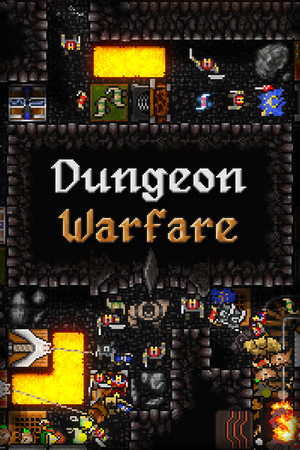
This guide discusses traps, enemy defeat, and cartoon-style dungeon violence.
Fast answer
The answer before the background
Dungeon Warfare has no conventional character roster. You do not choose, level, or unlock heroes; you play as an unnamed dungeon lord who defends stages with traps and utilities. The closest equivalent to a roster is the group of enemy adventurer types, which includes ordinary fighters, fast or evasive units, support units, ranged threats, and heavy targets. Friendly demons can also appear, but only through the Demon Portal trap. The stage called Heroes Must Die is not a character, hero faction, or recruitable unit.
Verified answer
What counts as a character in Dungeon Warfare?
Dungeon Warfare is a grid-based tower-defense game built around defending a dungeon, not managing a party. The official store description presents the player as a dungeon lord and lists enemies, traps, levels, runes, and progression systems rather than playable heroes or named companions.
That distinction matters because many searches use “heroes” to describe the adventurers entering the dungeon. In this game, heroes are usually enemies in the tower-defense sense: units that follow paths, trigger hazards, attack obstacles, or attempt to escape with the dungeon’s treasure. They are not characters you can recruit or control.
The player character is also not given a confirmed personal name in the official material reviewed for this guide. Treat “dungeon lord” as the role or viewpoint, not as a named hero with a biography, class tree, equipment screen, or dialogue route.
- Playable hero roster: none verified.
- Recruitable adventurer roster: none verified.
- Named protagonist: none verified in the official game description.
- Enemy roster: yes; the store listing confirms 22 enemy types.
- Friendly combat units: limited summoned units, such as demons from a Demon Portal.
| Roster category | What the game actually provides | Unlock method |
|---|---|---|
| Player | An unnamed dungeon lord viewpoint | Available from the start |
| Heroes or adventurers | Hostile units attacking the dungeon | Appear according to stage wave design |
| Traps | The main defensive roster, including 26 unique traps | Progression, experience, gems, and stage access |
| Friendly demons | Temporary blockers and attackers from a Demon Portal | Unlock and upgrade the relevant trap |
| Named characters | No verified selectable or recruitable cast | Not applicable |
Do not use a Dungeon Warfare 2 enemy list as if it were the original game’s complete roster. The sequel has its own encyclopedia and progression systems, while the original store page only confirms the total enemy count.
Roster guide
Enemy roles to recognize during a run
The original game’s official listing confirms 22 enemy types, but it does not publish a complete named encyclopedia on the store page. A community reference lists many specific types, including peasants, adventurers, warriors, knights, priests, thieves, wizards, golems, flying machines, dwarves, marksmen, nobles, horsemen, heavy armor, brutes, drummers, diggers, and engineering squads. Because that list is community-maintained and may combine information from related builds, use it as a reference rather than as a guaranteed stage-by-stage unlock order.
For practical play, sorting enemies by battlefield role is more useful than memorizing names. Basic foot soldiers are usually handled by reliable damage traps. Armored or high-health units need repeated damage, a kill zone, or environmental hazards. Fast, evasive, or specialist units can invalidate a defense that works perfectly against ordinary warriors. Ranged or support enemies should be watched because they may interact with your blockers instead of simply walking into the nearest damage source.
The most reliable database habit is to pause before each wave, read the incoming icons or silhouettes, and compare them with the trap behavior you have already tested. A role-based answer stays useful even when a platform build presents enemy names or tooltips differently.
- Basic attackers: use a dependable damage lane and avoid spending premium traps too early.
- Armored targets: combine damage sources instead of relying on one slow-recharging trap.
- Fast or evasive targets: use path control, timing traps, and coverage near the exit.
- Support or ranged targets: place damage where they cannot safely stand behind blockers.
- Heavy targets: combine displacement, pits, minecart tracks, or repeated crowd control where the map allows it.
- Special enemies: test their interaction with demons and barricades before committing to a full layout.
| Role | Typical problem | Practical response |
|---|---|---|
| Basic melee | Low individual threat but dangerous in groups | Use broad coverage and a short kill lane |
| Heavy or armored | Survives the first trap cycle | Layer damage and use environmental hazards |
| Fast or evasive | Reaches the exit before slow traps recover | Add overlapping control near the final bend |
| Support or ranged | Can undermine a blocker-based setup | Kill it before the main choke point |
| Special unit | May ignore or counter a favorite trap | Check the wave preview and adapt the path |
The role descriptions above are strategic recommendations. They are not a substitute for an in-game tooltip, and the official listing does not document every enemy ability.
Progression
What unlocks instead of heroes?
Dungeon Warfare’s progression is centered on traps and utilities. The official store page says that killing invaders grants experience and that successful dungeon runs give access to more powerful traps and devious utilities. It also lists three upgradeable tiers for the game’s 26 unique traps, plus passive trap upgrades.
This means there is no hero-unlock checklist. You do not unlock a knight, wizard, thief, or named adventurer for your own roster. Instead, you expand the tools used to defeat those enemy roles. A new trap can change the shape of a level more dramatically than a conventional character would: a push effect can redirect a wave, a spring effect can launch units into hazards, and a summoned demon can hold enemies in place long enough for damage traps to reset.
Unlock timing can depend on campaign progression, permanent upgrades, gems, and the specific platform or build. If a trap is missing, first check the dungeon progression and upgrade menus rather than looking for a character banner, recruitment screen, or hero shop.
- Advance through stages to expose more of the defensive toolkit.
- Spend experience or permanent progression currency on traps that solve your current bottleneck.
- Upgrade a small group of complementary traps rather than spreading investment across everything.
- Use runes only after the base layout works; difficulty modifiers can change which roles are most dangerous.
- Treat friendly summons as trap effects, not as permanent units with levels, equipment, or independent unlock trees.
| Player goal | Correct system to check | What not to expect |
|---|---|---|
| More damage | Trap tiers and passive upgrades | A stronger playable hero |
| Better crowd control | Push, spring, barricade, demon, or path-manipulation tools | A tank character |
| Handling fast enemies | Coverage, timing, and map routing | A rogue recruit |
| Handling heavy enemies | Layered damage and environmental hazards | A warrior class upgrade |
| New content | Stage and progression unlocks | A named party member |
If you are early in the campaign, prioritize a layout that combines damage, delay, and displacement. A single high-damage trap is less dependable than several traps that make enemies remain in the kill zone.
Named-character questions
Is the stage title a hero name?
No. Heroes Must Die is referenced by players as a Dungeon Warfare stage or challenge, including discussions about its trap layout and enemy waves. It is not presented in the verified official store material as the name of a recruitable hero, boss, protagonist, or faction.
The title can cause confusion because the game’s enemies are described as adventurers and wanna-be heroes. In context, the phrase describes the dungeon lord’s objective: stop the invading adventurers. It does not create a character database entry.
Likewise, names such as thief, knight, priest, wizard, or warrior should be read as enemy-unit labels unless your copy explicitly presents a different tooltip. They are battlefield archetypes, not selectable classes for the player.
- There is no verified hero named Heroes Must Die.
- There is no verified named adventurer cast in the original game’s official description.
- There is no confirmed system for recruiting defeated enemies.
- The dungeon lord is a role, not a documented personal name.
- For exact stage waves, trust the in-game preview for your platform build.
| Search question | Evidence-led answer |
|---|---|
| Can I play as a hero? | No playable hero system is verified for the original game. |
| Can I unlock heroes? | No. Progression unlocks traps, utilities, and upgrades. |
| Who is the main character? | An unnamed dungeon lord viewpoint. |
| Is Heroes Must Die a character? | No. It refers to a stage or challenge context. |
| Are demons heroes? | No. They are friendly summoned units created by a trap. |
Community pages can use “hero” loosely for any invading adventurer. When a source does not distinguish enemy type, stage title, and playable character, the in-game encyclopedia and wave preview should take priority.
FAQ
Common questions
Does Dungeon Warfare have heroes like a role-playing game?
No. The original game is a tower-defense title in which you control dungeon defenses rather than a party of heroes. Its adventurers are hostile units, and the player’s progression is built around traps and utilities.
What characters can I unlock?
No permanent character roster is verified. You unlock or improve defensive tools, including traps with multiple tiers and passive upgrades. Friendly demons are produced by a Demon Portal rather than recruited as characters.
Who is the dungeon lord?
The dungeon lord is the player role and viewpoint. The official description does not establish a personal name, class, portrait-based build, or separate character progression system for this figure.
What is the Heroes Must Die stage?
It is a stage or challenge reference used by players, not a named hero. Its difficulty comes from the map layout, available traps, and the enemy waves assigned to that stage.
Should I use a community enemy list as the definitive roster?
Use it as a helpful reference, not an absolute source. The official store page confirms 22 enemy types but does not publish the complete named list or stage-by-stage availability. Check your game’s tooltips and wave preview for final confirmation.
Sources
What we checked
Official listings establish current availability and product facts. Community pages are used for mechanics and build history, then labeled separately.
- OfficialOfficial Steam store page for Dungeon Warfare
- CommunityDungeon Warfare Steam Community discussions about the Heroes Must Die stage
- CommunityDungeon Warfare community wiki overview
- ReferenceDungeon Warfare community enemy reference
- CommunityKongregate discussion referencing the stage and trap reward